
Title
Sizing Up The Senate: The Unequal Consequences Of Equal Representation,New
Sold by Ergodebooks, an authorized reseller.
Returns accepted within 30 days | support@ergodebooks.com
Shipping Information
- Free Standard Shipping — United States only
- Processing Time: 3–5 business days
- Estimated Delivery: 6–10 business days after dispatch
- Double-boxed, fully insured & discreetly packaged
- Tracking number sent via email once dispatched
Returns & Refund
Returns accepted within 30 days of delivery.
Damaged or Defective Item
Free return shipping + replacement or full refund
Wrong Item Received
Free return shipping + replacement or full refund
Change of Mind
Return shipping at customer's expense · 25% restocking fee applies
Payment Option

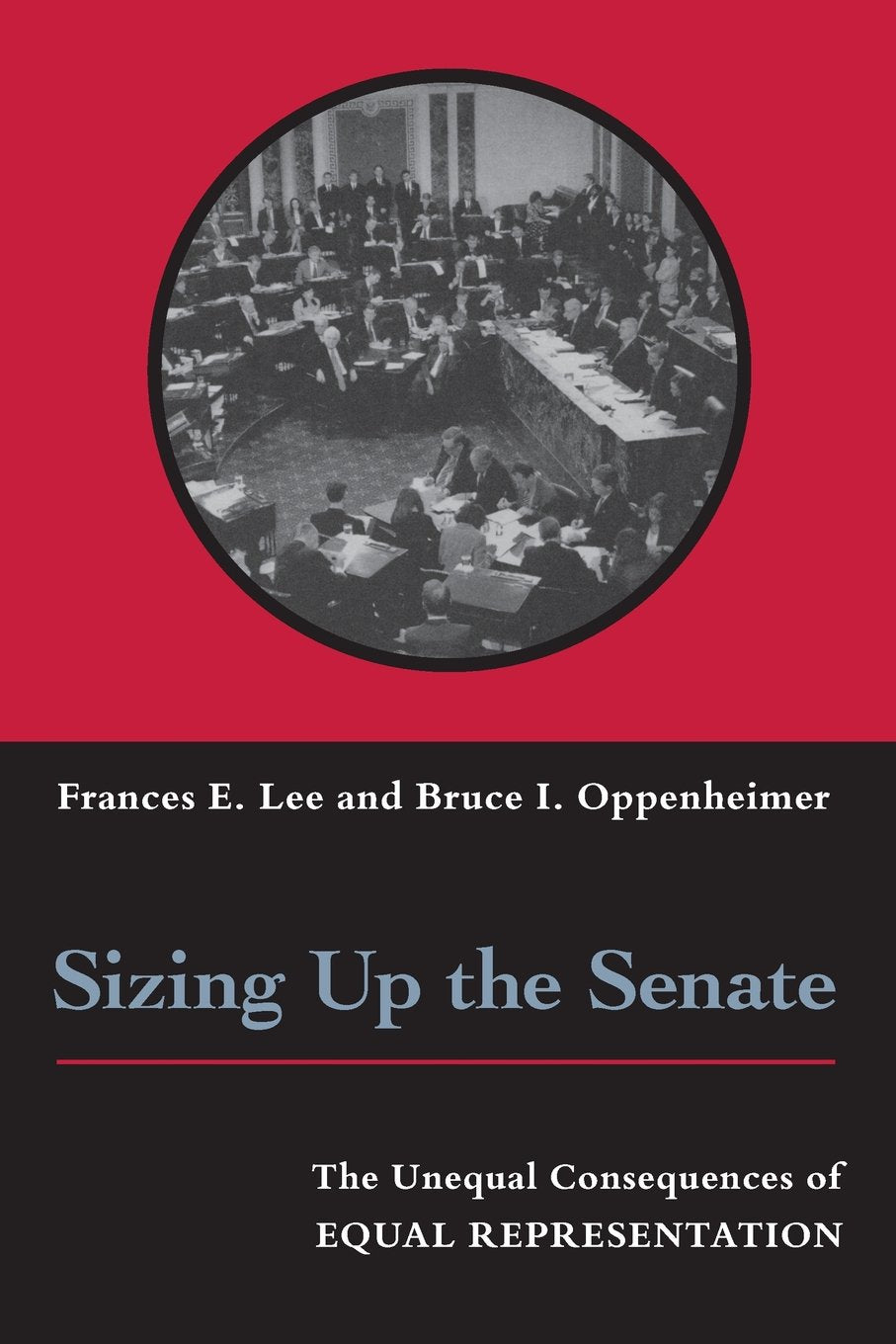
We Take It For Granted That Every State Has Two Representatives In The United States Senate. Apply The 'One Person, One Vote' Standard, However, And The Senate Is The Most Malapportioned Legislature In The Democratic World.But Does It Matter That California'S 32 Million People Have The Same Number Of Senate Votes As Wyoming'S 480,000? Frances Lee And Bruce Oppenheimer Systematically Show That The Senate'S Unique Apportionment Scheme Profoundly Shapes Legislation And Representation. The Size Of A State'S Population Affects The Senatorconstituent Relationship, Fundraising And Elections, Strategic Behavior Within The Senate, And, Ultimately, Policy Decisions. They Also Show That Less Populous States Consistently Receive More Federal Funding Than States With More People. In Sum, Lee And Oppenheimer Reveal That Senate Apportionment Leaves No Aspect Of The Institution Untouched.This Groundbreaking Book Raises New Questions About One Of The Key Institutions Of American Government And Will Interest Anyone Concerned With Issues Of Representation.
⚠️ WARNING (California Proposition 65):
This product may contain chemicals known to the State of California to cause cancer, birth defects, or other reproductive harm.
For more information, please visit www.P65Warnings.ca.gov.
- Q: How many pages does the book have? A: The book has two hundred eighty-eight pages. This length provides ample depth for exploring complex themes in political science.
- Q: What is the binding type of the book? A: The book is paperback bound. This makes it lightweight and flexible, ideal for easy reading and transportation.
- Q: What are the dimensions of the book? A: The book measures eight point nine eight inches in length, six point one inches in width, and zero point seven five inches in height. These dimensions make it a convenient size for a variety of reading environments.
- Q: Who is the author of the book? A: The book is authored by Frances E. Lee and Bruce Oppenheimer. Their expertise in political science adds credibility to the discussions presented.
- Q: What genre does this book belong to? A: The book belongs to the Political Science genre. It critically examines the implications of Senate representation on legislation and policy.
- Q: Is this book appropriate for beginners in political science? A: Yes, the book is suitable for beginners. It thoughtfully breaks down complex issues related to representation and legislation in an accessible manner.
- Q: What are the main themes discussed in the book? A: The main themes include representation, legislation, and the impact of population size on Senate dynamics. The authors analyze how these factors influence federal funding and policy decisions.
- Q: How can I apply the insights from this book? A: You can apply the insights by engaging in discussions about representation and policy issues. Understanding these themes may enhance your perspective on current political debates.
- Q: Is there a specific audience for this book? A: Yes, the book targets individuals interested in political science, government studies, and civic engagement. It is particularly valuable for students and professionals in these fields.
- Q: How should I store this book to keep it in good condition? A: Store the book in a dry, cool place away from direct sunlight. This will help preserve its quality and prevent damage to the binding and pages.
- Q: Can I return the book if I am unsatisfied? A: Yes, you can return the book if you are unsatisfied, depending on the retailer's return policy. Always check the specific terms for returns before purchasing.
- Q: What should I do if the book arrives damaged? A: If the book arrives damaged, contact the retailer immediately for a replacement or refund. Keep all packaging materials until the issue is resolved.
- Q: Is the book suitable for academic use? A: Yes, the book is suitable for academic use. Its research-based insights and critical analyses make it an excellent resource for coursework and discussions.
- Q: Does the book include references or citations? A: Yes, the book includes references and citations. This adds scholarly value and allows readers to explore sources for further research.
- Q: How does the book address the topic of federal funding? A: The book discusses how less populous states receive more federal funding compared to their larger counterparts. This analysis highlights the disparities in representation.