
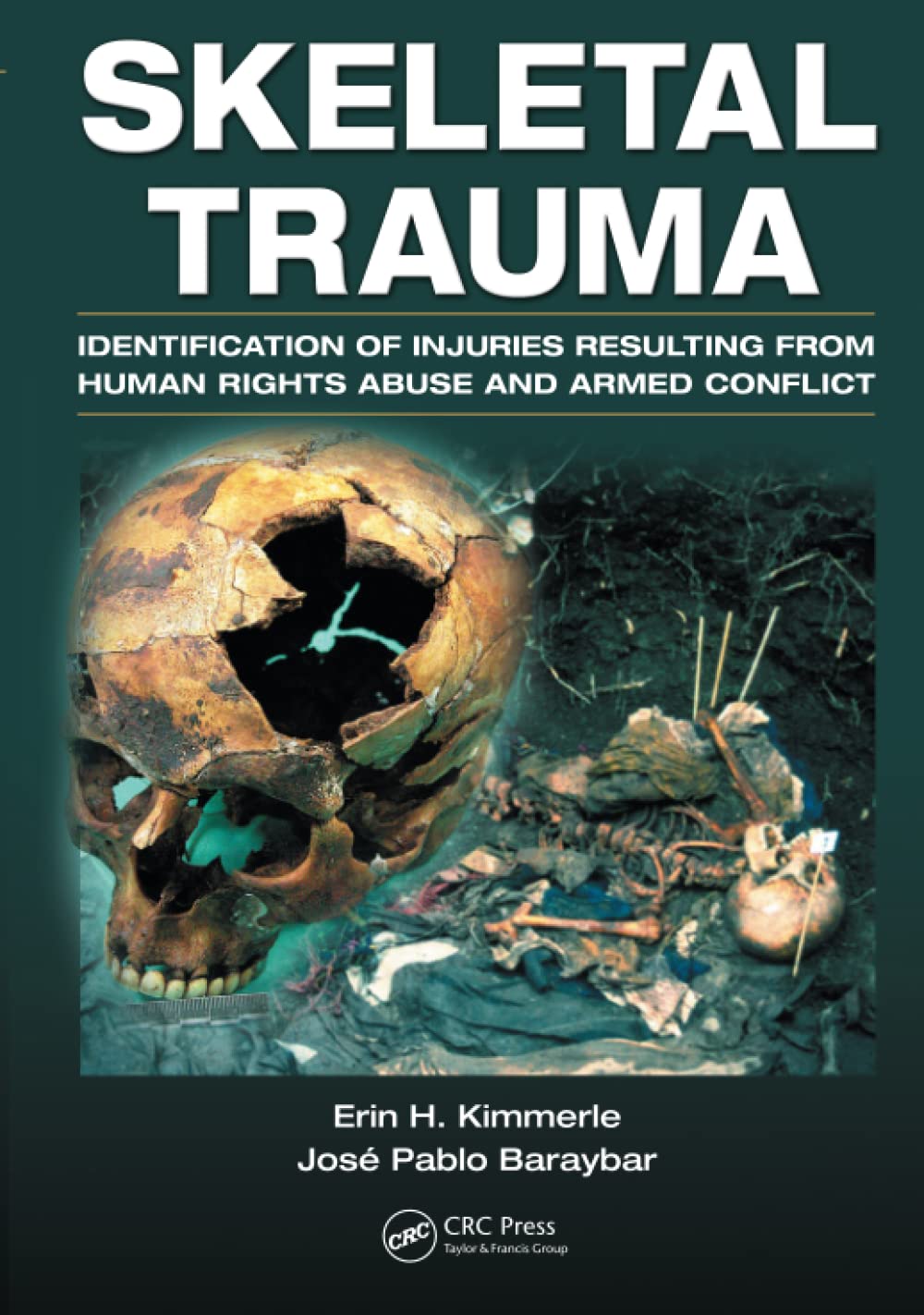
Title
Skeletal Trauma,Used
Sold by Ergodebooks, an authorized reseller.
Returns accepted within 30 days | support@ergodebooks.com
Shipping Information
- Free Standard Shipping — United States only
- Processing Time: 3–5 business days
- Estimated Delivery: 6–10 business days after dispatch
- Double-boxed, fully insured & discreetly packaged
- Tracking number sent via email once dispatched
Returns & Refund
Returns accepted within 30 days of delivery.
Damaged or Defective Item
Free return shipping + replacement or full refund
Wrong Item Received
Free return shipping + replacement or full refund
Change of Mind
Return shipping at customer's expense · 25% restocking fee applies
Payment Option

Born out of the need to recover, analyze, and present physical evidence on thousands of individual victims of largescale human rights violations, multinational, multidisciplinary forensic teams developed a sophisticated system for the examination of human remains and set a precedent for future investigations. Codifying this process, Skeletal Trauma: Identification of Injuries Resulting from Human Rights Abuse and Armed Conflict describes an epidemiological framework for collecting, analyzing, and interpreting evidence for use at trial. It pieces together fragments of skeletal tissue and associated physical evidence to determine a mechanism of trauma that is factually based, methodologically scripted, and scientifically interpreted.Providing a contextual background, the opening chapter discusses international forensic investigations into Human Rights violations through international tribunals and other emerging judicial systems. The second chapter presents protocols for systemic data collection and methods for the differential diagnosis of wounds to classify and interpret mechanisms of injury. Organized topically, the remaining chapters evaluate blasting injuries, blunt force trauma, skeletal evidence of torture, sharp force trauma, and gunfire injuries. Each chapter discusses wounding mechanisms, wound pathophysiology, relevant legal examples, and case studies.Twentysix leading scholars and practitioners from anthropology, pathology, and forensics contribute their research, cases, photographs, and extensive fieldwork experience to provide 16 representative case studies. Taken from human rights violations, ethnic and armed conflict, and extrajudicial executions throughout the Americas, Europe, and Asia, all evidence in the examples is interpreted through an epidemiological model and set in a legal framework. Several of the exemplary studies, including those from the Balkans, have already been presented as evidence in criminal trials.
⚠️ WARNING (California Proposition 65):
This product may contain chemicals known to the State of California to cause cancer, birth defects, or other reproductive harm.
For more information, please visit www.P65Warnings.ca.gov.