
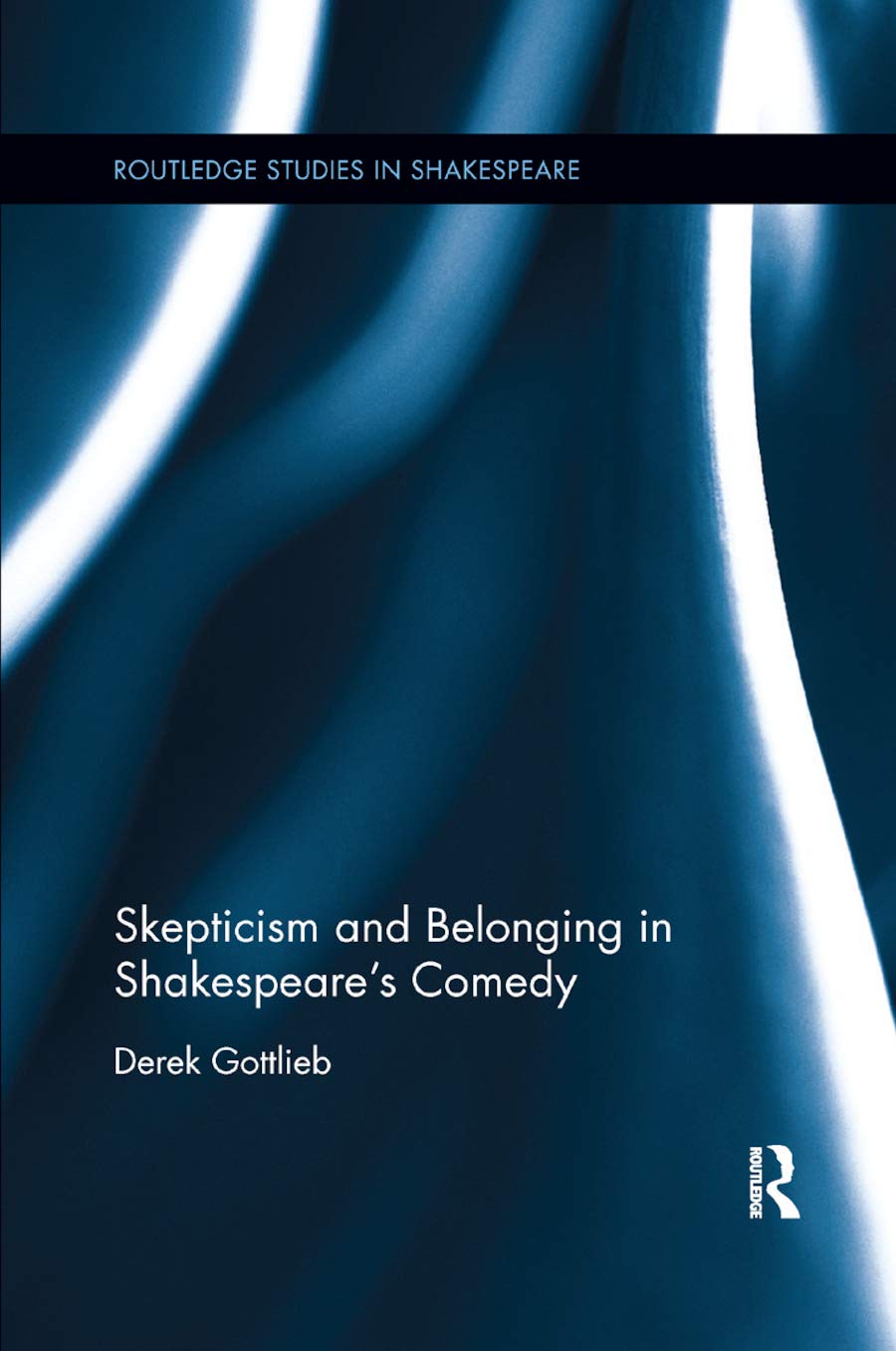
Title
Skepticism and Belonging in Shakespeare's Comedy (Routledge Studies in Shakespeare),Used
Sold by Ergodebooks, an authorized reseller.
Returns accepted within 30 days | support@ergodebooks.com
Shipping Information
- Free Standard Shipping — United States only
- Processing Time: 3–5 business days
- Estimated Delivery: 6–10 business days after dispatch
- Double-boxed, fully insured & discreetly packaged
- Tracking number sent via email once dispatched
Returns & Refund
Returns accepted within 30 days of delivery.
Damaged or Defective Item
Free return shipping + replacement or full refund
Wrong Item Received
Free return shipping + replacement or full refund
Change of Mind
Return shipping at customer's expense · 25% restocking fee applies
Payment Option

This book recovers a sense of the high stakes of Shakespearean comedy, arguing that the comedies, no less than the tragedies, serve to dramatize responses to the condition of being human, responses that invite scholarly investigation and explanation. Taking its cue from Stanley Cavells influential readings of Othello and Lear, the book argues that exposure or vulnerability to others is the source of both human happiness and human misery; while the tragedies showcase attempts at the evasion of such vulnerability through the selfdefeating pursuit of epistemological certainty, the comedies present the drama and the difficulty of turning away from an epistemological register in order to productively respond to the fact of our humanity. Where Shakespeares tragedies might be viewed in Cavellian terms as the drama of skepticism, Shakespeares comedies then exemplify the drama of acknowledgement. As a parallel and a preamble, Gottlieb suggests that the field of literary studies is itself a site of such revealing responses: where competing research methods strive to foreclose upon (or, alternatively, rejoice in) epistemological uncertainty, such commitments bespeak an urge to avoid or circumvent the human in the practice of scholarship. Reading Shakespeares comedies in tandem with a "defactoist" view of teaching and learning points in the direction of a new humanism, one that eschews both the relativism of old deconstruction and contemporary Presentism and the determinism of various kinds of structural accounts. This book offers something new in scholarly and popular understanding of Shakespeares work, doing so with both philosophical rigor and literary attention to the difficult work of reading.
⚠️ WARNING (California Proposition 65):
This product may contain chemicals known to the State of California to cause cancer, birth defects, or other reproductive harm.
For more information, please visit www.P65Warnings.ca.gov.