If you have any questions, you are always welcome to contact us. We'll get back to you as soon as possible, withing 24 hours on weekdays.
Customer service
All questions about your order, return and delivery must be sent to our customer service team by e-mail at yourstore@yourdomain.com
Sale & Press
If you are interested in selling our products, need more information about our brand or wish to make a collaboration, please contact us at press@yourdomain.com
Help
If you have any questions, you are always welcome to contact us. We'll get back to you as soon as possible, withing 24 hours on weekdays.
Customer service
All questions about your order, return and delivery must be sent to our customer service team by e-mail at yourstore@yourdomain.com
Sale & Press
If you are interested in selling our products, need more information about our brand or wish to make a collaboration, please contact us at press@yourdomain.com
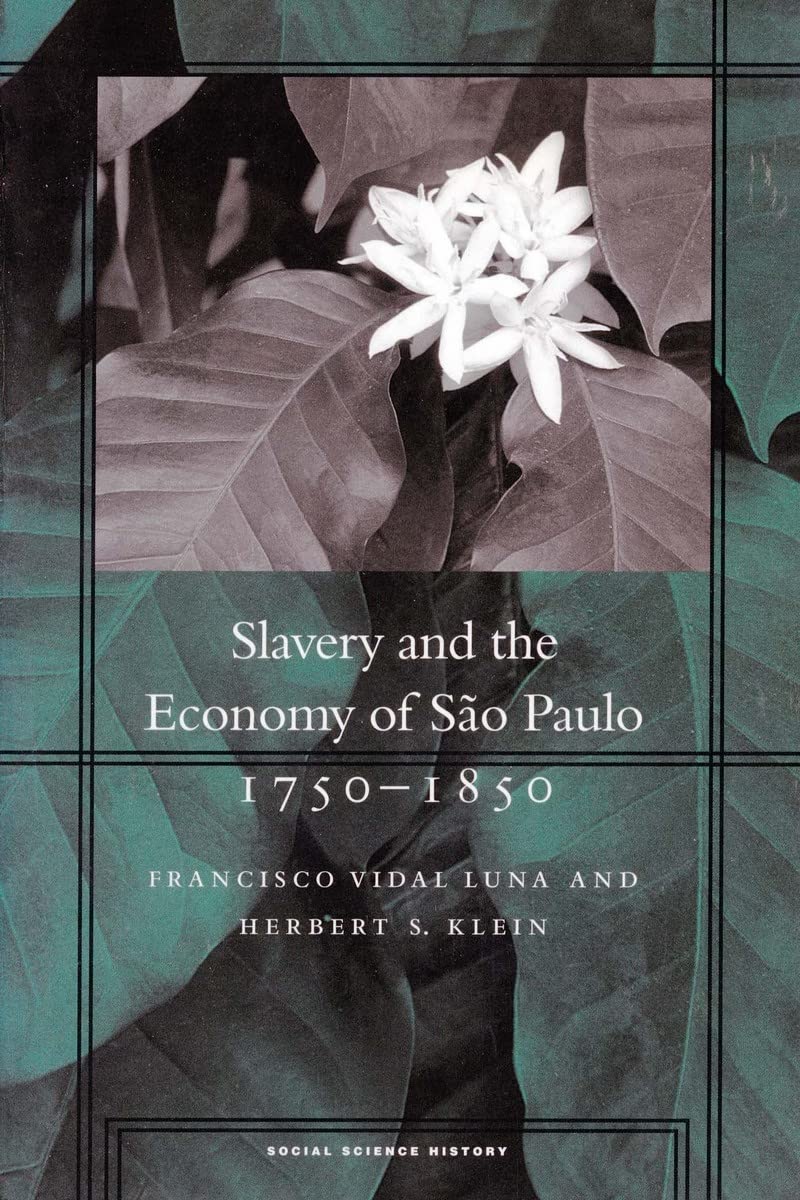
Today the Brazilian state of So Paulo is one of the worlds most advanced agricultural, industrial, and urbanized regions. Its historical evolution, however, is poorly understood. Most scholarly attention has been paid to the period after 1850, when coffee rose to economic dominance, or to the period since 1880, when largescale European immigration turned the city of So Paulo into one of the largest metropolises in the world.This book thus provides the first comprehensive portrait of the economy and people of So Paulo during the critical transition from the traditional eighteenthcentury colonial world to the modernizing world of the nineteenth century.The result is a major rethinking of the history of early slavery in Brazilit shows that, contrary to previous beliefs, slavery was as deeply entrenched and exploited in So Paulo as elsewhere in Brazil, and that the states early economic growth (as the worlds leading coffeeproducing region after 1850) was made possible by an expanding African slave labor force. This raises many questions about So Paulos supposed exceptionalism and challenges the standard account of the states economic history, which has been strongly shaped by ideas of path dependence.In addition to studying the slaveowning class, the authors investigate the economic role of free whites and colored who did not own slaves, and compare So Paulos slave society and economy with other such regions in the Americas.
⚠️ WARNING (California Proposition 65):
This product may contain chemicals known to the State of California to cause cancer,
birth defects, or other reproductive harm.
For MAP (Minimum Advertised Price) violations and Intellectual Property (IP) or Trademark concerns, please contact:
support@ergodebooks.com
⚠️ California Proposition 65 Warning: Some products sold on this website may expose you to chemicals known to the State of California to cause cancer, birth defects, or other reproductive harm. For more information, visit www.P65Warnings.ca.gov.