
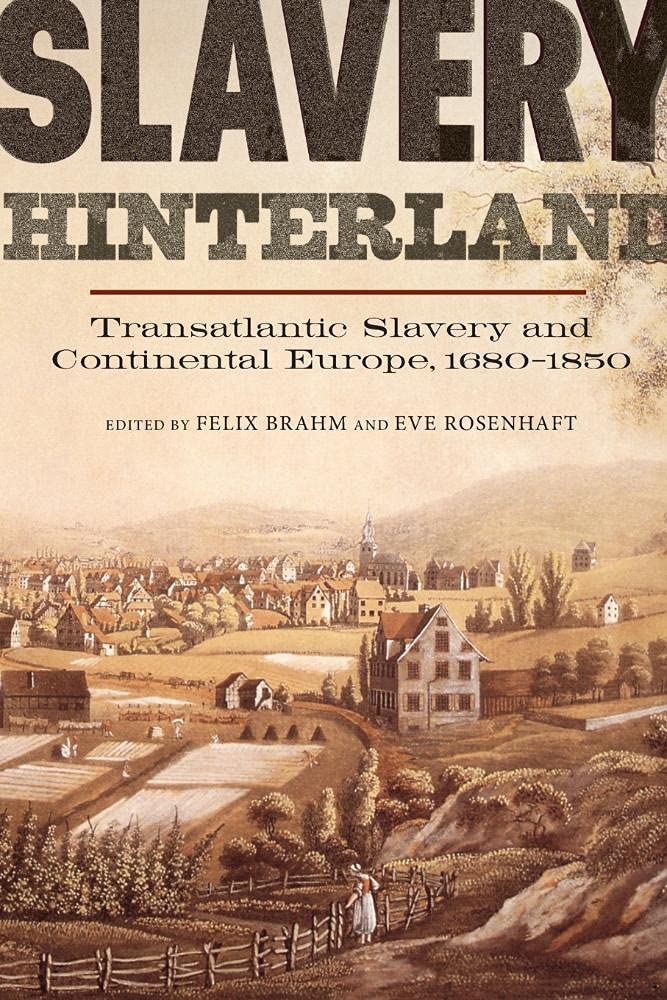
Title
Slavery Hinterland: Transatlantic Slavery and Continental Europe, 16801850 (People, Markets, Goods: Economies and Societies in ,Used
Sold by Ergodebooks, an authorized reseller.
Returns accepted within 30 days | support@ergodebooks.com
Shipping Information
- Free Standard Shipping — United States only
- Processing Time: 3–5 business days
- Estimated Delivery: 6–10 business days after dispatch
- Double-boxed, fully insured & discreetly packaged
- Tracking number sent via email once dispatched
Returns & Refund
Returns accepted within 30 days of delivery.
Damaged or Defective Item
Free return shipping + replacement or full refund
Wrong Item Received
Free return shipping + replacement or full refund
Change of Mind
Return shipping at customer's expense · 25% restocking fee applies
Payment Option

Contributors from the US, Britain and Europe explore a neglected aspect of transatlantic slavery: the implication of a continental European hinterland.Slavery Hinterland explores a neglected aspect of transatlantic slavery: the implication of a continental European hinterland. It focuses on historical actors in territories that were not directly involved in the traffic inAfricans but linked in various ways with the transatlantic slave business, the plantation economies that it fed and the consequences of its abolition. The volume unearths material entanglements of the Continental and Atlantic economies and also proposes a new agenda for the historical study of the relationship between business and morality. Contributors from the US, Britain and continental Europe examine the ways in which the slave economy touched on individual lives and economic developments in Germanspeaking Europe, Switzerland, Denmark and Italy. They reveal how these 'hinterlands' served as suppliers of investment, labour and trade goods for the slave trade and of materials for the plantation economies, and how involvement in trade networks contributed in turn to key economic developments in the 'hinterlands'. The chapters range in time from the first, shortlived attempt at establishing a German slavetrading operation in the 1680s to the involvement of textile manufacturers in transatlantic trade in the first quarter of the nineteenth century. A key theme of the volume is the question of conscience, or awareness of being morally implicated in an immoral enterprise. Evidence for subjective understandings of the moral challenge of slavery is found in individual actions and statements and also in postabolition colonisation and missionary projects.FELIX BRAHM is Research Fellow at the German Historical Institute in London.EVE ROSENHAFT is Professor of German Historical Studies, University of Liverpool.CONTRIBUTORS: Felix Brahm, Peter Haenger, Catherine Hall, Daniel P. Hopkins, Craig Koslofsky, Sarah Lentz, Rebekka von Mallinckrodt, Anne Sophie Overkamp, Alexandra Robinson, Eve Rosenhaft, Anka Steffen, Klaus Weber, Roberto Zaugg
⚠️ WARNING (California Proposition 65):
This product may contain chemicals known to the State of California to cause cancer, birth defects, or other reproductive harm.
For more information, please visit www.P65Warnings.ca.gov.