
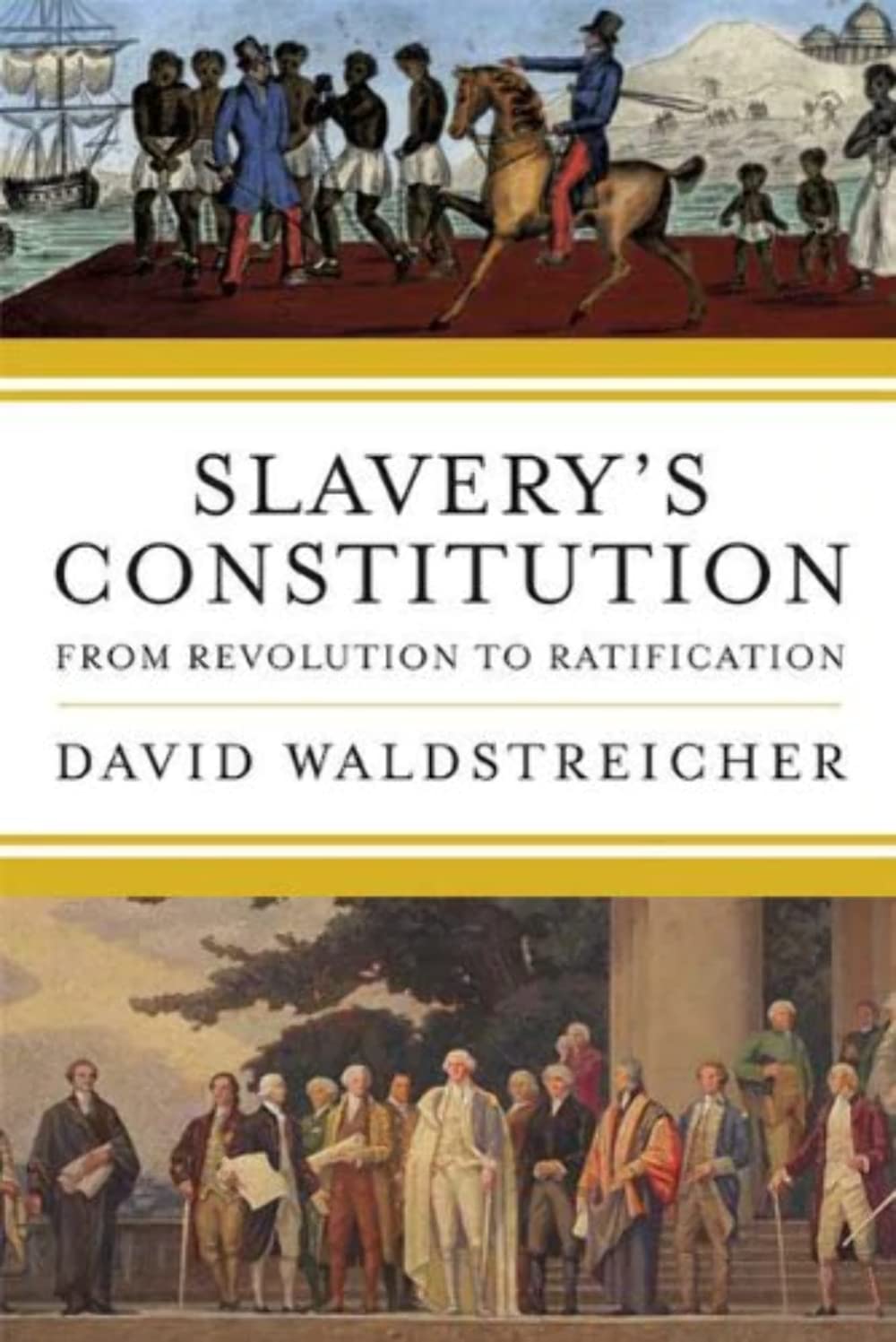
Title
Slavery's Constitution: From Revolution to Ratification,New
Sold by Ergodebooks, an authorized reseller.
Returns accepted within 30 days | support@ergodebooks.com
Shipping Information
- Free Standard Shipping — United States only
- Processing Time: 3–5 business days
- Estimated Delivery: 6–10 business days after dispatch
- Double-boxed, fully insured & discreetly packaged
- Tracking number sent via email once dispatched
Returns & Refund
Returns accepted within 30 days of delivery.
Damaged or Defective Item
Free return shipping + replacement or full refund
Wrong Item Received
Free return shipping + replacement or full refund
Change of Mind
Return shipping at customer's expense · 25% restocking fee applies
Payment Option

Taking on decades of received wisdom, David Waldstreicher has written the first book to recognize slaverys place at the heart of the U.S. Constitution. Famously, the Constitution never mentions slavery. And yet, of its eightyfour clauses, six were directly concerned with slaves and the interests of their owners. Five other clauses had implications for slavery that were considered and debated by the delegates to the 1787 Constitutional Convention and the citizens of the states during ratification. This peculiar institution was not a moral blind spot for Americas otherwise enlightened framers, nor was it the expression of a mere economic interest. Slavery was as important to the making of the Constitution as the Constitution was to the survival of slavery.By tracing slavery from before the revolution, through the Constitutions framing, and into the public debate that followed, Waldstreicher rigorously shows that slavery was not only actively discussed behind the closed and locked doors of the Constitutional Convention, but that it was also deftly woven into the Constitution itself. For one thing, slavery was central to the American economy, and since the document set the stage for a national economy, the Constitution could not avoid having implications for slavery. Even more, since the government defined sovereignty over individuals, as well as property in them, discussion of sovereignty led directly to debate over slaverys place in the new republic.Finding meaning in silences that have long been ignored, Slaverys Constitution is a vital and sorely needed contribution to the conversation about the origins, impact, and meaning of our nations founding document.
⚠️ WARNING (California Proposition 65):
This product may contain chemicals known to the State of California to cause cancer, birth defects, or other reproductive harm.
For more information, please visit www.P65Warnings.ca.gov.