
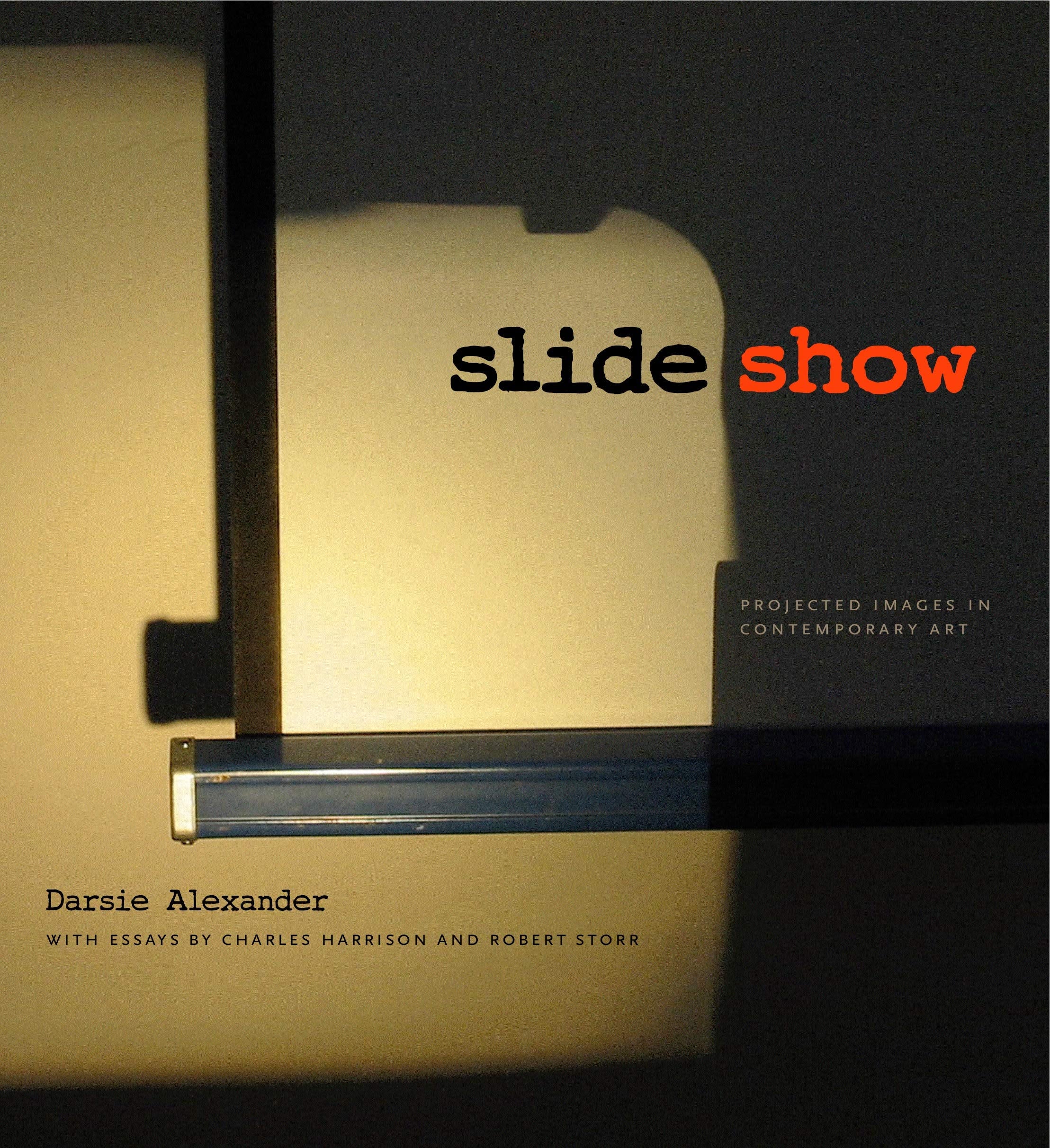
Title
Slideshow: Projected Images In Contemporary Art
Sold by Ergodebooks, an authorized reseller.
Returns accepted within 30 days | support@ergodebooks.com
Shipping Information
- Free Standard Shipping — United States only
- Processing Time: 3–5 business days
- Estimated Delivery: 6–10 business days after dispatch
- Double-boxed, fully insured & discreetly packaged
- Tracking number sent via email once dispatched
Returns & Refund
Returns accepted within 30 days of delivery.
Damaged or Defective Item
Free return shipping + replacement or full refund
Wrong Item Received
Free return shipping + replacement or full refund
Change of Mind
Return shipping at customer's expense · 25% restocking fee applies
Payment Option

New Babies Just Home From The Hospital, Children Cavorting Under The Christmas Tree; Weddings, Receptions, Birthday Partiesthese And Many Other Happy Memories Live On Through The Magic Of Color Slides. Kodak Instruction Manual, 1967Interview With Darsie Alexander, Curator, Bma, August 2004Since The Renaissance, Most Art Has Been Prized Because Of The Prodigious Skills That Went Into Its Making. Why Would Any Artist Choose To Work With Slides?Its Tempting To See Slide Projection As Quick And Easy. Indeed, Many Artists Cite These Qualities When Explaining Their Initial Attraction To The Medium. But The Process Can Be Complicated, Involving Not Only The Creation Of The Transparency Itself But Also Its Arrangement, Projected Scale, And Timing. A Single Carousel May Contain As Many As Eighty Images That Must Be Numbered And Ordered, A Task That Grows All The More Complicated With The Addition Of Each New Slide Grouping. When We Rediscovered A Piece By One Of The Performance Artists In The Exhibition, I Thought He Was Going To Cry. The Prospect Of Putting The Whole Complex Thing Back Together Was Painful, Even Though He Was Delighted To See His Work Again. Of Course, Slide Projection Is Lowtech And Notoriously Accidentprone. But I Think The Medium Owes A Lot Of Its Immediacy To Its Tendency As An Apparatus To Jam, To Burn Out A Bulb, To Turn A Wellplanned Show Into A Logistical Nightmare. Good Art Often Courts Disaster.Is The Development Of Slide Art Connected To The Ferment Of The 60S?During The 1960S And 1970S, Public Projection Of Slides Became A Vehicle For Social And Political Activism. Slide Projections Portability Made This Possible, Enabling Artists (Krzysztof Wodiczko, For Example) To Project Powerful, Challenging Images Onto Public Buildings. When Lucy Lippard Wanted To Publicize The Exclusion Of Women From The Whitney Annual Of 1970, She Projected Slides Against The Surface Of The Museum To Protest Its Curatorial Policies. This Application Of Slides As Critical Commentary Had Historical Precedents: In The 1880S, The Photographer Jacob Riis Used Slides Of The Urban Poor To Arouse The Concern Of People Who Might Have Been Able To Help.Did The Strong Associations Of Slides With Family Entertainment Have Any Impact On The Ways Artists Adapted The Medium?The Fact That The Medium Promotes A Collective Viewing Experience Is Important For Both Artists And Popular Users. The Act Of Looking At Images, Especially Still Photographs, Generally Involves A Single Spectator And A Stationary Object, But With Slides You Are Often Sitting In The Same Room With Other People, Sharing The Experience With Them. People Who Watch Nan Goldins The Ballad Of Sexual Dependency, For Example, Find Themselves On The Same Emotional Roller Coaster. Its Like The Family Slide Show In A Way; People Participate In A Joint Emotional Response To Images Of Past Events. Of Course, The Memories And Feelings Such A Work Stimulates Are Different For Everyone, And That Is The Reason The Ballad Is Such A Great Piece. Marcel Proust As Well As Ingmar Bergman Have Called Attention To The Mesmerizing Power Of The Magic Lantern Shows They Saw As Children.Is There Any Connection Between Those Shows And Slide Shows By Such Artists As Dennis Oppenheim Or James Coleman?Projection Is A Mysterious Process That Evokes All Kinds Of Fantasies. The Ancient Meaning Of The Term To Project Is Related To The Alchemical Process For Changing Base Metal Into Gold. Nearly Every Artist I Interviewed Remembers Being Fascinated By Shadows On The Wall As A Kid, Or Lying In The Dark Using The Beam Of A Flashlight To Make Patterns In The Darkness. An Artist Like James Coleman Extends This Magical Experience To Viewers By Manipulating The Transformative Properties Of Slides As Images That Are Not Quite Real; Indeed, The Projections Themselves Are Totally Intangible. But All The Works In The Exhibition Invite Viewers To Read Meaning Into Translucent Pictures.Is Slide Technolo
⚠️ WARNING (California Proposition 65):
This product may contain chemicals known to the State of California to cause cancer, birth defects, or other reproductive harm.
For more information, please visit www.P65Warnings.ca.gov.
- Q: How many pages does the book have? A: The book has one hundred ninety-two pages. This length provides an in-depth exploration of slide projection in contemporary art.
- Q: What is the size of the book? A: The dimensions of the book are eight point seventy-five inches in length, zero point seventy-one inches in width, and nine point five inches in height. This size makes it easy to handle and read.
- Q: What type of binding does the book have? A: The book features a paperback binding. This makes it lightweight and flexible for reading.
- Q: Who is the author of this book? A: The author of the book is Darsie Alexander. She is a recognized curator and brings insights into contemporary art.
- Q: What category does this book fall under? A: This book falls under the category of Collections, Catalogues & Exhibitions. It is particularly relevant for art enthusiasts.
- Q: Is this book suitable for art students? A: Yes, this book is suitable for art students. It provides valuable insights into the use of slides in contemporary art practices.
- Q: How can I use this book for research? A: You can use this book as a research tool to understand the historical and contemporary significance of slide projection in art. It contains interviews and critical analysis.
- Q: Is this book appropriate for children? A: Yes, this book can be appropriate for older children interested in art. However, younger children may require guidance due to complex themes.
- Q: How should I store this book? A: Store this book upright on a shelf in a cool, dry place. This will help preserve its condition and prevent damage.
- Q: Can I clean the book if it gets dirty? A: Yes, you can clean the book gently with a soft, dry cloth. Avoid using liquids to prevent damage to the pages.
- Q: What if my book arrives damaged? A: If your book arrives damaged, you should contact customer support for return or exchange options. Keep the packaging for reference.
- Q: Does this book include illustrations? A: Yes, the book includes one hundred thirty-seven color illustrations. These visuals enhance the reader's understanding of the subject.
- Q: Is there a warranty for this book? A: No, there is typically no warranty for books. However, returns may be accepted based on the seller's policy.
- Q: How does this book compare to others in its category? A: This book offers a unique perspective on slide projection, making it a valuable addition to collections focused on contemporary art.
- Q: What is the main theme of this book? A: The main theme of the book is the exploration of slide projection as an artistic medium and its historical context in social activism.
- Q: Is this book available in digital format? A: Availability in digital format may vary by retailer. Check with the publisher or bookseller for e-book options.