
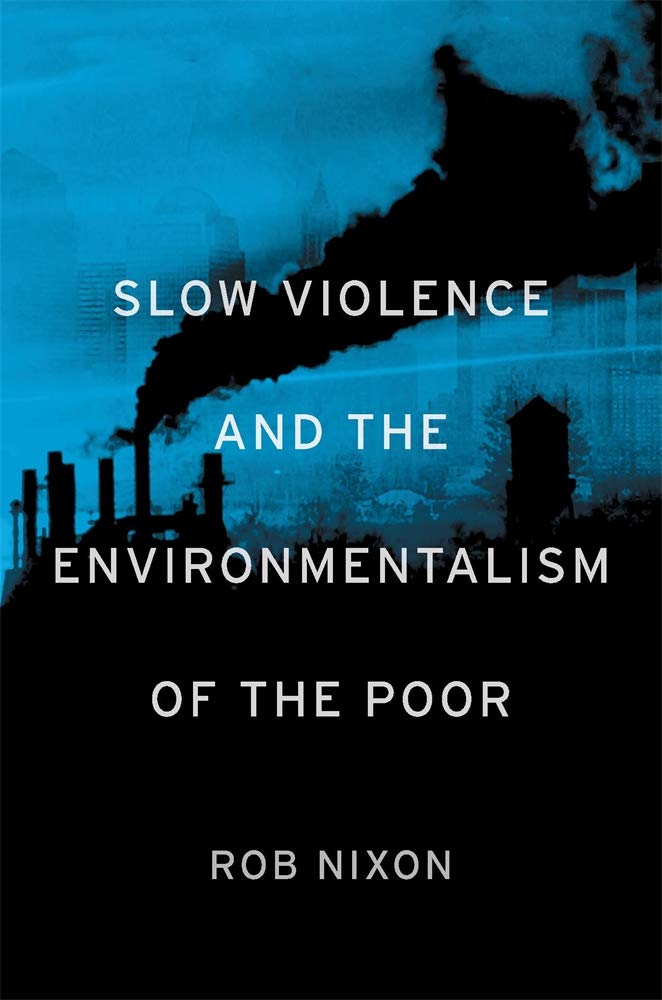
Title
Slow Violence And The Environmentalism Of The Poor
Sold by Ergodebooks, an authorized reseller.
Returns accepted within 30 days | support@ergodebooks.com
Shipping Information
- Free Standard Shipping — United States only
- Processing Time: 3–5 business days
- Estimated Delivery: 6–10 business days after dispatch
- Double-boxed, fully insured & discreetly packaged
- Tracking number sent via email once dispatched
Returns & Refund
Returns accepted within 30 days of delivery.
Damaged or Defective Item
Free return shipping + replacement or full refund
Wrong Item Received
Free return shipping + replacement or full refund
Change of Mind
Return shipping at customer's expense · 25% restocking fee applies
Payment Option

The Violence Wrought By Climate Change, Toxic Drift, Deforestation, Oil Spills, And The Environmental Aftermath Of War Takes Place Gradually And Often Invisibly. Using The Innovative Concept Of Slow Violence To Describe These Threats, Rob Nixon Focuses On The Inattention We Have Paid To The Attritional Lethality Of Many Environmental Crises, In Contrast With The Sensational, Spectacledriven Messaging That Impels Public Activism Today. Slow Violence, Because It Is So Readily Ignored By A Hardcharging Capitalism, Exacerbates The Vulnerability Of Ecosystems And Of People Who Are Poor, Disempowered, And Often Involuntarily Displaced, While Fueling Social Conflicts That Arise From Desperation As Lifesustaining Conditions Erode.In A Book Of Extraordinary Scope, Nixon Examines A Cluster Of Writeractivists Affiliated With The Environmentalism Of The Poor In The Global South. By Approaching Environmental Justice Literature From This Transnational Perspective, He Exposes The Limitations Of The National And Local Frames That Dominate Environmental Writing. And By Skillfully Illuminating The Strategies These Writeractivists Deploy To Give Dramatic Visibility To Environmental Emergencies, Nixon Invites His Readers To Engage With Some Of The Most Pressing Challenges Of Our Time.
⚠️ WARNING (California Proposition 65):
This product may contain chemicals known to the State of California to cause cancer, birth defects, or other reproductive harm.
For more information, please visit www.P65Warnings.ca.gov.
- Q: How many pages does this book have? A: This book has three hundred sixty-eight pages. It offers an in-depth exploration of environmental issues and social justice.
- Q: What is the binding type of the book? A: The book is paperback bound. This makes it lightweight and easy to carry around.
- Q: What are the dimensions of the book? A: The book measures six inches in length, one inch in width, and nine point twenty-five inches in height. These dimensions make it a standard-sized paperback.
- Q: Who is the author of this book? A: The author is Rob Nixon. He is known for his work on environmentalism and social justice.
- Q: What genre does this book belong to? A: This book belongs to the Environmental Economics genre. It delves into the intersections of environmental issues and economic factors.
- Q: How do I read this book? A: You can read this book like any standard paperback. It's suitable for anyone interested in environmental issues and social justice.
- Q: Is this book suitable for beginners in environmental studies? A: Yes, this book is suitable for beginners. It provides a comprehensive overview of complex topics in an accessible manner.
- Q: What age group is this book appropriate for? A: This book is appropriate for adults and older teens. It deals with mature themes related to social and environmental justice.
- Q: How should I store this book? A: You should store this book in a cool, dry place. Avoid exposing it to direct sunlight to prevent fading.
- Q: Can I clean the book if it gets dirty? A: Yes, you can clean the book gently with a soft, dry cloth. Avoid using water or cleaning solutions.
- Q: What should I do if the book arrives damaged? A: If the book arrives damaged, you should contact the seller for a return or exchange. Make sure to keep the original packaging.
- Q: Is there a warranty for this book? A: No, there is typically no warranty for books. However, you can check the return policy for your purchase.
- Q: What if I don't like the book? A: If you don't like the book, you can return it according to the seller's return policy. Be sure to review their guidelines.
- Q: Is this book available in digital format? A: Yes, this book may be available in digital format. Check online retailers for eBook options.
- Q: How does this book compare to other environmental studies? A: This book offers a unique perspective on environmental issues, focusing on the concept of 'slow violence.' It's distinct from other works that may emphasize immediate crises.
- Q: What kind of environmental issues does this book address? A: The book addresses issues like climate change, deforestation, and social conflicts related to environmental crises. It highlights the often-invisible impacts of these threats.