
Title
SLUM GROWTH: IN THE RAPIDLY URBANIZING DEVELOPING WORLD,Used
Sold by Ergodebooks, an authorized reseller.
Returns accepted within 30 days | support@ergodebooks.com
Shipping Information
- Free Standard Shipping — United States only
- Processing Time: 3–5 business days
- Estimated Delivery: 6–10 business days after dispatch
- Double-boxed, fully insured & discreetly packaged
- Tracking number sent via email once dispatched
Returns & Refund
Returns accepted within 30 days of delivery.
Damaged or Defective Item
Free return shipping + replacement or full refund
Wrong Item Received
Free return shipping + replacement or full refund
Change of Mind
Return shipping at customer's expense · 25% restocking fee applies
Payment Option

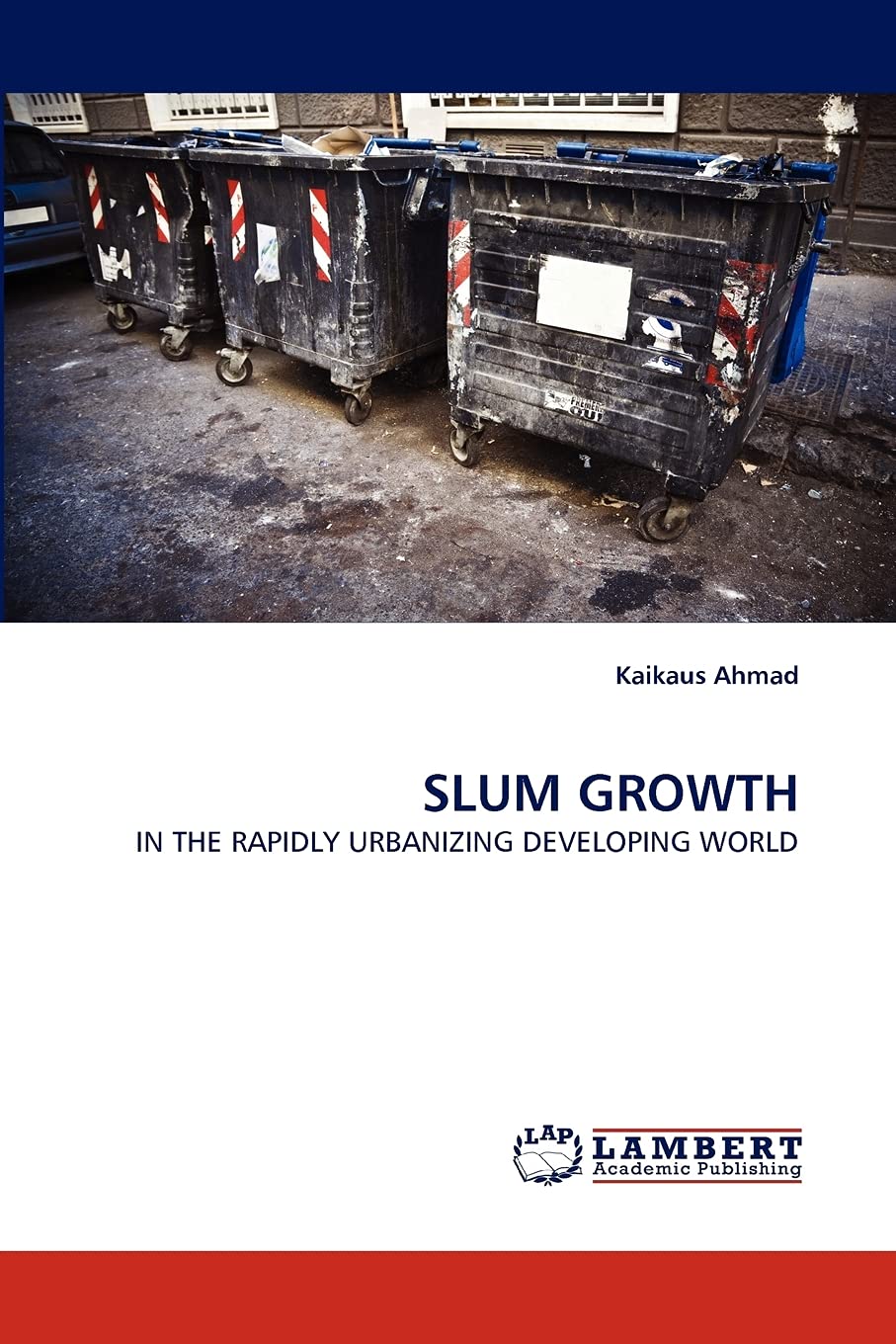
World is more urban than rural now. The UN predicts that the developing regions will account for 93 percent of urban growth during this century. Alarmingly, developing world contains more than one third of its urban population in slums. This raises concern from the growth as well as from the distribution point of view. Concern arises as to whether the process is affecting growth thus creating higher rate of slum population or whether the rising rate is the outcome of distribution and equity problem. Slum growth rate, which was ignored by previous studies as an indicator of urbanization, is important because it simultaneously shows the benefit and cost of urbanization. If the slum population compared to the urban population decreases, it shows the benefit of urbanization whereas if it increases, it shows the cost of urbanization. Several indicators to the process of urbanization were ignored previously. This study identifies several crosscountry contributing factors of urbanization in the developing nations arguing that the slum population is a better indicator of urbanization in terms of growth and distribution perspectives as well as from cost and benefit standpoints.
⚠️ WARNING (California Proposition 65):
This product may contain chemicals known to the State of California to cause cancer, birth defects, or other reproductive harm.
For more information, please visit www.P65Warnings.ca.gov.