
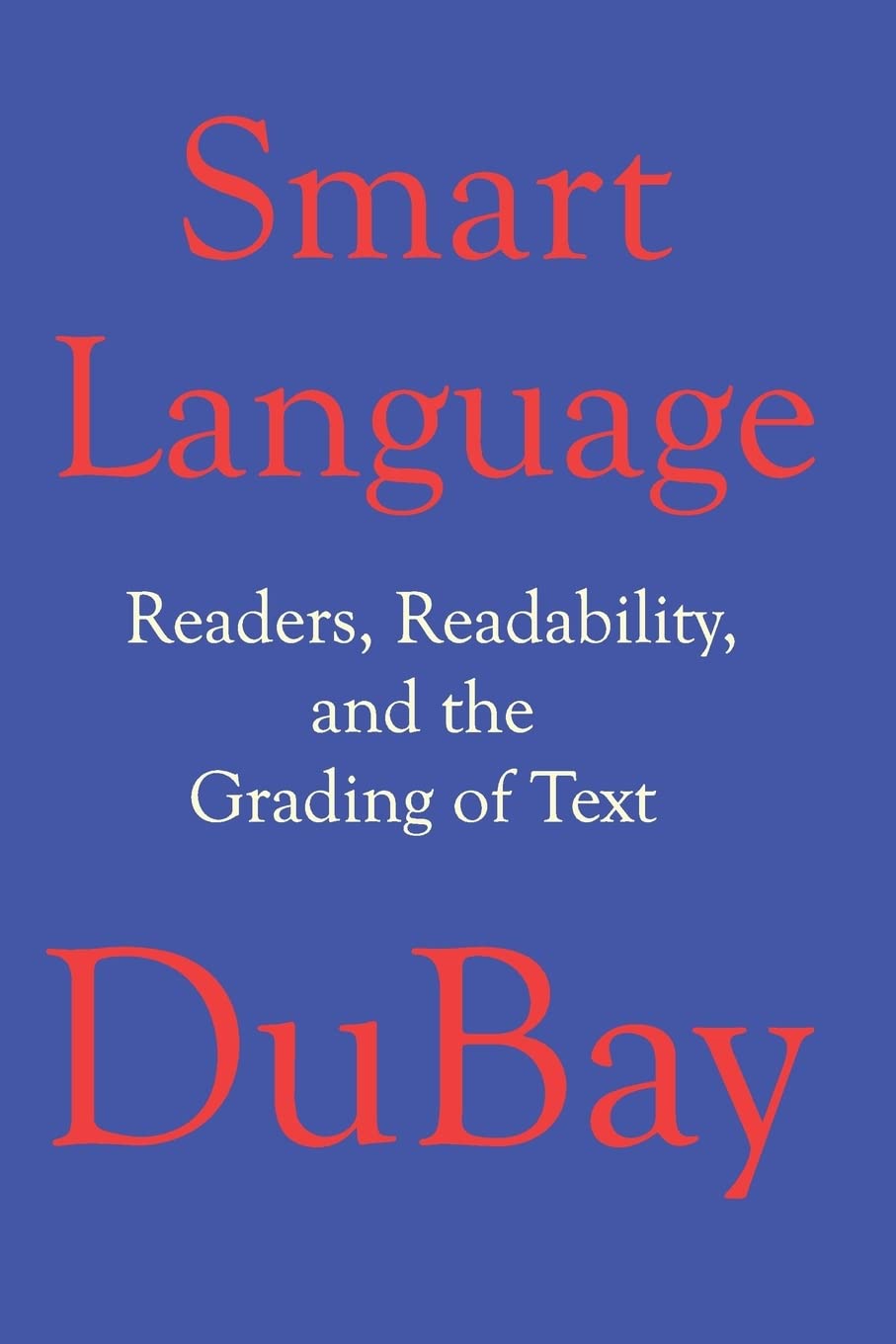
Title
Smart Language: Readers, Readability, And The Grading Of Text,New
Sold by Ergodebooks, an authorized reseller.
Returns accepted within 30 days | support@ergodebooks.com
Shipping Information
- Free Standard Shipping — United States only
- Processing Time: 3–5 business days
- Estimated Delivery: 6–10 business days after dispatch
- Double-boxed, fully insured & discreetly packaged
- Tracking number sent via email once dispatched
Returns & Refund
Returns accepted within 30 days of delivery.
Damaged or Defective Item
Free return shipping + replacement or full refund
Wrong Item Received
Free return shipping + replacement or full refund
Change of Mind
Return shipping at customer's expense · 25% restocking fee applies
Payment Option

Smart Language Is The Story Of The Readability Formulas, Standard Tools In Education, Government, And Business. Early In The 20Th Century, Education In The U.S. Was Confronted By A Changing School Population, Especially An Increase In The Second Generation Of Immigrants In Secondary Schools. In Response, There Was A New Reliance On Scientific Tools For Studying And Objectively Measuring Educational Problems. This Effort Engaged The Best Minds Of The Age, Including Edward Thorndike, William Gray, And Edgar Dale. Their Work Led To The First Readability Formulas. In 1935, Surveys Revealed That The Average Readers In The U.S. Were Adults Of Limited Reading Ability. New Studies Showed How More Readable Text Increases Their Readership And Comprehension. Today, The Readability Formulas Continue To Benefit Millions Of Readers Throughout The World In Many Languages. William H. Dubay Is A Professional Writer With 40 Years Experience In Public Relations And Technical Communication.
⚠️ WARNING (California Proposition 65):
This product may contain chemicals known to the State of California to cause cancer, birth defects, or other reproductive harm.
For more information, please visit www.P65Warnings.ca.gov.
- Q: What is the size of the book? A: The book measures six inches in length, zero point thirty-six inches in width, and nine point zero two inches in height.
- Q: How many pages does the book have? A: The book contains one hundred fifty-eight pages, providing a comprehensive exploration of readability formulas.
- Q: What type of binding does the book have? A: The book is available in paperback binding, which is suitable for casual reading and portability.
- Q: Who is the author of the book? A: The book is authored by William H. DuBay, who has over forty years of experience in public relations and technical communication.
- Q: What is the genre of this book? A: The book falls under the category of Assessment, focusing on readability in educational and professional contexts.
- Q: How can I use this book effectively? A: You can use this book to understand and apply readability formulas to enhance text comprehension and readership.
- Q: Is this book suitable for educators? A: Yes, this book is ideally suited for educators who want to improve their understanding of text readability in their teaching.
- Q: Can I use this book for self-study? A: Yes, individuals interested in readability and text evaluation can use this book for self-study and reference.
- Q: What age group is this book appropriate for? A: The book is appropriate for adults and educators, particularly those involved in teaching or assessing reading skills.
- Q: How should I store this book? A: Store the book in a cool, dry place, away from direct sunlight to prevent fading and maintain its condition.
- Q: Are there any special care instructions for the book? A: To keep the book in good condition, avoid exposing it to moisture and handle it with clean hands to prevent dirt transfer.
- Q: Can I return the book if I'm not satisfied? A: Yes, you can return the book if it arrives damaged or if it does not meet your expectations, following the seller's return policy.
- Q: What should I do if I receive a damaged book? A: If you receive a damaged book, contact the seller immediately to report the issue and initiate a return or exchange.
- Q: Is there a warranty for the book? A: Typically, books do not come with a warranty, but check with the seller for specific return or replacement policies.
- Q: How does this book compare to other readability resources? A: This book offers a unique historical perspective on readability formulas compared to more technical resources available.
- Q: Is this book suitable for beginners in readability studies? A: Yes, this book is accessible for beginners and provides foundational knowledge about readability and its applications.