If you have any questions, you are always welcome to contact us. We'll get back to you as soon as possible, withing 24 hours on weekdays.
Customer service
All questions about your order, return and delivery must be sent to our customer service team by e-mail at yourstore@yourdomain.com
Sale & Press
If you are interested in selling our products, need more information about our brand or wish to make a collaboration, please contact us at press@yourdomain.com
Help
If you have any questions, you are always welcome to contact us. We'll get back to you as soon as possible, withing 24 hours on weekdays.
Customer service
All questions about your order, return and delivery must be sent to our customer service team by e-mail at yourstore@yourdomain.com
Sale & Press
If you are interested in selling our products, need more information about our brand or wish to make a collaboration, please contact us at press@yourdomain.com
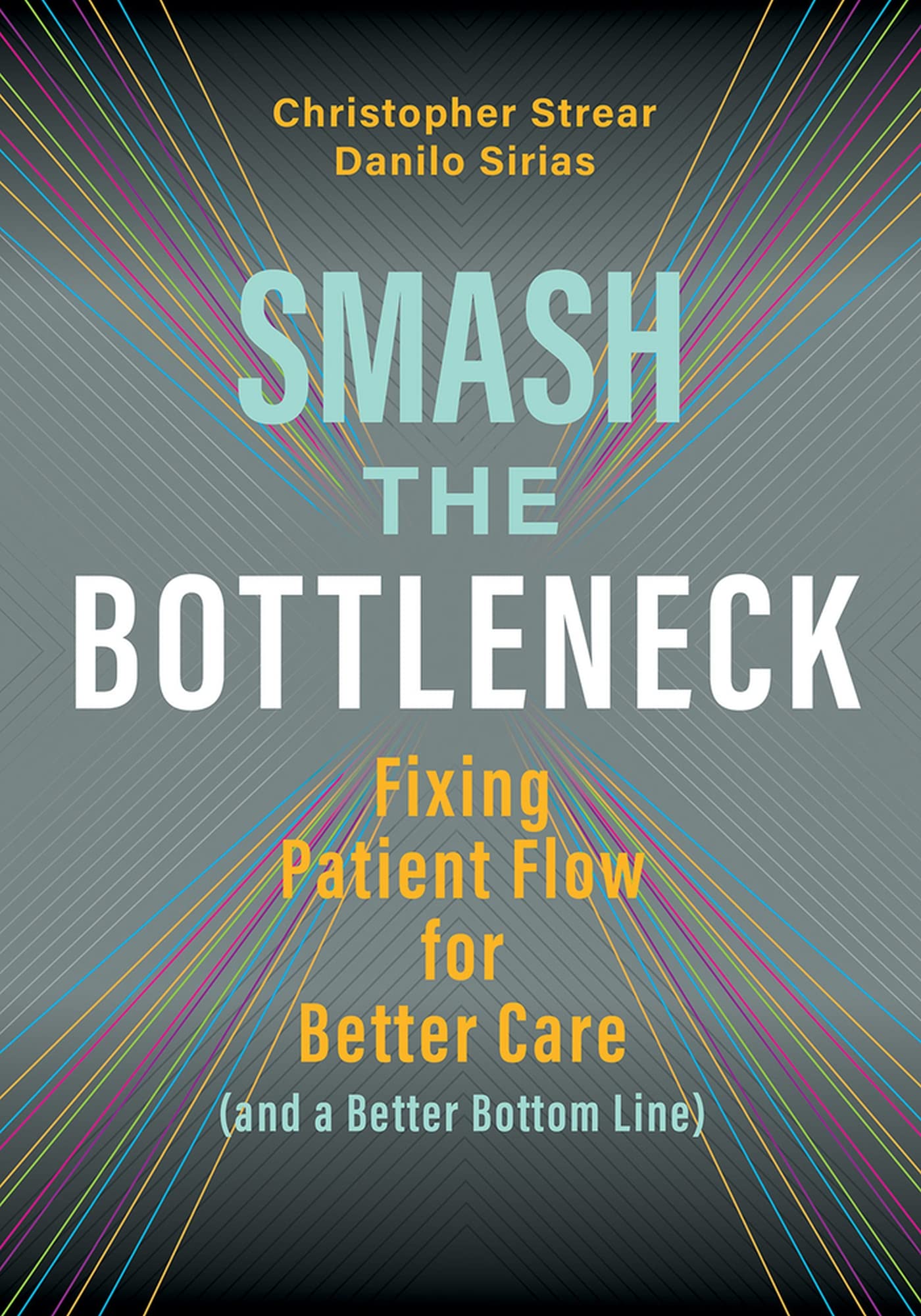
Overcrowding is endemic in most US hospitals, and untangling patient flow is a top priority for todays healthcare leaders. Smash the Bottleneck: Fixing Patient Flow for Better Care (and a Better Bottom Line) lays out a concrete methodology for getting to the root of patientflow problems and addressing themquickly. The book highlights a continuous improvement methodology known as the Theory of Constraints (TOC), which emphasizes identifying, optimizing, and breaking down bottlenecks to improve overall system performance. Introduced in Eliyahu M. Goldratts seminal business book The Goal, this method and its concepts have since been adopted by Fortune 500 companies worldwide. Uniquely, the authors tie TOC to healthcare delivery from a practitioners point of view. They provide numerous examples of common health system bottlenecks to illustrate how the methodology can be applied in readers own organizations. The book also showcases precisely how TOC can help: decrease length of stay in inpatient units; coordinate resources and break down organizational silos; reduce overcrowding and increase throughput in emergency departments; and shorten wait times in primary and specialty care clinics, imaging centers, and surgery centers. Poor patient flow has grave implications for quality of care, patient satisfaction, provider wellbeing, and an organizations bottom line. Discover the practical knowledge and tools that you can use to break bottlenecks and enact meaningful, lasting change.
⚠️ WARNING (California Proposition 65):
This product may contain chemicals known to the State of California to cause cancer,
birth defects, or other reproductive harm.
For MAP (Minimum Advertised Price) violations and Intellectual Property (IP) or Trademark concerns, please contact:
support@ergodebooks.com
⚠️ California Proposition 65 Warning: Some products sold on this website may expose you to chemicals known to the State of California to cause cancer, birth defects, or other reproductive harm. For more information, visit www.P65Warnings.ca.gov.