If you have any questions, you are always welcome to contact us. We'll get back to you as soon as possible, withing 24 hours on weekdays.
Customer service
All questions about your order, return and delivery must be sent to our customer service team by e-mail at yourstore@yourdomain.com
Sale & Press
If you are interested in selling our products, need more information about our brand or wish to make a collaboration, please contact us at press@yourdomain.com
Help
If you have any questions, you are always welcome to contact us. We'll get back to you as soon as possible, withing 24 hours on weekdays.
Customer service
All questions about your order, return and delivery must be sent to our customer service team by e-mail at yourstore@yourdomain.com
Sale & Press
If you are interested in selling our products, need more information about our brand or wish to make a collaboration, please contact us at press@yourdomain.com
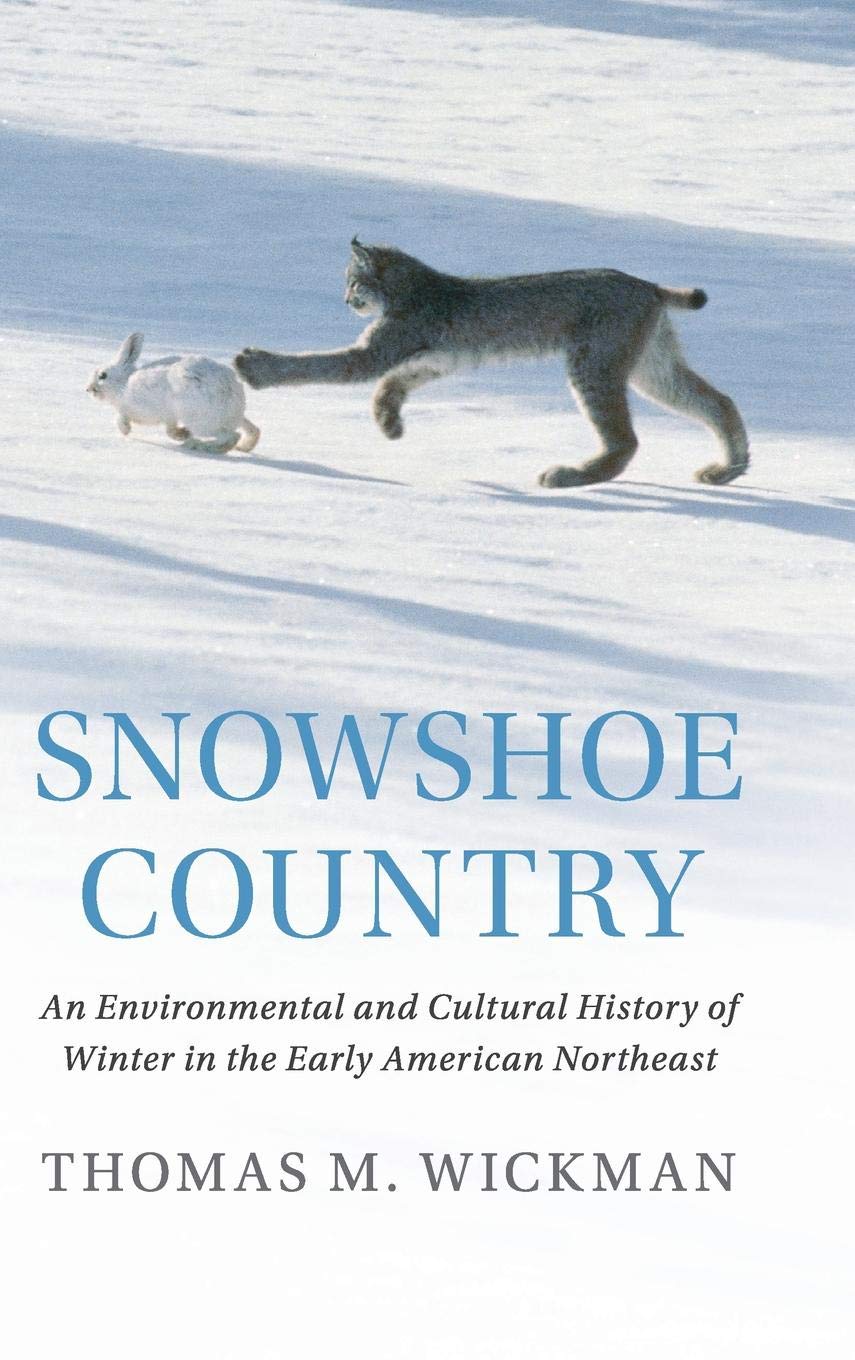
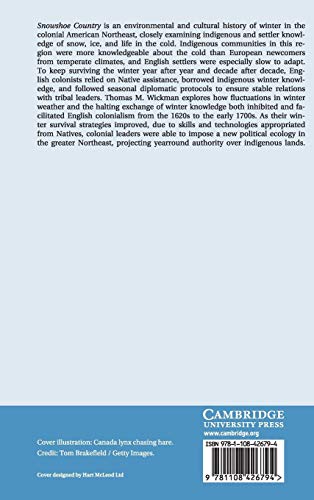
Snowshoe Country is an environmental and cultural history of winter in the colonial Northeast, closely examining indigenous and settler knowledge of snow, ice, and life in the cold. Indigenous communities in this region were more knowledgeable about the cold than European newcomers from temperate climates, and English settlers were especially slow to adapt. To keep surviving the winter year after year and decade after decade, English colonists relied on Native assistance, borrowed indigenous winter knowledge, and followed seasonal diplomatic protocols to ensure stable relations with tribal leaders. Thomas M. Wickman explores how fluctuations in winter weather and the halting exchange of winter knowledge both inhibited and facilitated English colonialism from the 1620s to the early 1700s. As their winter survival strategies improved, due to skills and technologies appropriated from Natives, colonial leaders were able to impose a new political ecology in the greater Northeast, projecting yearround authority over indigenous lands.
⚠️ WARNING (California Proposition 65):
This product may contain chemicals known to the State of California to cause cancer,
birth defects, or other reproductive harm.
For MAP (Minimum Advertised Price) violations and Intellectual Property (IP) or Trademark concerns, please contact:
support@ergodebooks.com
⚠️ California Proposition 65 Warning: Some products sold on this website may expose you to chemicals known to the State of California to cause cancer, birth defects, or other reproductive harm. For more information, visit www.P65Warnings.ca.gov.