
Title
So Paulo In The Brazilian Federation, 18891937,Used
Sold by Ergodebooks, an authorized reseller.
Returns accepted within 30 days | support@ergodebooks.com
Shipping Information
- Free Standard Shipping — United States only
- Processing Time: 3–5 business days
- Estimated Delivery: 6–10 business days after dispatch
- Double-boxed, fully insured & discreetly packaged
- Tracking number sent via email once dispatched
Returns & Refund
Returns accepted within 30 days of delivery.
Damaged or Defective Item
Free return shipping + replacement or full refund
Wrong Item Received
Free return shipping + replacement or full refund
Change of Mind
Return shipping at customer's expense · 25% restocking fee applies
Payment Option

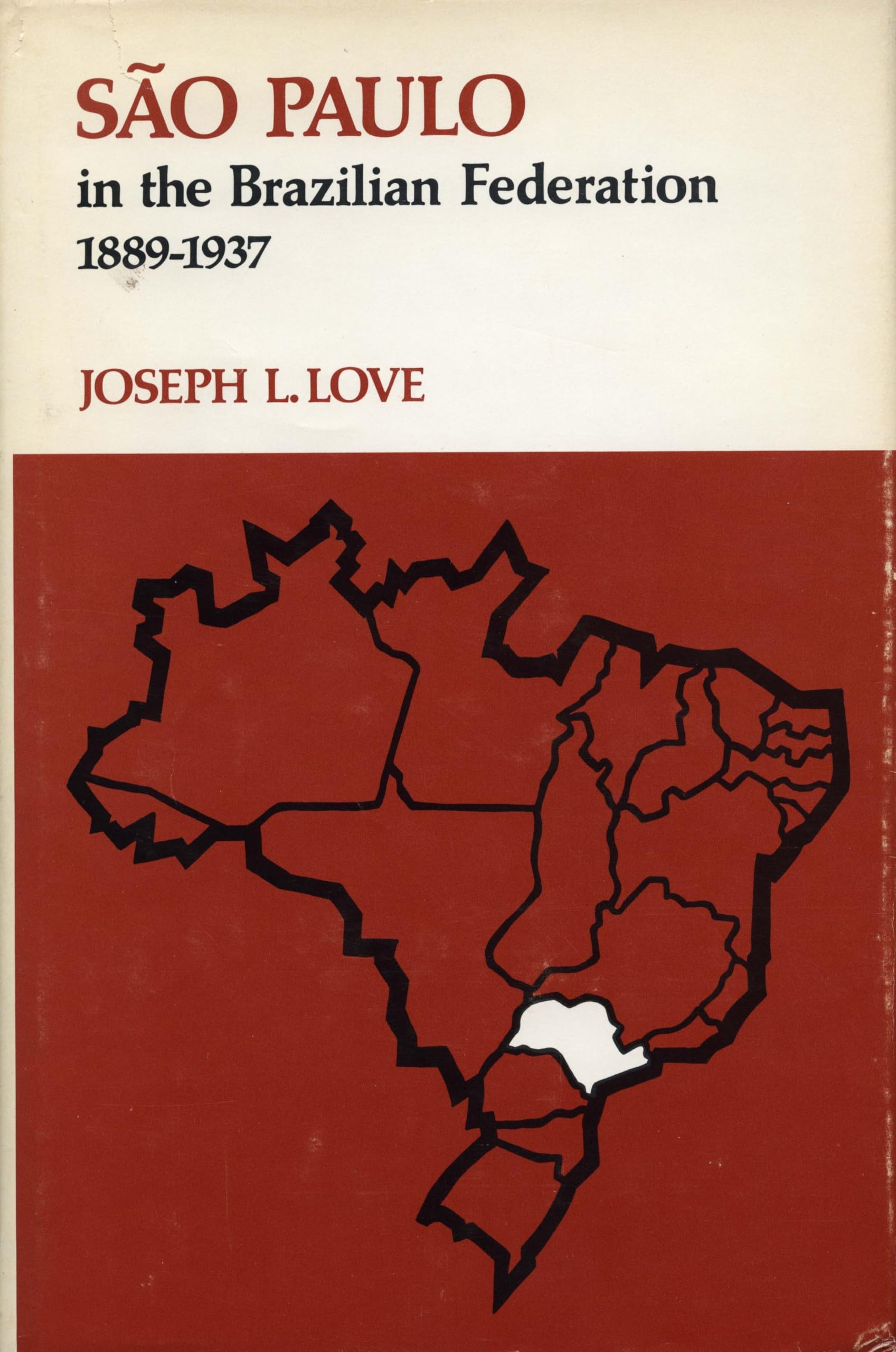
This is the third of three independent but coordinated studies on Brazilian regionalism from the beginning of the Republic to the establishment of Getulio Vargas's Estado Novo in 1937. The first volume, on the state of Minas Gerais by John D. Wirth, was published in 1977; the second volume, on the state of Pernambuco by Robert M. Levine, was published in 1978. These studies present the first overall survey of the politics, economy, and society of these key regions and offer important new data and interpretations on political elites, fiscal systems, and social integration.The authors examine the complex dynamics of statelevel social and political structures in three leading statesSo Paolo in the CenterSouth, which received the greatest benefits from export growth; politically important Minas Gerais, situated between the prosperous southern states and the impoverished Northeast; and Pernambuco, the Northeast's most important state. The studies trace the shift of power from the centralized Empire to the states and then follow the course of the Union's gradual assumption of authority and responsibility over the ensuing half century.They are organized on thematic rather than chronological lines, but each author uses a chronology appropriate to his own state while relating regional events to those at the national level and those in other states. Similarities and differences in identically defined political elites are thrown into relief by the comparative analysis of quantitative biographical data of the three state elitesrevealing not only who they were, but what they wanted, what they tried to get, and what they settled for.So Paulo's story is one of rapid economic expansion, first in agriculture and then in manufacturing. Its political elitesrelying on massive exports and foreign borrowingpioneered in state intervention in economy and society, and in the process confused the interests of Brazil with their own.
⚠️ WARNING (California Proposition 65):
This product may contain chemicals known to the State of California to cause cancer, birth defects, or other reproductive harm.
For more information, please visit www.P65Warnings.ca.gov.