
Title
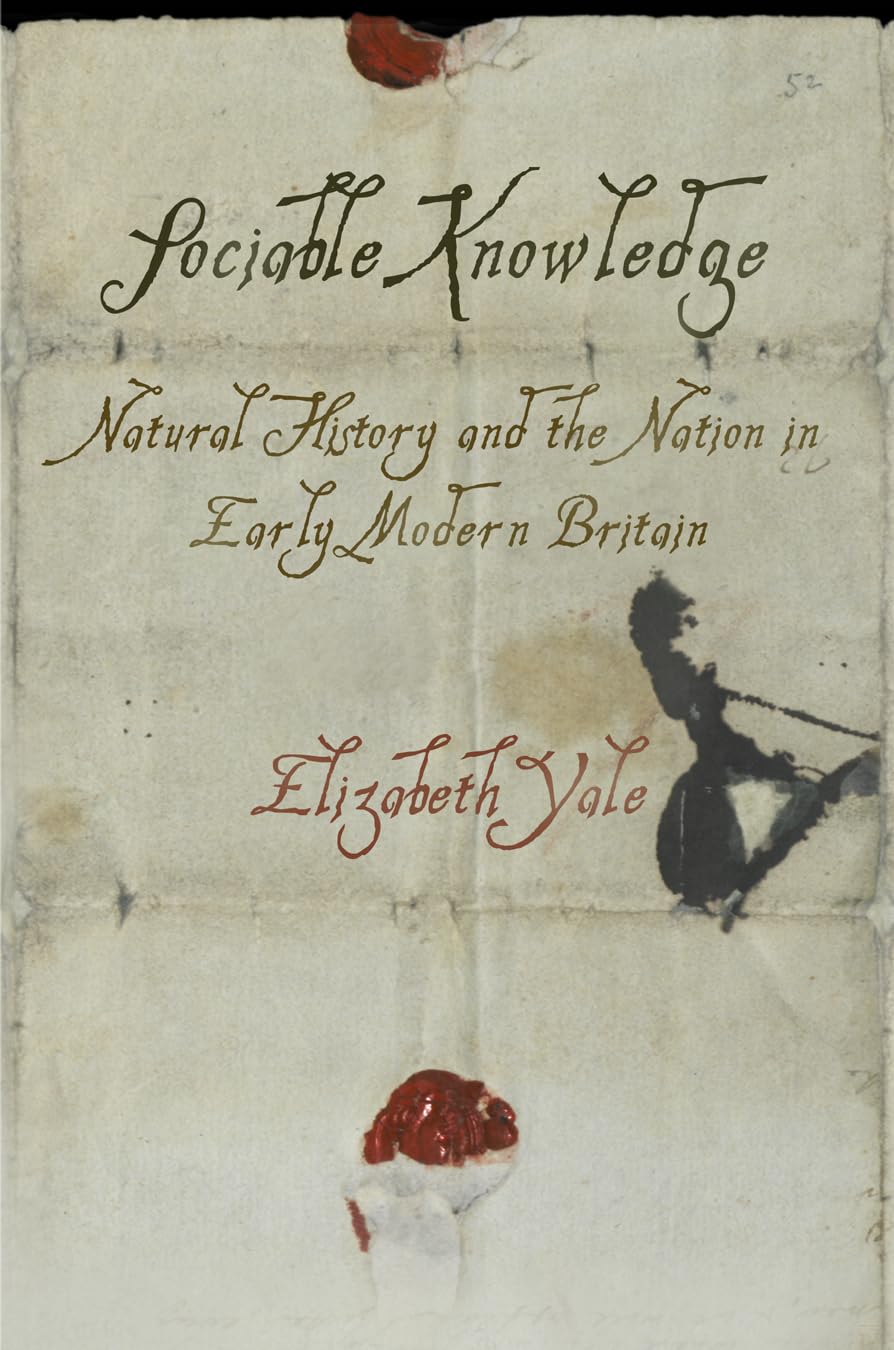
Sociable Knowledge: Natural History And The Nation In Early Modern Britain (Material Texts),New
Sold by Ergodebooks, an authorized reseller.
Returns accepted within 30 days | support@ergodebooks.com
Shipping Information
- Free Standard Shipping — United States only
- Processing Time: 3–5 business days
- Estimated Delivery: 6–10 business days after dispatch
- Double-boxed, fully insured & discreetly packaged
- Tracking number sent via email once dispatched
Returns & Refund
Returns accepted within 30 days of delivery.
Damaged or Defective Item
Free return shipping + replacement or full refund
Wrong Item Received
Free return shipping + replacement or full refund
Change of Mind
Return shipping at customer's expense · 25% restocking fee applies
Payment Option

Working with the technologies of pen and paper, scissors and glue, naturalists in early modern England, Scotland, and Wales wrote, revised, and recombined their words, sometimes over a period of many years, before fixing them in printed form. They built up their stocks of papers by sharing these materials through postal and less formal carrier services. They exchanged letters, loose notes, drawings and plans, commonplace books, as well as lengthy treatises, everexpanding repositories for new knowledge about nature and history as it accumulated through reading, observation, correspondence, and conversation. These textual collections grew alongside cabinets of natural specimens, antiquarian objects, and other curiositiesinsects pinned in boxes, leaves and flowers pressed in books, rocks and fossils, ancient coins and amulets, and drafts of stone monuments and inscriptions. The goal of all this collecting and sharing, Elizabeth Yale claims, was to create channels through which naturalists and antiquaries could pool their fragmented knowledge of the hyperlocal and curious into an understanding and representation of Britain as a unified historical and geographical space.Sociable Knowledge pays careful attention to the concrete and the particular: the manuscript almost lost off the back of the mail carrier's cart, the proper ways to package live plants for transport, the kin relationships through which research questionnaires were distributed. The book shows how naturalists used print instruments to garner financing and content from correspondents and how they relied upon research travelgoing out into the fieldto make and refresh social connections. By moving beyond an easy distinction between print and scribal cultures, Yale reconstructs not just the collaborations of seventeenthcentury practitioners who were dispersed across city and country, but also the ways in which the totality of their exchange practices structured early modern scientific knowledge.
⚠️ WARNING (California Proposition 65):
This product may contain chemicals known to the State of California to cause cancer, birth defects, or other reproductive harm.
For more information, please visit www.P65Warnings.ca.gov.