
Title
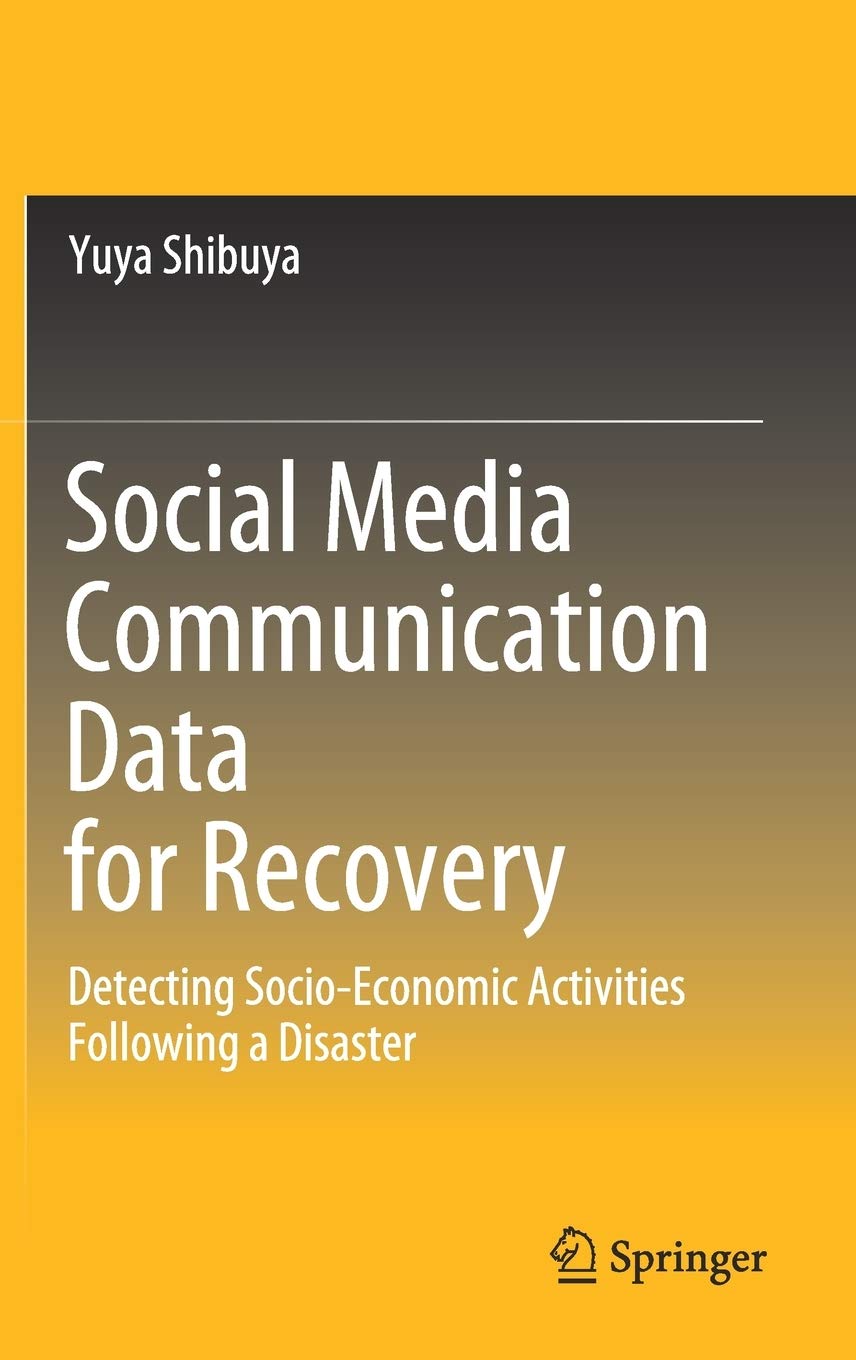
Social Media Communication Data for Recovery: Detecting SocioEconomic Activities Following a Disaster,New
Sold by Ergodebooks, an authorized reseller.
Returns accepted within 30 days | support@ergodebooks.com
Shipping Information
- Free Standard Shipping — United States only
- Processing Time: 3–5 business days
- Estimated Delivery: 6–10 business days after dispatch
- Double-boxed, fully insured & discreetly packaged
- Tracking number sent via email once dispatched
Returns & Refund
Returns accepted within 30 days of delivery.
Damaged or Defective Item
Free return shipping + replacement or full refund
Wrong Item Received
Free return shipping + replacement or full refund
Change of Mind
Return shipping at customer's expense · 25% restocking fee applies
Payment Option

This book explores the possibility of using social media data for detecting socioeconomic recovery activities. In the last decade, there have been intensive research activities focusing on social media during and after disasters. This approach, which views peoples communication on social media as a sensor for realtime situations, has been widely adopted as the people as sensor approach. Furthermore, to improve recovery efforts after largescale disasters, detecting communities realtime recovery situations is essential, since conventional socioeconomic recovery indicators, such as governmental statistics, are not published in real time. Thanks to its timeliness, using social media data can fill the gap. Motivated by this possibility, this book especially focuses on the relationships between peoples communication on Twitter and Facebook pages, and socioeconomic recovery activities as reflected in the usedcar market data and the housing market data in the case of two major disasters: the Great East Japan Earthquake and Tsunami of 2011 and Hurricane Sandy in 2012. The book pursues an interdisciplinary approach, combining e.g. disaster recovery studies, crisis informatics, and economics. In terms of its contributions, firstly, the book sheds light on the people as sensors approach for detecting socioeconomic recovery activities, which has not been thoroughly studied to date but has the potential to improve situation awareness during the recovery phase. Secondly, the book proposes new socioeconomic recovery indicators: usedcar market data and housing market data. Thirdly, in the context of using social media during the recovery phase, the results demonstrate the importance of distinguishing between social media data posted both by people who are at or near disasterstricken areas and by those who are farther away.
⚠️ WARNING (California Proposition 65):
This product may contain chemicals known to the State of California to cause cancer, birth defects, or other reproductive harm.
For more information, please visit www.P65Warnings.ca.gov.