
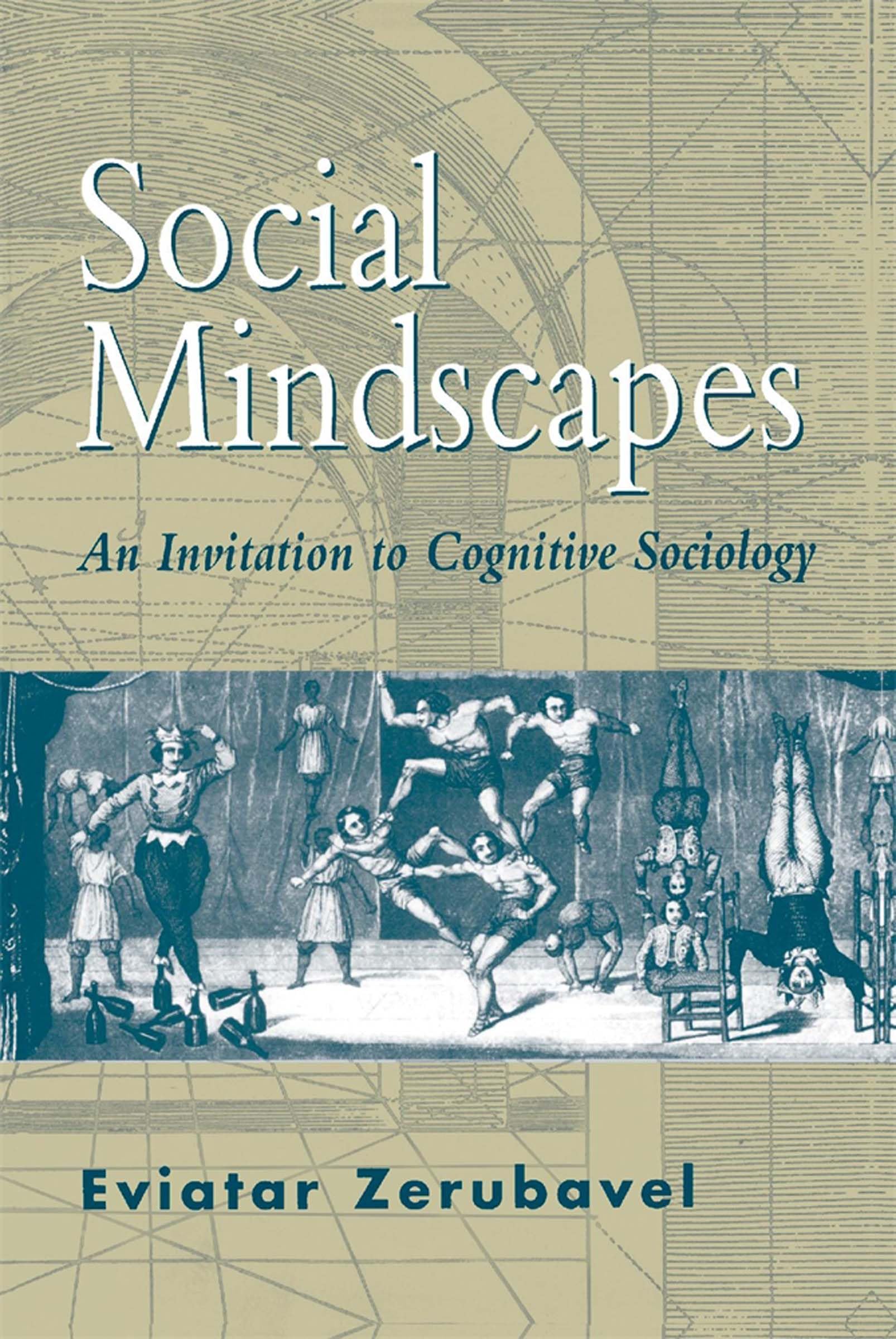
Title
Social Mindscapes: An Invitation To Cognitive Sociology,New
Sold by Ergodebooks, an authorized reseller.
Returns accepted within 30 days | support@ergodebooks.com
Shipping Information
- Free Standard Shipping — United States only
- Processing Time: 3–5 business days
- Estimated Delivery: 6–10 business days after dispatch
- Double-boxed, fully insured & discreetly packaged
- Tracking number sent via email once dispatched
Returns & Refund
Returns accepted within 30 days of delivery.
Damaged or Defective Item
Free return shipping + replacement or full refund
Wrong Item Received
Free return shipping + replacement or full refund
Change of Mind
Return shipping at customer's expense · 25% restocking fee applies
Payment Option

Why Do We Eat Sardines, But Never Goldfish; Ducks, But Never Parrots? Why Does Adding Cheese Make A Hamburger A 'Cheeseburger' Whereas Adding Ketchup Does Not Make It A 'Ketchupburger'? By The Same Token, How Do We Determine Which Things Said At A Meeting Should Be Included In The Minutes And Which Ought To Be Considered 'Off The Record' And Officially Disregarded?In This Wideranging And Provocative Book, Eviatar Zerubavel Argues That Cognitive Science Cannot Answer These Questions, Since It Addresses Cognition On Only Two Levels: The Individual And The Universal. To Fill The Gap Between The Romantic Vision Of The Solitary Thinker Whose Thoughts Are The Product Of Unique Experience, And The Cognitivepsychological View, Which Revolves Around The Search For The Universal Foundations Of Human Cognition, Zerubavel Charts An Expansive Social Realm Of Minda Domain That Focuses On The Conventional, Normative Aspects Of The Way We Think.With Witty Anecdote And Revealing Analogy, Zerubavel Illuminates The Social Foundation Of Mental Actions Such As Perceiving, Attending, Classifying, Remembering, Assigning Meaning, And Reckoning The Time. What Takes Place Inside Our Heads, He Reminds Us, Is Deeply Affected By Our Social Environments, Which Are Typically Groups That Are Larger Than The Individual Yet Considerably Smaller Than The Human Race. Thus, We Develop A Nonuniversal Software For Thinking As Americans Or Chinese, Lawyers Or Teachers, Catholics Or Jews, Baby Boomers Or Genxers. Zerubavel Explores The Fascinating Ways In Which Thought Communities Carve Up And Classify Reality, Assign Meanings, And Perceive Things, 'Defamiliarizing' In The Process Many Takenforgranted Assumptions.
⚠️ WARNING (California Proposition 65):
This product may contain chemicals known to the State of California to cause cancer, birth defects, or other reproductive harm.
For more information, please visit www.P65Warnings.ca.gov.
- Q: How many pages does 'Social Mindscapes' have? A: One hundred seventy-six pages. This book provides a comprehensive exploration of cognitive sociology and its implications.
- Q: What is the binding type of 'Social Mindscapes'? A: The binding is paperback. This makes it lightweight and easy to carry around.
- Q: What are the dimensions of 'Social Mindscapes'? A: The dimensions are five point five one inches by zero point four four inches by eight point five inches. This size is typical for a standard paperback book.
- Q: Who is the author of 'Social Mindscapes'? A: The author is Eviatar Zerubavel. He is well-known for his work in cognitive sociology.
- Q: Which publisher released 'Social Mindscapes'? A: Harvard University Press published this book. The publisher is renowned for academic and scholarly works.
- Q: What is the main theme of 'Social Mindscapes'? A: The main theme is the intersection of cognitive science and social norms. Zerubavel examines how social environments influence our thinking.
- Q: How can I apply the concepts from 'Social Mindscapes'? A: You can apply these concepts by reflecting on how social contexts shape your own thought processes. Consider how different groups influence perception and meaning.
- Q: Is 'Social Mindscapes' suitable for general readers? A: Yes, it is suitable for general readers. While it delves into cognitive sociology, it is written in an engaging and accessible manner.
- Q: What type of reader would benefit most from 'Social Mindscapes'? A: Students and professionals in psychology or sociology would benefit most. The insights can enhance understanding of social cognition.
- Q: How should I care for my copy of 'Social Mindscapes'? A: Keep it in a dry, cool place. Avoid exposing it to excessive moisture or sunlight to preserve its condition.
- Q: Can I lend 'Social Mindscapes' to someone? A: Yes, you can lend it. Just ensure it is returned promptly to maintain its good condition.
- Q: Is 'Social Mindscapes' a good gift for someone interested in psychology? A: Yes, it makes an excellent gift for psychology enthusiasts. Its unique perspective on cognitive sociology is thought-provoking.
- Q: What if 'Social Mindscapes' arrives damaged? A: Contact the seller for a return or exchange. Most sellers provide options for damaged items.
- Q: Are there any similar books to 'Social Mindscapes'? A: Yes, books like 'Thinking, Fast and Slow' by Daniel Kahneman explore cognitive processes. These can complement your understanding of sociology.
- Q: How can I find more books like 'Social Mindscapes'? A: You can search online bookstores or libraries under cognitive sociology or psychology categories. This will yield similar titles.