
Title
Social Mobility in Europe,Used
Sold by Ergodebooks, an authorized reseller.
Returns accepted within 30 days | support@ergodebooks.com
Shipping Information
- Free Standard Shipping — United States only
- Processing Time: 3–5 business days
- Estimated Delivery: 6–10 business days after dispatch
- Double-boxed, fully insured & discreetly packaged
- Tracking number sent via email once dispatched
Returns & Refund
Returns accepted within 30 days of delivery.
Damaged or Defective Item
Free return shipping + replacement or full refund
Wrong Item Received
Free return shipping + replacement or full refund
Change of Mind
Return shipping at customer's expense · 25% restocking fee applies
Payment Option

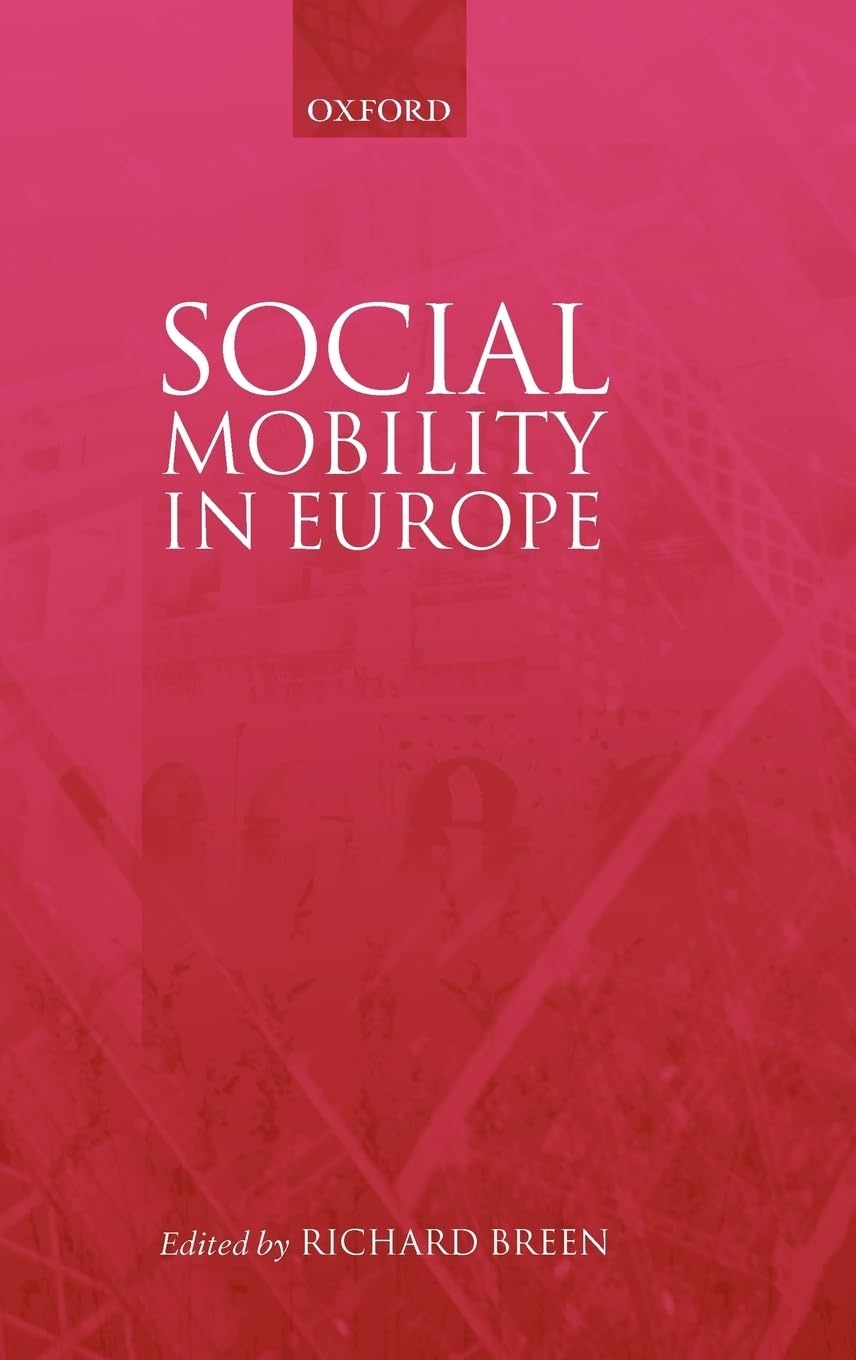
Social Mobility in Europe is the most comprehensive study to date of trends in intergenerational social mobility. It uses data from 11 European countries covering the last 30 years of the twentieth century to analyze differences between countries and changes through time.The findings call into question several longstanding views about social mobility. We find a growing similarity between countries in their class structures and rates of absolute mobility: in other words, the countries of Europe are now more alike in their flows between class origins and destinations than they were thirty years ago. However, differences between countries in social fluidity (that is, the relative chances, between people of different class origins, of being found in given class destinations) show no reduction and so there is no evidence supporting theories of modernization which predict such convergence. Our results also contradict the longstanding Featherman Jones Hauser hypothesis of a basic similarity in social fluidity in all industrial societies 'with a market economy and a nuclear family system'. There are considerable differences between countries like Israel and Sweden, where societal openness is very marked, and Italy, France, and Germany, where social fluidity rates are low. Similarly, there is a substantial difference between, for example, the Netherlands in the 1970s (which was quite closed) and in the 1990s, when it ranks among the most open societies.Mobility tables reflect many underlying processes and this makes it difficult to explain mobility and fluidity or to provide policy prescriptions. Nevertheless, those countries in which fluidity increased over the last decades of the twentieth century had not only succeeded in reducing class inequalities in educational attainment but had also restricted the degree to which, among people with the same level of education, class background affected their chances of gaining access to better class destinations.
⚠️ WARNING (California Proposition 65):
This product may contain chemicals known to the State of California to cause cancer, birth defects, or other reproductive harm.
For more information, please visit www.P65Warnings.ca.gov.