If you have any questions, you are always welcome to contact us. We'll get back to you as soon as possible, withing 24 hours on weekdays.
Customer service
All questions about your order, return and delivery must be sent to our customer service team by e-mail at yourstore@yourdomain.com
Sale & Press
If you are interested in selling our products, need more information about our brand or wish to make a collaboration, please contact us at press@yourdomain.com
Help
If you have any questions, you are always welcome to contact us. We'll get back to you as soon as possible, withing 24 hours on weekdays.
Customer service
All questions about your order, return and delivery must be sent to our customer service team by e-mail at yourstore@yourdomain.com
Sale & Press
If you are interested in selling our products, need more information about our brand or wish to make a collaboration, please contact us at press@yourdomain.com
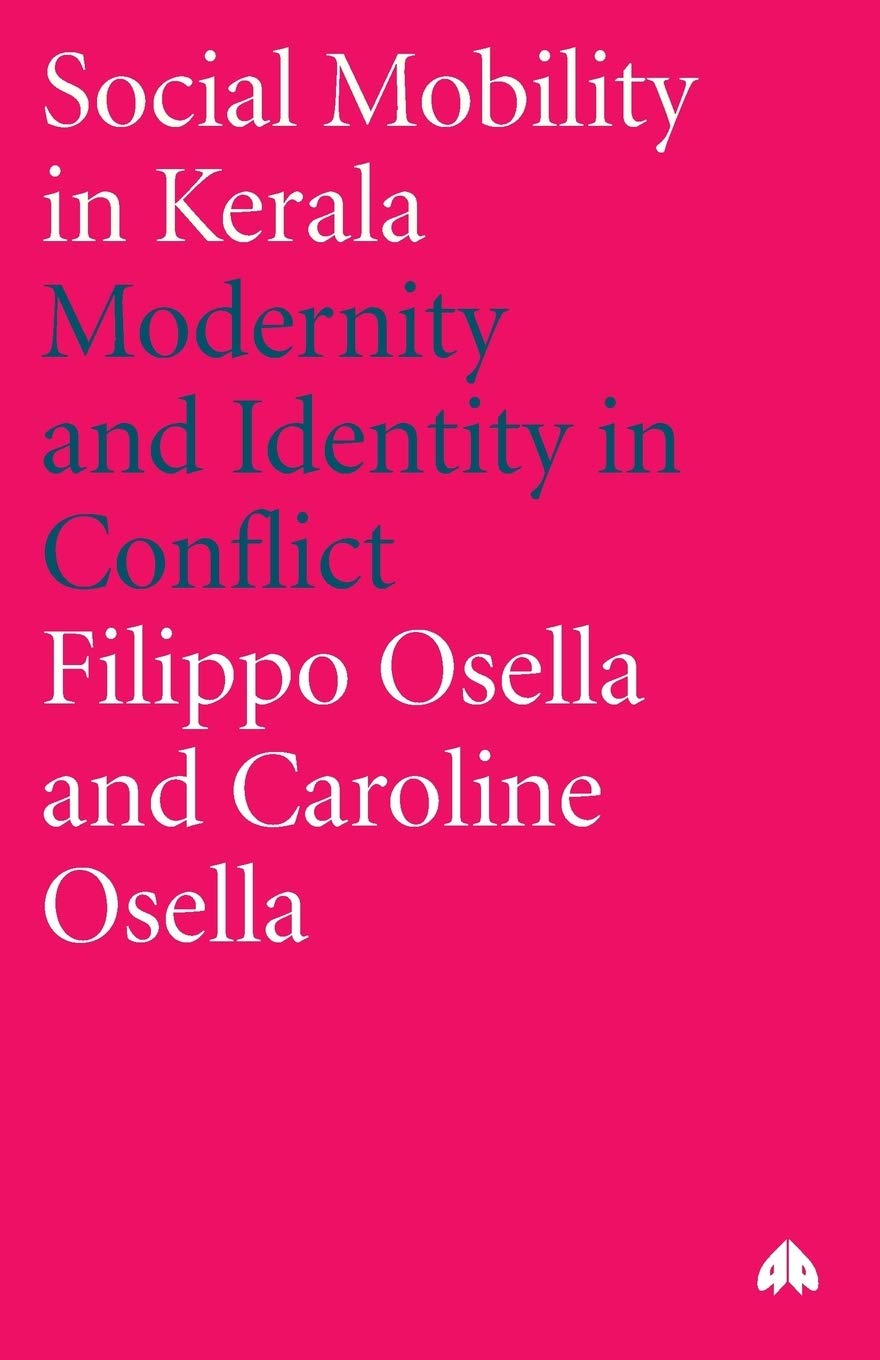
The Izhavas are an exuntouchable community in the southern Indian state of Kerala. Politically and economically weak, stigmatised as 'toddy tappers' and 'devil dancers', and considered unapproachable by clean caste Hindus, a century ago Izhavas were associated with other manuallabouring untouchable castes. In recent decades they have sought to improve their position by accumulating economic, symbolic and cultural capital through employment, religion, politics, migration, marriage, education and have tried to assert their right to mobility, often in the face of opposition from their high status Christian and Nayar neighbours. This study examines how Izhavas, through repudiation of their nineteenthcentury identity and search for mobility, have come into complex relationships with modernity, colonialism and globalisation. Filippo Osella and Caroline Osella highlight the complexities and contradictions of modern identity, both locally and globally. The authors' approach builds upon and goes beyond a south Asian focus, showing how the Izhavas represent the rise of formerly stigmatised groups who remain at the same time trapped by stereotype and material disadvantage. Absolute mobility, they argue, has not led to relative mobility within a society which remains stratified and prone to new forms of social exclusion.
⚠️ WARNING (California Proposition 65):
This product may contain chemicals known to the State of California to cause cancer,
birth defects, or other reproductive harm.
For MAP (Minimum Advertised Price) violations and Intellectual Property (IP) or Trademark concerns, please contact:
support@ergodebooks.com
⚠️ California Proposition 65 Warning: Some products sold on this website may expose you to chemicals known to the State of California to cause cancer, birth defects, or other reproductive harm. For more information, visit www.P65Warnings.ca.gov.