
Title
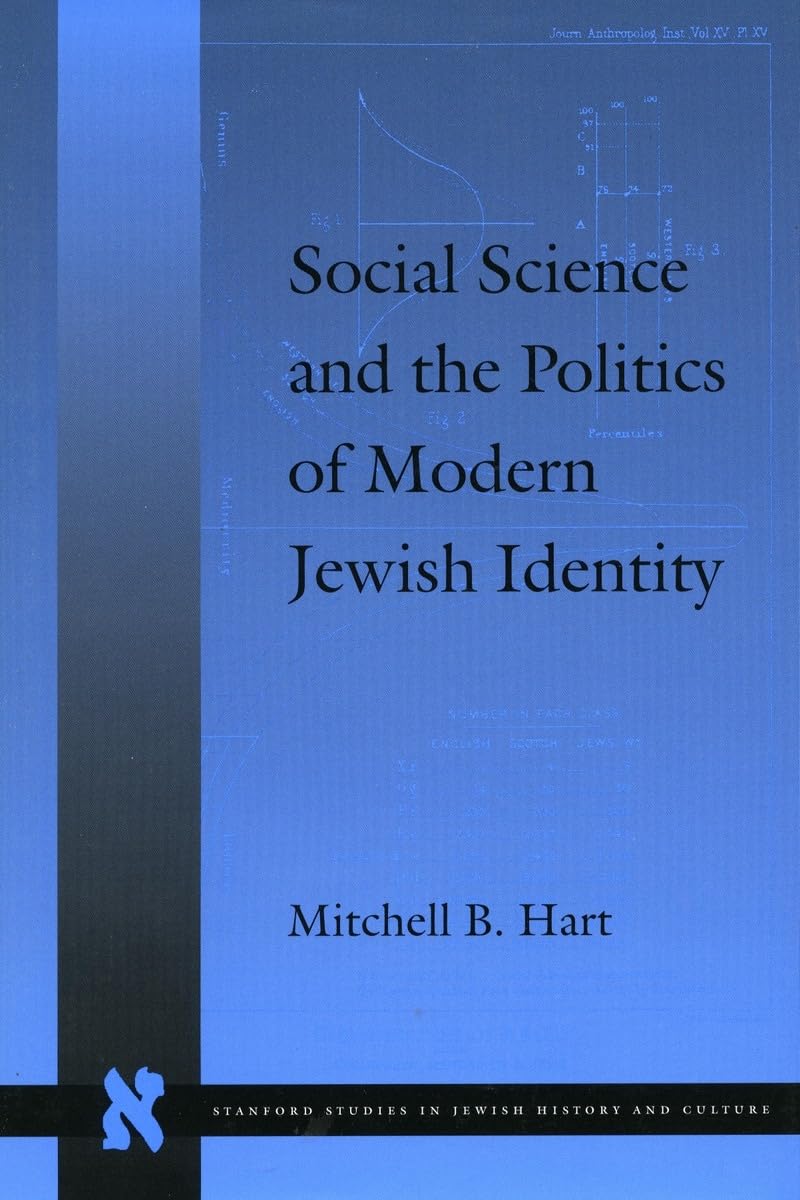
Social Science and the Politics of Modern Jewish Identity (Stanford Studies in Jewish History and Culture),Used
Sold by Ergodebooks, an authorized reseller.
Returns accepted within 30 days | support@ergodebooks.com
Shipping Information
- Free Standard Shipping — United States only
- Processing Time: 3–5 business days
- Estimated Delivery: 6–10 business days after dispatch
- Double-boxed, fully insured & discreetly packaged
- Tracking number sent via email once dispatched
Returns & Refund
Returns accepted within 30 days of delivery.
Damaged or Defective Item
Free return shipping + replacement or full refund
Wrong Item Received
Free return shipping + replacement or full refund
Change of Mind
Return shipping at customer's expense · 25% restocking fee applies
Payment Option

Why did the social sciences become an integral part of Jewish scholarship beginning in the late nineteenth century? What part did this new scholarship play in the ongoing debate over emancipation and assimilation, Zionism and diasporism, the nature of Jewish identity, and the problem of Jewish continuity and survival. To answer these questions, this book traces the emergence and development of an organized Jewish social science in central Europe, and explores the increasing importance of statistics and other social science modes of analysis for Jewish elites throughout Europe and in the United States. The author locates the initial impetus for an organized, institutionalized Jewish social science in the Zionist movement, as Zionists looked to the social sciences to provide them with the knowledge of contemporary Jewish life deemed necessary for nationalist revival. In particular, the social sciences offered empirical evidence of the ambiguous condition of Jewry in the diaspora. Social science also charted emancipation and assimilation, which were viewed as disintegrative agents for the dissolution of Jewish identity, and hence as a threat to the Jewish future. For Zionists, nationalism offered the means to reverse the process of dissolution. Yet Zionists were not alone in turning to the social sciences to advance their political agenda. This study also examines the involvement of nonZionists in Jewish social science, focusing on the way liberal, assimilationist scholars utilized social science data to demonstrate the continuing viability of Jewish life in the diaspora. Jewish social science grew out of a sustained effort to understand and explain the effects of modernization on Jewry. Above all, Jewish scholars sought to give the enormous transformations undergone by Jewry in the nineteenth century a larger meaning and significance.
⚠️ WARNING (California Proposition 65):
This product may contain chemicals known to the State of California to cause cancer, birth defects, or other reproductive harm.
For more information, please visit www.P65Warnings.ca.gov.