
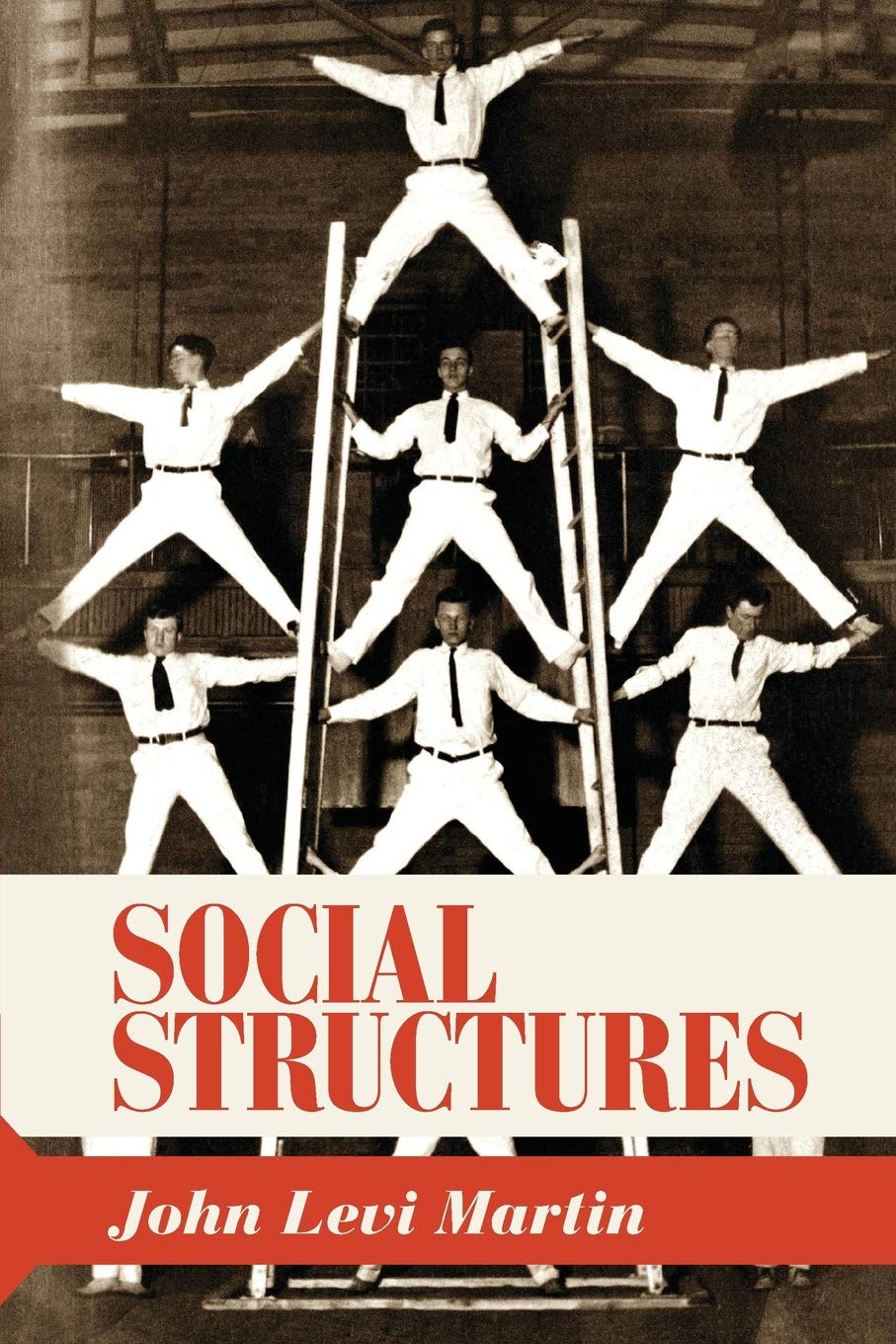
Title
Social Structures,New
Sold by Ergodebooks, an authorized reseller.
Returns accepted within 30 days | support@ergodebooks.com
Shipping Information
- Free Standard Shipping — United States only
- Processing Time: 3–5 business days
- Estimated Delivery: 6–10 business days after dispatch
- Double-boxed, fully insured & discreetly packaged
- Tracking number sent via email once dispatched
Returns & Refund
Returns accepted within 30 days of delivery.
Damaged or Defective Item
Free return shipping + replacement or full refund
Wrong Item Received
Free return shipping + replacement or full refund
Change of Mind
Return shipping at customer's expense · 25% restocking fee applies
Payment Option

Social Structures is a book that examines how structural forms spontaneously arise from social relationships. Offering major insights into the building blocks of social life, it identifies which locally emergent structures have the capacity to grow into larger ones and shows how structural tendencies associated with smaller structures shape and constrain patterns of larger structures. The book then investigates the role such structures have played in the emergence of the modern nationstate.Bringing together the latest findings in sociology, anthropology, political science, and history, John Levi Martin traces how sets of interpersonal relationships become ordered in different ways to form structures. He looks at a range of social structures, from smaller ones like families and street gangs to larger ones such as communes and, ultimately, nationstates. He finds that the relationships best suited to forming larger structures are those that thrive in conditions of inequality; that are incomplete and as sparse as possible, and thereby avoid the problem of completion in which interacting members are required to establish too many relationships; and that abhor transitivity rather than assuming it. Social Structures argues that these 'patronage' relationships, which often serve as means of loose coordination in the absence of strong states, are nevertheless the scaffolding of the social structures most distinctive to the modern state, namely the command army and the political party.
⚠️ WARNING (California Proposition 65):
This product may contain chemicals known to the State of California to cause cancer, birth defects, or other reproductive harm.
For more information, please visit www.P65Warnings.ca.gov.
- Q: What is the main focus of the book 'Social Structures'? A: The book 'Social Structures' examines how structural forms spontaneously arise from social relationships, exploring the building blocks of social life and the emergence of larger social structures from smaller ones.
- Q: Who is the author of 'Social Structures'? A: The author of 'Social Structures' is John Levi Martin.
- Q: What are the key themes discussed in 'Social Structures'? A: Key themes include the ordering of interpersonal relationships, the formation of social structures, and the role of these structures in the emergence of the modern nation-state.
- Q: What type of reader would benefit from this book? A: Readers interested in sociology, anthropology, political science, and history, as well as those studying social relationships and structures, would benefit from this book.
- Q: Is 'Social Structures' a new or used book? A: The item condition of 'Social Structures' is listed as New.
- Q: How many pages does 'Social Structures' have? A: The book contains 408 pages.
- Q: What is the binding type of 'Social Structures'? A: The binding type of 'Social Structures' is paperback.
- Q: When was 'Social Structures' published? A: The book was published on March 27, 2011.
- Q: What insights does 'Social Structures' provide regarding social inequality? A: The book argues that relationships suited for forming larger structures thrive in conditions of inequality and often involve patronage relationships that help to coordinate social interactions.
- Q: Are there any specific social structures discussed in 'Social Structures'? A: Yes, the book discusses various social structures, including families, street gangs, communes, and the modern nation-state.