
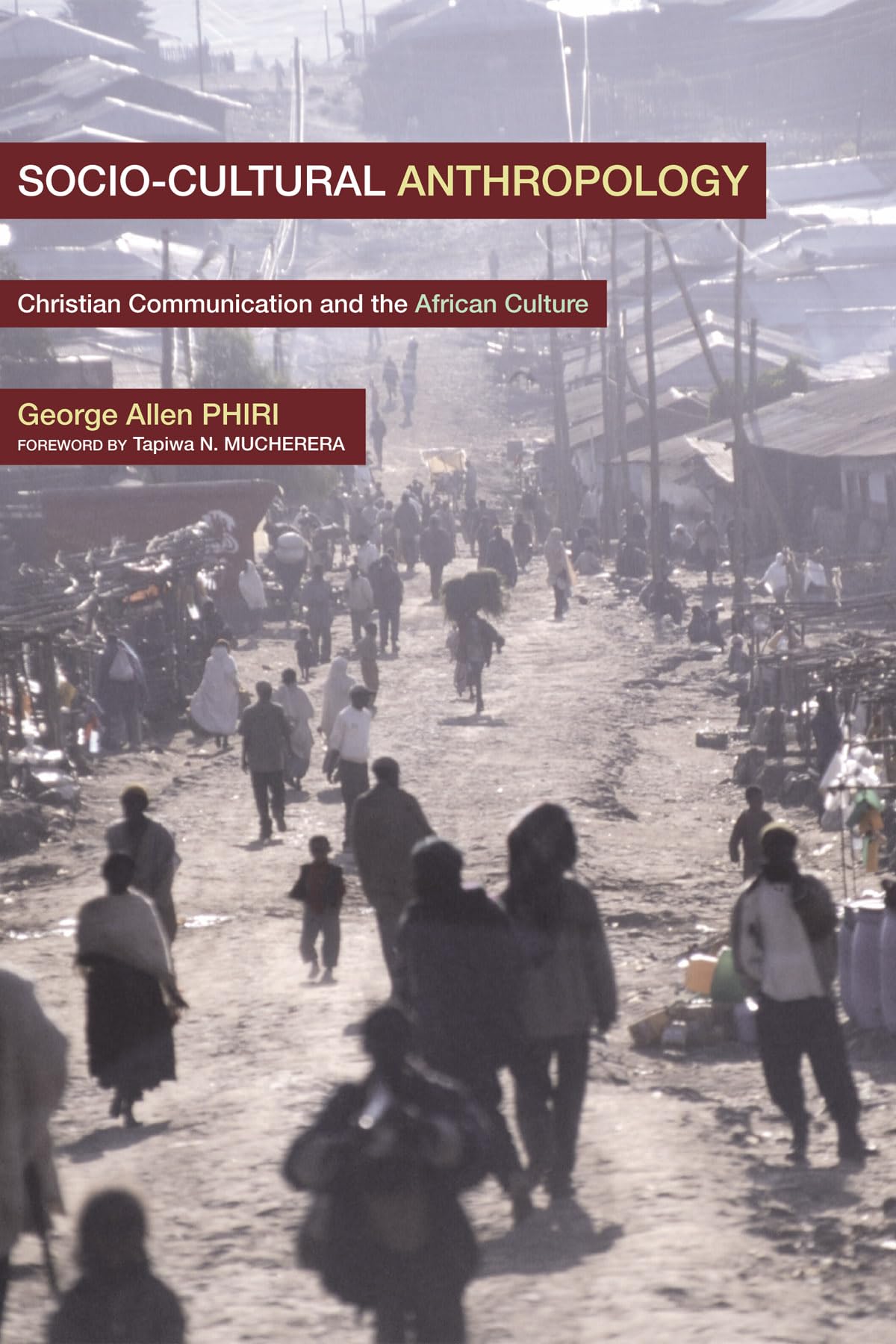
Title
SocialCultural Anthropology: Communication with the African Society,Used
Sold by Ergodebooks, an authorized reseller.
Returns accepted within 30 days | support@ergodebooks.com
Shipping Information
- Free Standard Shipping — United States only
- Processing Time: 3–5 business days
- Estimated Delivery: 6–10 business days after dispatch
- Double-boxed, fully insured & discreetly packaged
- Tracking number sent via email once dispatched
Returns & Refund
Returns accepted within 30 days of delivery.
Damaged or Defective Item
Free return shipping + replacement or full refund
Wrong Item Received
Free return shipping + replacement or full refund
Change of Mind
Return shipping at customer's expense · 25% restocking fee applies
Payment Option

Effective communication with the African society in the field of missions, church planting, and social development work has been and continues to be a great challenge, particularly to people from western cultural and language orientation. Africans are a "we" rather than "I" and a "depended on" rather than "independent of" society. The worldview of a traditional African in terms of society, relationships, and communication is communal. Certainly, the African perception of communalism affects how they communicate with the people of different cultural orientation. Africa has several cultures and people differ in their communication depending on their cultural orientation. However, there are universal African cultures that act as a framework for understanding key aspects of communication with Africans for successful missions, church planting, and social development work. This book, therefore, provides a strategy of understanding communication with the African society. The discussions in this book provide readers with different cultural orientations unique perception of the African society as s/he may be planning to communicate with the African society for missions, church planting, and social development work, even doing humanitarian ministry in African society. Although literacy levels have improved tremendously in most African countries, most of Africa is not a reading society. It is imperative to understand that most Africans still communicate orally and are not time conscious. Hence, effective communication in African societies ought to be based on storytelling rather than literature distribution, although this is in transition. In fact, Africans are oratory and good listeners. Thus, this book provides an understanding to people of different cultural orientations when they plan to communicate with the people in Africa.
⚠️ WARNING (California Proposition 65):
This product may contain chemicals known to the State of California to cause cancer, birth defects, or other reproductive harm.
For more information, please visit www.P65Warnings.ca.gov.