
Title
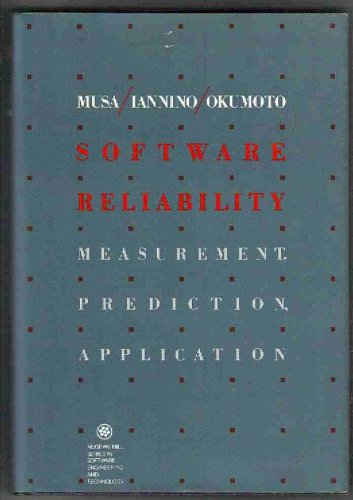
Software Reliability: Measurement, Prediction, Application (Mcgrawhill Series In Software Engineering And Technology)-used
Sold by Ergodebooks, an authorized reseller.
Returns accepted within 30 days | support@ergodebooks.com
Shipping Information
- Free Standard Shipping — United States only
- Processing Time: 3–5 business days
- Estimated Delivery: 6–10 business days after dispatch
- Double-boxed, fully insured & discreetly packaged
- Tracking number sent via email once dispatched
Returns & Refund
Returns accepted within 30 days of delivery.
Damaged or Defective Item
Free return shipping + replacement or full refund
Wrong Item Received
Free return shipping + replacement or full refund
Change of Mind
Return shipping at customer's expense · 25% restocking fee applies
Payment Option

This Pioneering Text For Emerging Courses In Software Reliability And Software Testing Integrates The Theoretical And Pragmatic Aspects Of Software Reliability Measurement. It Contains Helpful Appendices, Glossaries Of Symbols And Terms, Challenging Realworld Cases, And Extensive Exercises.
⚠️ WARNING (California Proposition 65):
This product may contain chemicals known to the State of California to cause cancer, birth defects, or other reproductive harm.
For more information, please visit www.P65Warnings.ca.gov.
- Q: How many pages does this book have? A: This book contains six hundred twenty-one pages. It covers essential aspects of software reliability measurement and testing.
- Q: What are the dimensions of this book? A: The book measures seven point zero one inches in length, one point two six inches in width, and nine point seven six inches in height. These dimensions make it a standard hardcover size.
- Q: What type of binding does this book have? A: This book is bound in hardcover. Hardcover binding provides durability and a professional appearance.
- Q: Who is the author of this book? A: The author of this book is John D. Musa. He is a recognized expert in the field of software reliability.
- Q: What is the primary subject matter of this book? A: This book focuses on software reliability measurement, prediction, and application. It is designed for courses in software engineering.
- Q: Is this book suitable for beginners? A: Yes, this book is suitable for beginners. It integrates theoretical and practical aspects of software reliability, making it accessible for newcomers.
- Q: How can I apply the concepts from this book? A: You can apply the concepts from this book through real-world case studies and extensive exercises provided within its pages. These practical applications enhance understanding.
- Q: What age group is this book appropriate for? A: This book is appropriate for college students and professionals in software engineering. It is aimed at those studying or working in technology fields.
- Q: How should I care for this book? A: To care for this book, store it in a cool, dry place and avoid exposure to direct sunlight. This helps preserve its condition.
- Q: Can I clean this book if it gets dirty? A: Yes, you can clean the book gently using a soft, dry cloth. Avoid using water or cleaning solutions that may damage the cover.
- Q: What if I receive a damaged copy of the book? A: If you receive a damaged copy, you can contact customer support for a return or exchange. Make sure to provide details of the damage for assistance.
- Q: Is there a return policy for this book? A: Yes, there is a return policy in place for this book. You can return it within a specified period if it is in its original condition.
- Q: What type of exercises does this book include? A: The book includes extensive exercises that challenge readers to apply the concepts learned. These exercises are designed to reinforce understanding.
- Q: Does this book contain any glossaries? A: Yes, this book contains glossaries of symbols and terms. These glossaries help clarify important concepts related to software reliability.
- Q: How does this book compare to other software engineering texts? A: This book stands out due to its integration of theoretical and pragmatic aspects, making it unique among software engineering texts. It is particularly focused on reliability.