
Title
Soil Conservation Service Curve Number (SCSCN) Methodology (Water Science and Technology Library, 42),Used
Sold by Ergodebooks, an authorized reseller.
Returns accepted within 30 days | support@ergodebooks.com
Shipping Information
- Free Standard Shipping — United States only
- Processing Time: 3–5 business days
- Estimated Delivery: 6–10 business days after dispatch
- Double-boxed, fully insured & discreetly packaged
- Tracking number sent via email once dispatched
Returns & Refund
Returns accepted within 30 days of delivery.
Damaged or Defective Item
Free return shipping + replacement or full refund
Wrong Item Received
Free return shipping + replacement or full refund
Change of Mind
Return shipping at customer's expense · 25% restocking fee applies
Payment Option

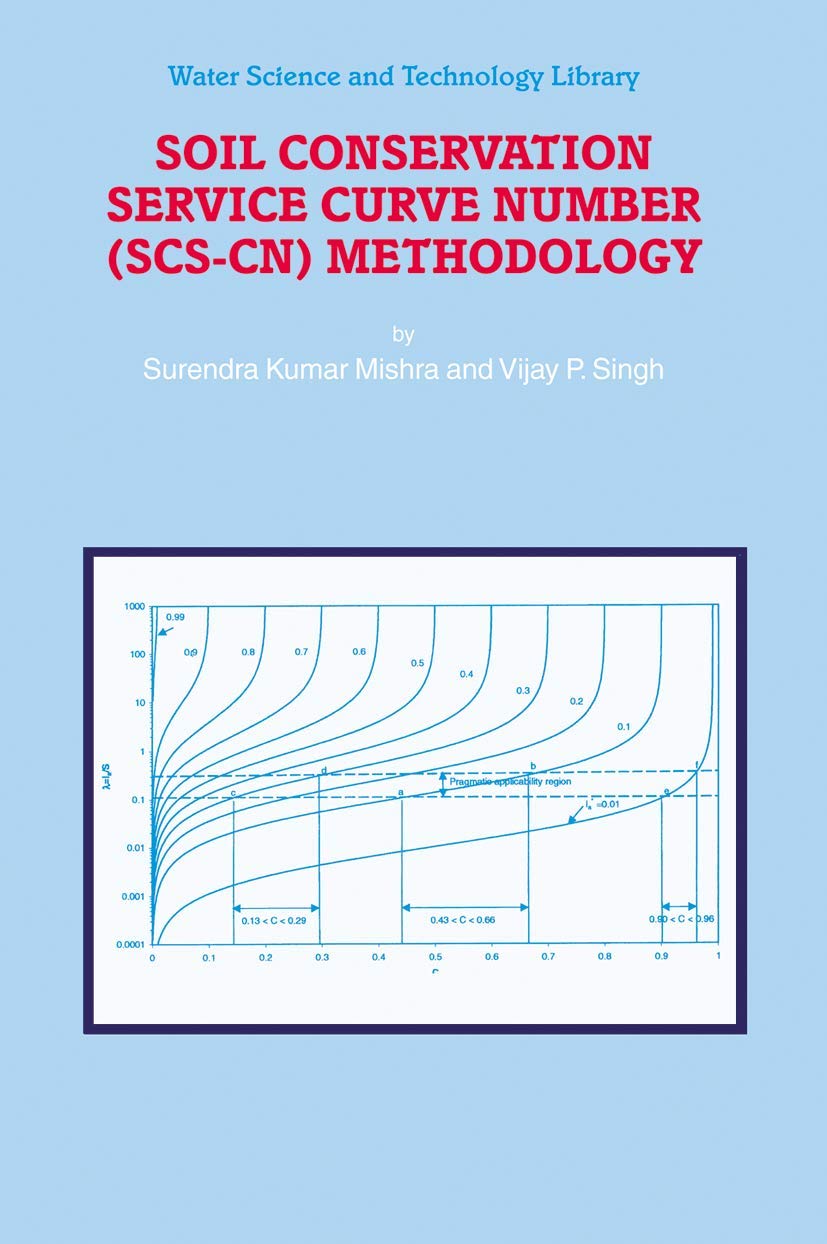
The Soil Conservation Service (SCS) curve number (CN) method is one of the most popular methods for computing the runoff volume from a rainstorm. It is popular because it is simple, easy to understand and apply, and stable, and accounts for most of the runoff producing watershed characteristics, such as soil type, land use, hydrologic condition, and antecedent moisture condition. The SCSCN method was originally developed for its use on small agricultural watersheds and has since been extended and applied to rural, forest and urban watersheds. Since the inception of the method, it has been applied to a wide range of environments. In recent years, the method has received much attention in the hydrologic literature. The SCSCN method was first published in 1956 in Section4 of the National Engineering Handbook of Soil Conservation Service (now called the Natural Resources Conservation Service), U. S. Department of Agriculture. The publication has since been revised several times. However, the contents of the methodology have been nonetheless more or less the same. Being an agency methodology, the method has not passed through the process of a peer review and is, in general, accepted in the form it exists. Despite several limitations of the method and even questionable credibility at times, it has been in continuous use for the simple reason that it works fairly well at the field level.
⚠️ WARNING (California Proposition 65):
This product may contain chemicals known to the State of California to cause cancer, birth defects, or other reproductive harm.
For more information, please visit www.P65Warnings.ca.gov.