
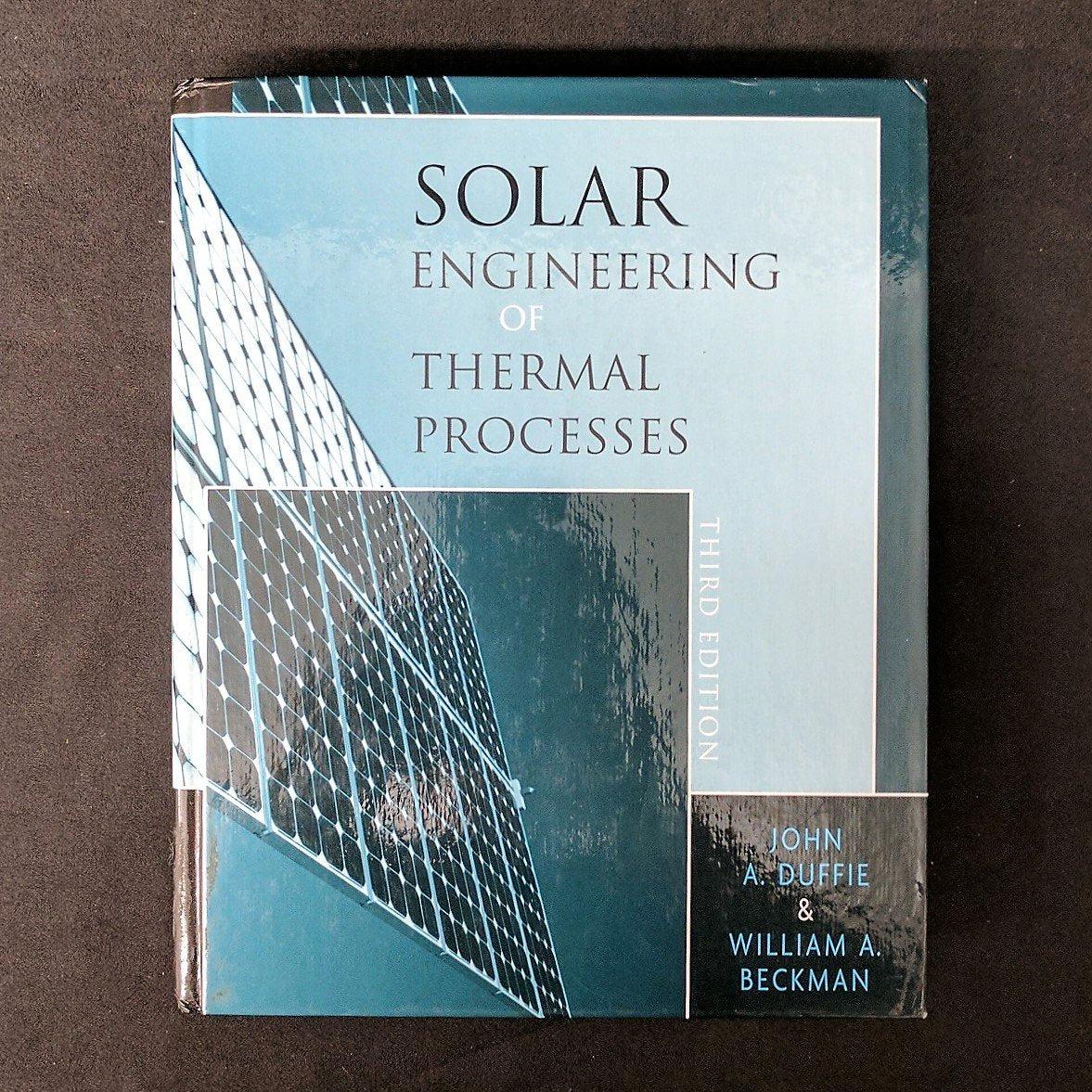
Title
Solar Engineering Of Thermal Processes
Sold by Ergodebooks, an authorized reseller.
Returns accepted within 30 days | support@ergodebooks.com
Shipping Information
- Free Standard Shipping — United States only
- Processing Time: 3–5 business days
- Estimated Delivery: 6–10 business days after dispatch
- Double-boxed, fully insured & discreetly packaged
- Tracking number sent via email once dispatched
Returns & Refund
Returns accepted within 30 days of delivery.
Damaged or Defective Item
Free return shipping + replacement or full refund
Wrong Item Received
Free return shipping + replacement or full refund
Change of Mind
Return shipping at customer's expense · 25% restocking fee applies
Payment Option

The Updated, Cornerstone Engineering Resource Of Solar Energy Theory And Applications. Solar Technologies Already Provide Energy For Heat, Light, Hot Water, Electricity, And Cooling For Homes, Businesses, And Industry. Because Solar Energy Only Accounts For Onetenth Of A Percent Of Primary Energy Demand, Relatively Small Increases In Market Penetration Can Lead To Very Rapid Growth Rates In The Industry???Which Is Exactly What Has Been Projected For Coming Years As The World Moves Away From Carbonbased Energy Production. Solar Engineering Of Thermal Processes, Third Edition Provides The Latest Thinking And Practices For Engineering Solar Technologies And Using Them In Various Markets.This Third Edition Of The Acknowledged Leading Book On Solar Engineering Features: Complete Coverage Of Basic Theory, Systems Design, And Applications Updated Material On Such Cuttingedge Topics As Photovoltaics And Wind Power Systems New Homework Problems And Exercises
⚠️ WARNING (California Proposition 65):
This product may contain chemicals known to the State of California to cause cancer, birth defects, or other reproductive harm.
For more information, please visit www.P65Warnings.ca.gov.
- Q: How many pages does this book have? A: This book contains nine hundred twenty-eight pages. It offers a comprehensive overview of solar energy theory and applications.
- Q: What is the binding type of this book? A: The book is hardcover. This durable binding is ideal for frequent use and ensures longevity.
- Q: What are the dimensions of the book? A: The dimensions are seven point seventy-four inches in length, one point fifty-four inches in width, and nine point twenty-one inches in height.
- Q: Who is the author of this book? A: The author is John A. Duffie. He is recognized for his expertise in solar engineering and renewable energy.
- Q: What is the main focus of this book? A: The book focuses on solar energy theory and applications. It covers essential topics in solar technologies and systems design.
- Q: How do I use this book effectively? A: You can use this book as a reference for solar engineering projects. It also includes homework problems and exercises for practical learning.
- Q: Is this book suitable for beginners? A: Yes, the book is suitable for beginners. It provides complete coverage of basic theory and practical applications in solar engineering.
- Q: Can I use this book for academic purposes? A: Yes, this book is ideal for academic use. It is a cornerstone resource for students and professionals in civil and environmental engineering.
- Q: What topics are covered in the book? A: The book covers topics such as photovoltaics, wind power systems, and basic solar energy theory. Updated material reflects current trends in the industry.
- Q: How should I store this book? A: Store the book in a cool, dry place away from direct sunlight. This will help preserve the binding and pages.
- Q: Is there a warranty for this book? A: Books typically do not come with a warranty. However, check the return policy of the seller for any issues.
- Q: What if the book arrives damaged? A: If the book arrives damaged, contact the seller for a return or exchange. Most sellers have policies for damaged goods.
- Q: How do I clean this book? A: To clean the book, gently wipe the cover with a soft, dry cloth. Avoid using liquids that could damage the binding.
- Q: Can this book be used in professional settings? A: Yes, it can be used in professional settings. The book is recognized as a leading resource in solar engineering practices.
- Q: What makes this edition different from previous ones? A: This third edition features updated material on cutting-edge topics and new homework problems. It reflects the latest advancements in solar energy.
- Q: Is this book appropriate for all age groups? A: Yes, the book is appropriate for all age groups interested in solar engineering. However, it is more suited for those with at least a basic understanding of engineering principles.