If you have any questions, you are always welcome to contact us. We'll get back to you as soon as possible, withing 24 hours on weekdays.
Customer service
All questions about your order, return and delivery must be sent to our customer service team by e-mail at yourstore@yourdomain.com
Sale & Press
If you are interested in selling our products, need more information about our brand or wish to make a collaboration, please contact us at press@yourdomain.com
Help
If you have any questions, you are always welcome to contact us. We'll get back to you as soon as possible, withing 24 hours on weekdays.
Customer service
All questions about your order, return and delivery must be sent to our customer service team by e-mail at yourstore@yourdomain.com
Sale & Press
If you are interested in selling our products, need more information about our brand or wish to make a collaboration, please contact us at press@yourdomain.com
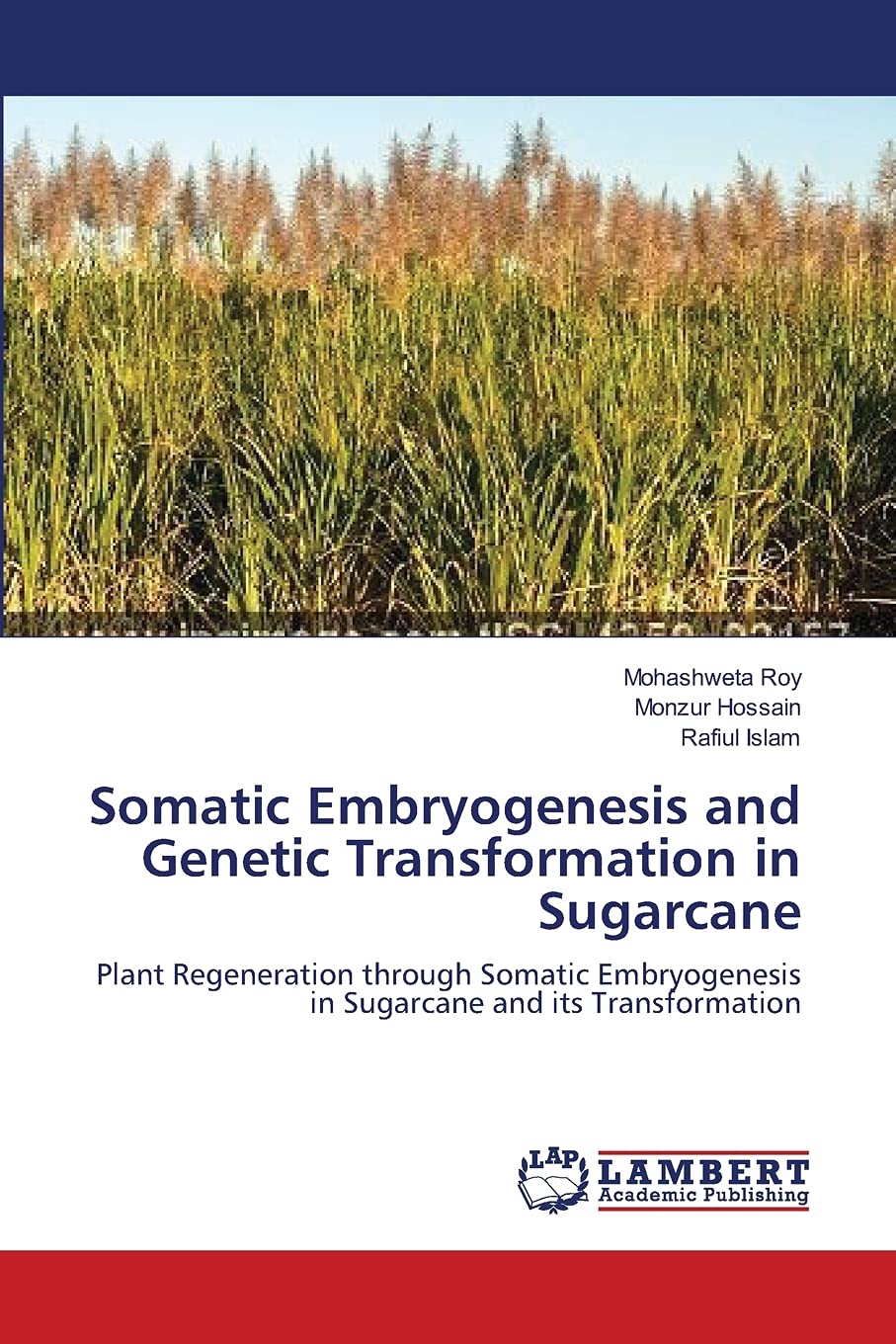
An efficient protocol for somatic embryogenesis and subsequent plant regeneration was developed for sugarcane variety Isd16 using leaf sheath explants of 3, 6 and 12monthsold field grown plants. Explants from 6monthold plant showed the best response and produced highest percentage of calli on MS + 3.0 mg/l 2,4D. Lproline 25mg/l significantly enhanced somatic embryogenesis. The embryos germinated well on halfstrength MS and developed into plantlets. Somatic embryo derived plants under field condition showed considerable variation in morphological, agronomical and biochemical characters. For genetic transformation the calli were cocultivated with A. tumefaciens strain LBA4404 harboring a binary plasmid pCAMBIA1303 containing hpt (hygromycin phosphotransferase) gene as a selectable marker and a glucuronidase (gus) reporter gene in the TDNA region. The transient expression of gus in hygromycin resistant calli and regenerated plants was confirmed by GUS flurometric assay. PCR analysis of genomic DNA from regenerated plants revealed that the hpt gene was integrated in the transgenic plants.
⚠️ WARNING (California Proposition 65):
This product may contain chemicals known to the State of California to cause cancer,
birth defects, or other reproductive harm.
For MAP (Minimum Advertised Price) violations and Intellectual Property (IP) or Trademark concerns, please contact:
support@ergodebooks.com
⚠️ California Proposition 65 Warning: Some products sold on this website may expose you to chemicals known to the State of California to cause cancer, birth defects, or other reproductive harm. For more information, visit www.P65Warnings.ca.gov.