If you have any questions, you are always welcome to contact us. We'll get back to you as soon as possible, withing 24 hours on weekdays.
Customer service
All questions about your order, return and delivery must be sent to our customer service team by e-mail at yourstore@yourdomain.com
Sale & Press
If you are interested in selling our products, need more information about our brand or wish to make a collaboration, please contact us at press@yourdomain.com
Help
If you have any questions, you are always welcome to contact us. We'll get back to you as soon as possible, withing 24 hours on weekdays.
Customer service
All questions about your order, return and delivery must be sent to our customer service team by e-mail at yourstore@yourdomain.com
Sale & Press
If you are interested in selling our products, need more information about our brand or wish to make a collaboration, please contact us at press@yourdomain.com
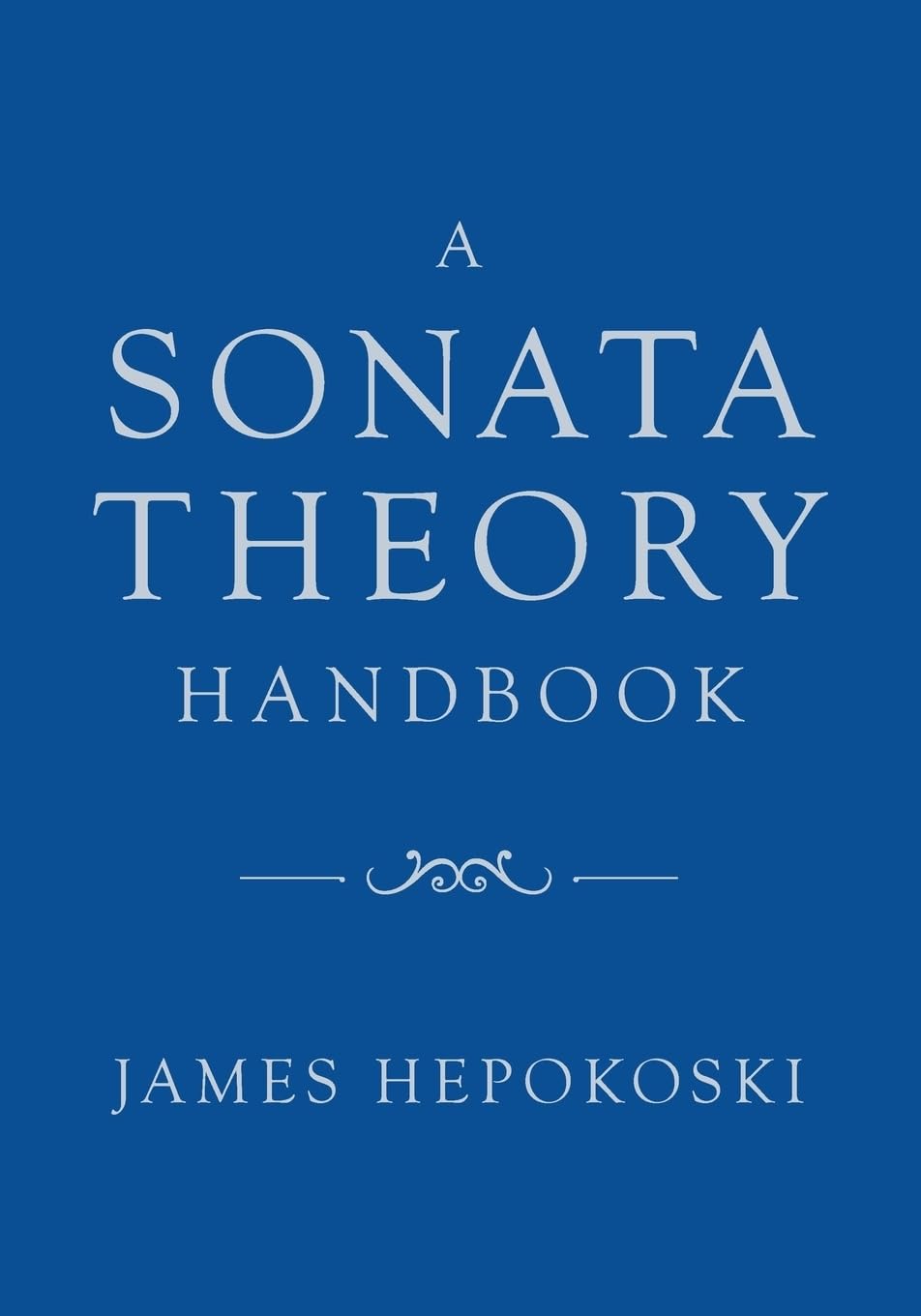
Sonata form is the most commonly encountered organizational plan in the works of the classicalmusic masters, from Haydn, Mozart, and Beethoven to Schubert, Brahms, and beyond. Sonata Theory, an analytic approach developed by James Hepokoski and Warren Darcy in their awardwinning Elements of Sonata Theory (2006), has emerged as one of the most influential frameworks for understanding this musical structure. What can this method from 'the new Formenlehre' teach us about how these composers put together their most iconic pieces and to what expressive ends?In this new Sonata Theory Handbook, Hepokoski introduces readers stepbystep to the main ideas of this approach. At the heart of the book are close readings of eight individual movements from Mozart's Piano Sonata in Bflat, K. 333, to such structurally complex pieces as Schubert's 'Death and the Maiden' String Quartet and the finale of Brahms's Symphony No 1 that show this analytical method in action. These illustrative analyses are supplemented with four updated discussions of the foundational concepts behind the theory, including dialogic form, expositional action zones, trajectories toward generically normative cadences, rotation theory, and the five sonata types. With its detailed examples and deep engagements with recent developments in form theory, schema theory, and cognitive research, this handbook updates and advances Sonata Theory and confirms its status as a key lens for analyzing sonata form.
⚠️ WARNING (California Proposition 65):
This product may contain chemicals known to the State of California to cause cancer,
birth defects, or other reproductive harm.
For MAP (Minimum Advertised Price) violations and Intellectual Property (IP) or Trademark concerns, please contact:
support@ergodebooks.com
⚠️ California Proposition 65 Warning: Some products sold on this website may expose you to chemicals known to the State of California to cause cancer, birth defects, or other reproductive harm. For more information, visit www.P65Warnings.ca.gov.