
Title
Song of the Forest: Russian Forestry and Stalinist Environmentalism, 19051953 (Russian and East European Studies),Used
Sold by Ergodebooks, an authorized reseller.
Returns accepted within 30 days | support@ergodebooks.com
Shipping Information
- Free Standard Shipping — United States only
- Processing Time: 3–5 business days
- Estimated Delivery: 6–10 business days after dispatch
- Double-boxed, fully insured & discreetly packaged
- Tracking number sent via email once dispatched
Returns & Refund
Returns accepted within 30 days of delivery.
Damaged or Defective Item
Free return shipping + replacement or full refund
Wrong Item Received
Free return shipping + replacement or full refund
Change of Mind
Return shipping at customer's expense · 25% restocking fee applies
Payment Option

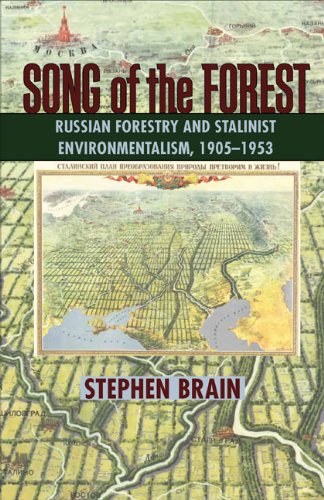
The Soviets are often viewed as insatiable industrialists who saw nature as a force to be tamed and exploited. Song of the Forest counters this assumption, uncovering significant evidence of Soviet conservation efforts in forestry, particularly under Josef Stalin. In his compelling study, Stephen Brain profiles the leading Sovietera conservationists, agencies, and administrators, and their efforts to formulate forest policy despite powerful ideological differences.By the time of the revolution of 1905, modern Russian forestry science had developed an influential romantic strand, especially prevalent in the work of Georgii Morozov, whose theory of stand types asked forest managers to consider native species and local conditions when devising plans for regenerating forests. After their rise to power, the Bolsheviks turned their backs on this tradition and adopted German methods, then considered the most advanced in the world, for clearcutting and replanting of marketable tree types in artificial forests. Later, when Stalins Five Year Plan required vast amounts of timber for industrialization, forest radicals proposed flying management, an exaggerated version of German forestry where large tracts of virgin forest would be clearcut. Opponents who still upheld Morozovs vision favored a conservative regenerating approach, and ultimately triumphed by establishing the worlds largest forest preserve.Another radical turn came with the Great Stalin Plan for the Transformation of Nature, implemented in 1948. Narrow belts of new forest planted on the vast Russian steppe would block drying winds, provide cool temperatures, trap moisture, and increase crop production. Unfortunately, planters were ordered to follow the misguided methods of the notorious Trofim Lysenko, and the resulting yields were abysmal. But despite Lysenko, agency infighting, and an indifferent peasant workforce, Stalins forestry bureaus eventually succeeded in winning many environmental concessions from industrial interests. In addition, the visionary teachings of Morozov found new life, ensuring that the forests song did not fall upon deaf ears.
⚠️ WARNING (California Proposition 65):
This product may contain chemicals known to the State of California to cause cancer, birth defects, or other reproductive harm.
For more information, please visit www.P65Warnings.ca.gov.