
Title
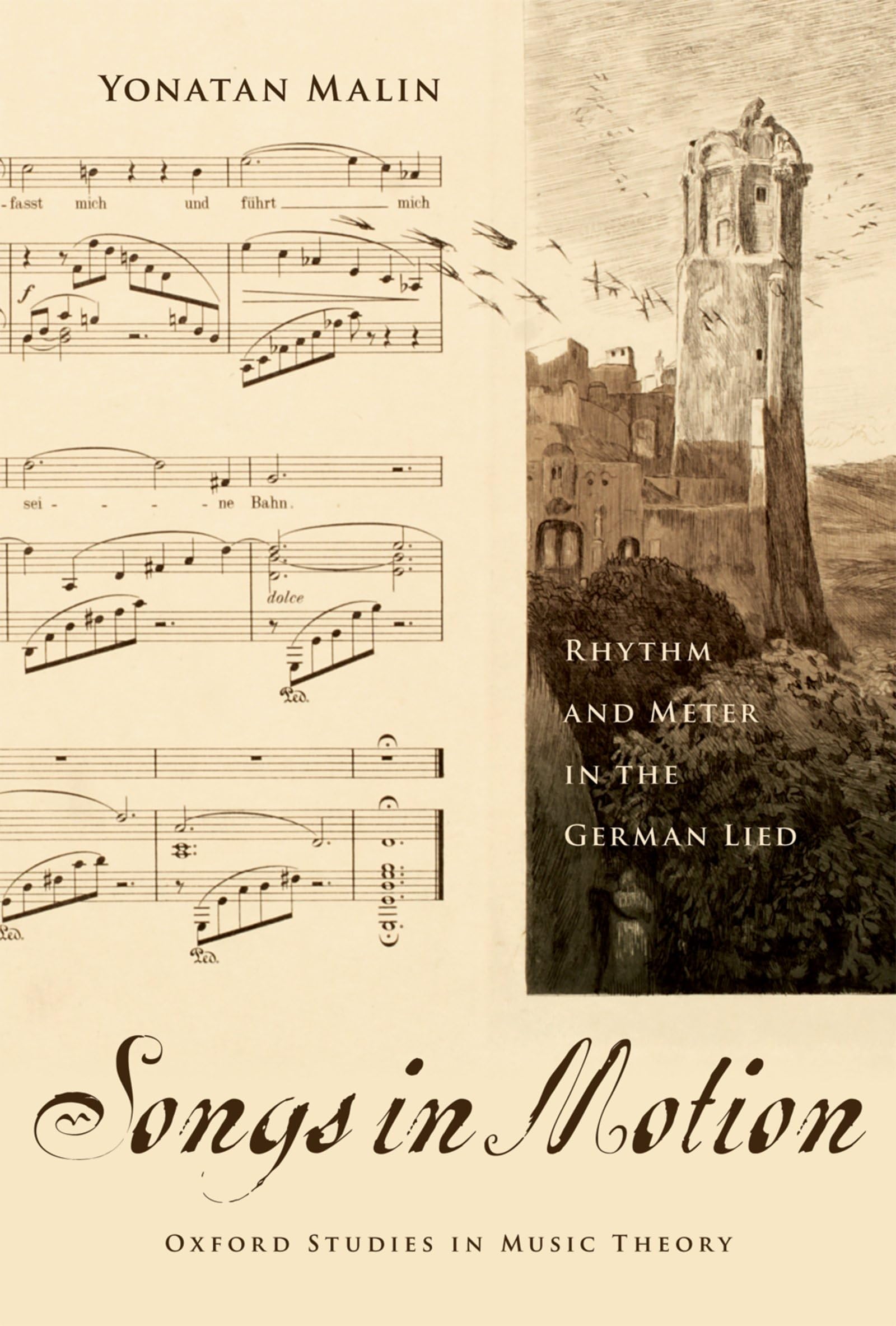
Songs in Motion: Rhythm and Meter in the German Lied (Oxford Studies in Music Theory),Used
Sold by Ergodebooks, an authorized reseller.
Returns accepted within 30 days | support@ergodebooks.com
Shipping Information
- Free Standard Shipping — United States only
- Processing Time: 3–5 business days
- Estimated Delivery: 6–10 business days after dispatch
- Double-boxed, fully insured & discreetly packaged
- Tracking number sent via email once dispatched
Returns & Refund
Returns accepted within 30 days of delivery.
Damaged or Defective Item
Free return shipping + replacement or full refund
Wrong Item Received
Free return shipping + replacement or full refund
Change of Mind
Return shipping at customer's expense · 25% restocking fee applies
Payment Option

Qualities of motion and emotion in song come from poetic images, melody, harmony, and voice leading, but they also come from rhythm and meterthe flow and articulation of words and music in time. This book explores rhythm and meter in the nineteenthcentury German Lied, including songs for voice and piano by Fanny Hensel ne Mendelssohn, Franz Schubert, Robert Schumann, Johannes Brahms, and Hugo Wolf.The Lied, as a genre, is characterized especially by the fusion of poetry and music. Poetic meter itself has expressive qualities, and rhythmic variations contribute further to the modes of signification. These features often carry over into songs, even as they are set in the more strictly determined periodicities of musical meter. A new method of declamatoryschema analysis is presented to illustrate common possibilities for setting trimeter, tetrameter, and pentameter lines. Degrees of rhythmic regularity and irregularity are also considered.There has been a wealth of new work on metric theory and analysis in the past thirty years; here this research is reviewed and applied in song analysis. Topics include the nature of metric entrainment (drawing on music psychology), metric dissonance, hypermeter, and phrase rhythm.Whereas narrative accounts of the nineteenthcentury Lied typically begin with Schubert, here forms of expansion and elision in songs by Hensel provide a point of departure. Repetition links up directly with motion in songs by Schubert, including his famous 'Gretchen am Spinnrade.' The doubling and reverberation of vocal melody creates a form of interiorized resonance in Schumann's songs. Brahms and Wolf are typically understood as polar opposites in the later nineteenth century; here the differences are clarified along with deeper affinities. Songs by both Brahms and Wolf may be understood as musical performances of poetic readings, and in this regard they both belong to a late period of cultural history.
⚠️ WARNING (California Proposition 65):
This product may contain chemicals known to the State of California to cause cancer, birth defects, or other reproductive harm.
For more information, please visit www.P65Warnings.ca.gov.