If you have any questions, you are always welcome to contact us. We'll get back to you as soon as possible, withing 24 hours on weekdays.
Customer service
All questions about your order, return and delivery must be sent to our customer service team by e-mail at yourstore@yourdomain.com
Sale & Press
If you are interested in selling our products, need more information about our brand or wish to make a collaboration, please contact us at press@yourdomain.com
Help
If you have any questions, you are always welcome to contact us. We'll get back to you as soon as possible, withing 24 hours on weekdays.
Customer service
All questions about your order, return and delivery must be sent to our customer service team by e-mail at yourstore@yourdomain.com
Sale & Press
If you are interested in selling our products, need more information about our brand or wish to make a collaboration, please contact us at press@yourdomain.com
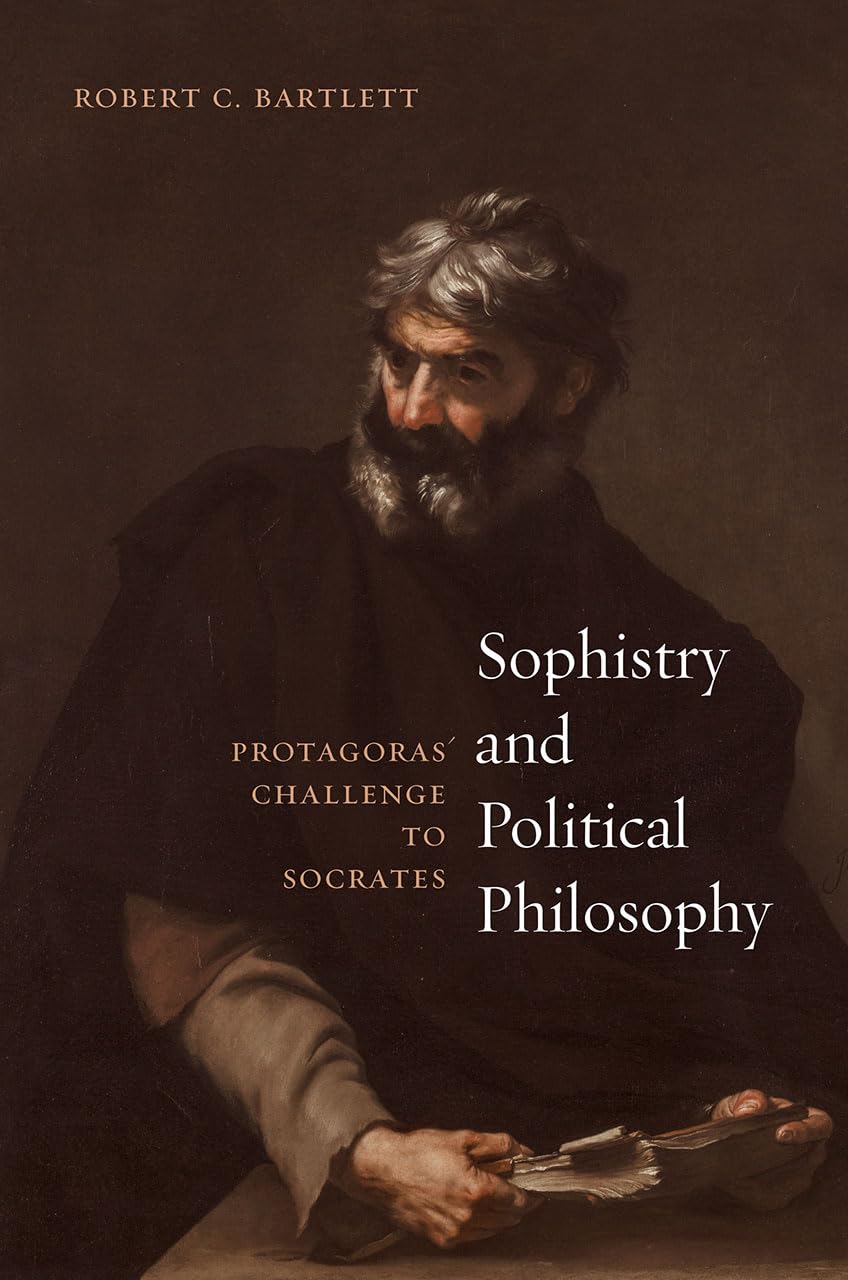
One of the central challenges to contemporary political philosophy is the apparent impossibility of arriving at any commonly agreed upon truths. As Nietzsche observed in his Will to Power, the currents of relativism that have come to characterize modern thought can be said to have been born with ancient sophistry. If we seek to understand the strengths and weaknesses of contemporary radical relativism, we must therefore look first to the sophists of antiquitythe most famous and challenging of whom is Protagoras.With Sophistry and Political Philosophy, Robert C. Bartlett provides the first close reading of Platos twopart presentation of Protagoras. In the Protagoras, Plato sets out the sophists moral and political teachings, while the Theaetetus, offers a distillation of his theoretical and epistemological arguments. Taken together, the two dialogues demonstrate that Protagoras is attracted to one aspect of conventional moralitythe nobility of courage, which in turn is connected to piety. This insight leads Bartlett to a consideration of the similarities and differences in the relationship of political philosophy and sophistry to pious faith. Bartletts superb exegesis offers a significant tool for understanding the history of philosophy, but, in tracing Socratess response to Protagoras teachings, Bartlett also builds toward a richer understanding of both ancient sophistry and what Socrates meant by political philosophy.
⚠️ WARNING (California Proposition 65):
This product may contain chemicals known to the State of California to cause cancer,
birth defects, or other reproductive harm.
For MAP (Minimum Advertised Price) violations and Intellectual Property (IP) or Trademark concerns, please contact:
support@ergodebooks.com
⚠️ California Proposition 65 Warning: Some products sold on this website may expose you to chemicals known to the State of California to cause cancer, birth defects, or other reproductive harm. For more information, visit www.P65Warnings.ca.gov.