
Title
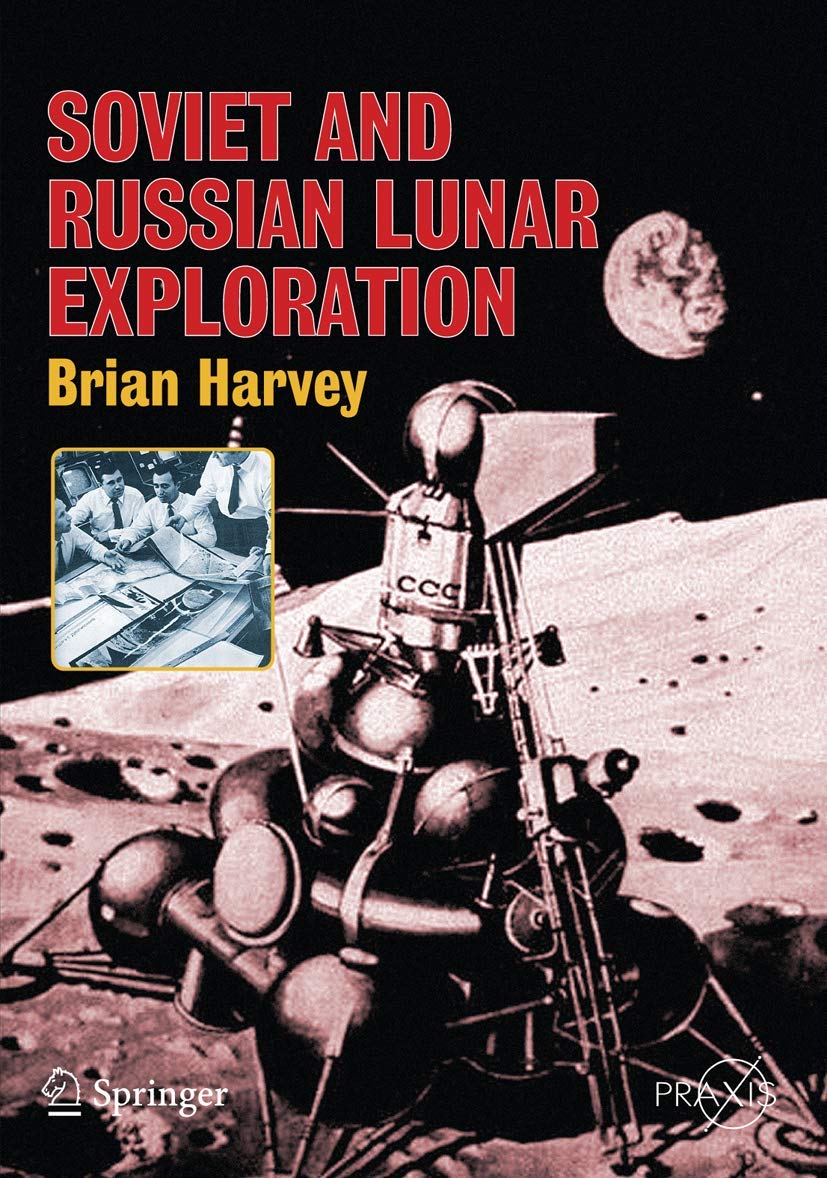
Soviet and Russian Lunar Exploration (Springer Praxis Books),Used
Sold by Ergodebooks, an authorized reseller.
Returns accepted within 30 days | support@ergodebooks.com
Shipping Information
- Free Standard Shipping — United States only
- Processing Time: 3–5 business days
- Estimated Delivery: 6–10 business days after dispatch
- Double-boxed, fully insured & discreetly packaged
- Tracking number sent via email once dispatched
Returns & Refund
Returns accepted within 30 days of delivery.
Damaged or Defective Item
Free return shipping + replacement or full refund
Wrong Item Received
Free return shipping + replacement or full refund
Change of Mind
Return shipping at customer's expense · 25% restocking fee applies
Payment Option

When, in July 1969, the Americans decisively beat the Soviet Union in the race to put an astronaut on the moon, this event had profound historical, scientific and political implications. This book tells the story of the Soviet and Russian lunar programme, from its origins to the reconsideration of a lunar programme in the presentday federal Russian space programme. Following Sputnik, the first Soviet lunar flights achieved the key goals of hitting, circling and photographing the moon in 1959. The Soviet Union planned to achieve the biggest prize of them all the first person to land on the moon and built all the key spaceships required to do so, such as a lunar orbiter and lander. Brian Harvey describes the techniques devised by the USSR for lunar landing, from the LK lunar module to the LOK lunar orbiter and tested versions in Earth orbit. He asks whether these systems would have worked and, examining how well they were tested, concludes that they would have: the Soviet Union lost the moon race for political, not technical reasons. Designs for moon bases were even drawn up. In the end, the Soviet Union ran an impressive series of robotic missions from 1968 to 1976 to circle the moon, map the far side, conduct scientific observations from orbit, recover samples and rove over the surface. The scientific haul from these missions is surveyed: what was actually learned about the moon, its rocks and the lunar environment, that will be useful for the present plans by the United States to return to the moon and for other countries, such as India and China, to conduct their own lunar exploration.The book opens in Surgut, Siberia, in August 1976, with a largely forgotten event: the return to Earth after a threeday journey from the moon, under a single parachute, of the tiny Luna 24 cabin, with a core sample drilled deep into the Sea of Crises, a remarkable scientific and engineering achievement. It ends with an examination of projected missions, fromplans to explore the far side and set up lunar observatories to the Luna Glob explorer of the 1990s. There is also discussion of lunar tourism, using a modernized version of the Zond spacecraft which flew around the moon from1968 to 1970.
⚠️ WARNING (California Proposition 65):
This product may contain chemicals known to the State of California to cause cancer, birth defects, or other reproductive harm.
For more information, please visit www.P65Warnings.ca.gov.