If you have any questions, you are always welcome to contact us. We'll get back to you as soon as possible, withing 24 hours on weekdays.
Customer service
All questions about your order, return and delivery must be sent to our customer service team by e-mail at yourstore@yourdomain.com
Sale & Press
If you are interested in selling our products, need more information about our brand or wish to make a collaboration, please contact us at press@yourdomain.com
Help
If you have any questions, you are always welcome to contact us. We'll get back to you as soon as possible, withing 24 hours on weekdays.
Customer service
All questions about your order, return and delivery must be sent to our customer service team by e-mail at yourstore@yourdomain.com
Sale & Press
If you are interested in selling our products, need more information about our brand or wish to make a collaboration, please contact us at press@yourdomain.com
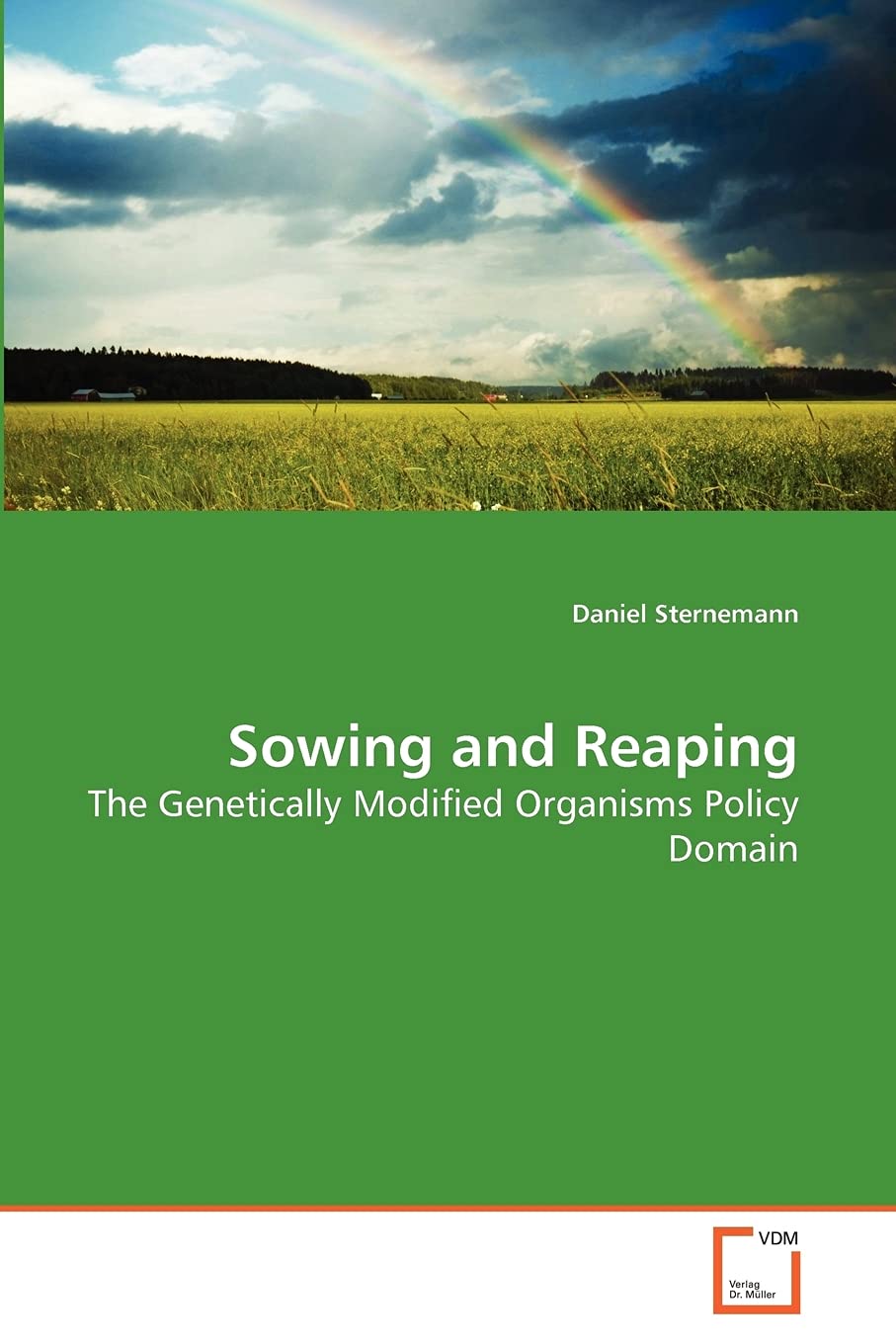
This study examines the genetically modified organisms (GMO) foodstuff policy domain in the United States to determine whether it is characteristic of an issue network or a subgovernment and what affect its composition has on GMO policy formation. Various political science theories and frameworks are employed, with particular emphasis on interest group politics theories. Qualitative and quantitative sources of information are used, such as scholarly books, articles, governmental resources, and data on U.S. House of Representatives voting history and campaign contributions to House members. The GMO policy domain in the U.S. remains a subgovernment with the power and control of agribusiness interests firmly entrenched. Weak antiGMO niche advocacy groups are attempting to enter the construct and form an issue network that would also include the courts, natural and organic farmers, consumer advocacy groups, and the healthminded public. Such an issue network would likely produce an opportunity to propose policy alternatives and update the twentyyearold GMO policy in the U.S.
⚠️ WARNING (California Proposition 65):
This product may contain chemicals known to the State of California to cause cancer,
birth defects, or other reproductive harm.
For MAP (Minimum Advertised Price) violations and Intellectual Property (IP) or Trademark concerns, please contact:
support@ergodebooks.com
⚠️ California Proposition 65 Warning: Some products sold on this website may expose you to chemicals known to the State of California to cause cancer, birth defects, or other reproductive harm. For more information, visit www.P65Warnings.ca.gov.