If you have any questions, you are always welcome to contact us. We'll get back to you as soon as possible, withing 24 hours on weekdays.
Customer service
All questions about your order, return and delivery must be sent to our customer service team by e-mail at yourstore@yourdomain.com
Sale & Press
If you are interested in selling our products, need more information about our brand or wish to make a collaboration, please contact us at press@yourdomain.com
Help
If you have any questions, you are always welcome to contact us. We'll get back to you as soon as possible, withing 24 hours on weekdays.
Customer service
All questions about your order, return and delivery must be sent to our customer service team by e-mail at yourstore@yourdomain.com
Sale & Press
If you are interested in selling our products, need more information about our brand or wish to make a collaboration, please contact us at press@yourdomain.com
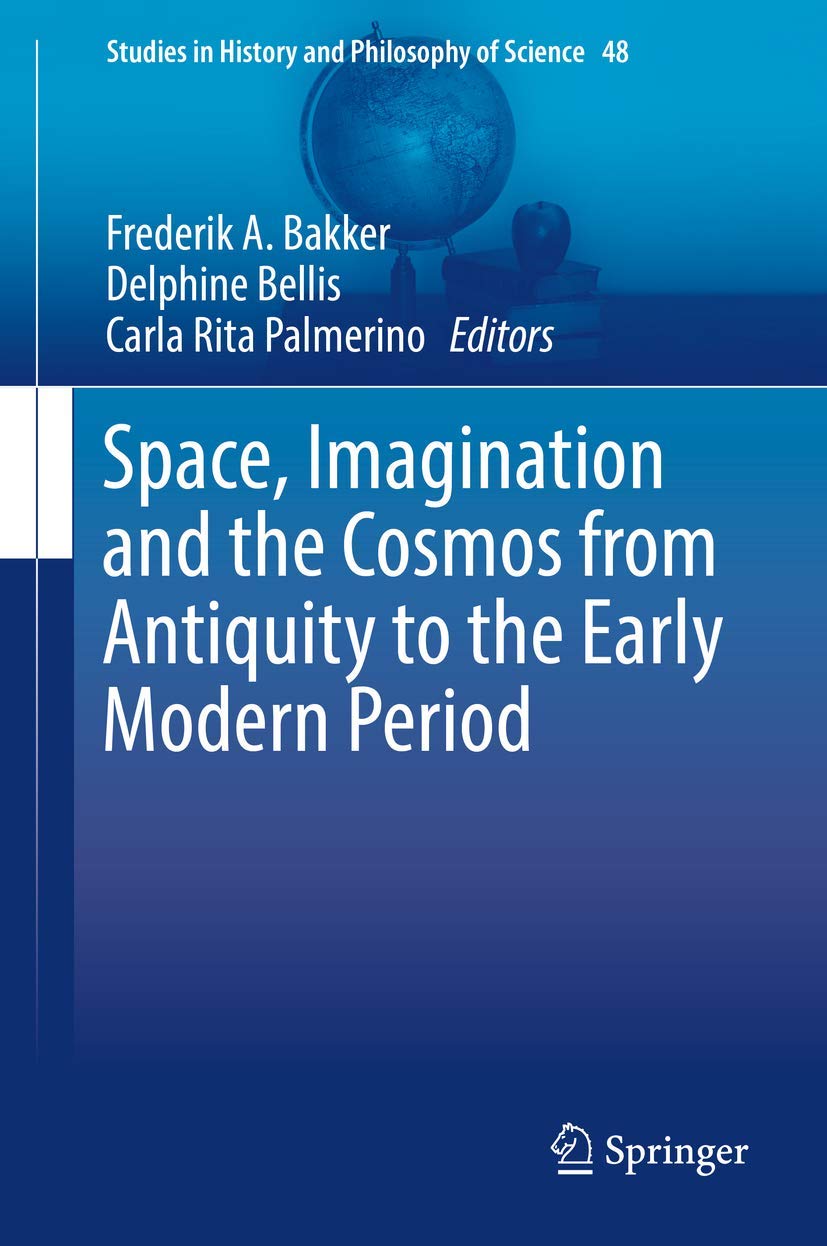
This volume provides a much needed, historically accurate narrative of the development of theories of space up to the beginning of the eighteenth century. It studies conceptions of space that were implicitly or explicitly entailed by ancient, medieval and early modern representations of the cosmos. The authors reassess Alexandre Koyrs groundbreaking work From the Closed World to the Infinite Universe (1957) and they trace the permanence of arguments to be found throughout the Middle Ages and beyond. By adopting a long timescale, this book sheds new light on the continuity between various cosmological representations and their impact on the ontology and epistemology of space.Readers may explore the work of a variety of authors including Aristotle, Epicurus, Henry of Ghent, John Duns Scotus, John Wyclif, Peter Auriol, Nicholas Bonet, Francisco Surez, Francesco Patrizi, Giordano Bruno, Libert Froidmont, Marin Mersenne, Pierre Gassendi, Gottfried Wilhelm Leibnizand Samuel Clarke. We see how reflections on space, imagination and the cosmos were the product of a plurality of philosophical traditions that found themselves confronted with, and enriched by, various scientific and theological challenges which induced multiple conceptual adaptations and innovations.This volume is a useful resource for historians of philosophy, those with an interest in the history of science, and particularly those seeking to understand the historical background of the philosophy of space.
⚠️ WARNING (California Proposition 65):
This product may contain chemicals known to the State of California to cause cancer,
birth defects, or other reproductive harm.
For MAP (Minimum Advertised Price) violations and Intellectual Property (IP) or Trademark concerns, please contact:
support@ergodebooks.com
⚠️ California Proposition 65 Warning: Some products sold on this website may expose you to chemicals known to the State of California to cause cancer, birth defects, or other reproductive harm. For more information, visit www.P65Warnings.ca.gov.