
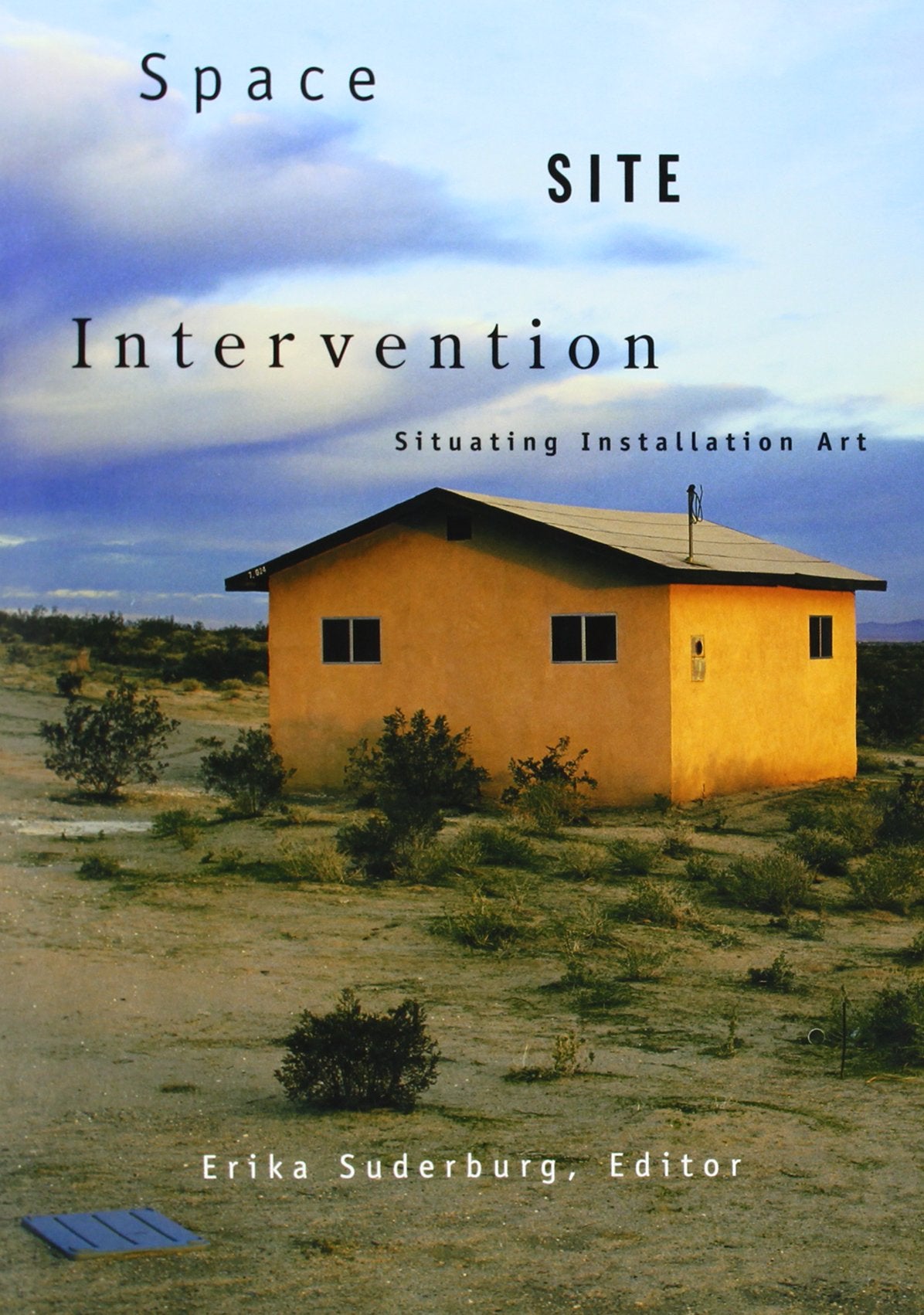
Title
Space, Site, Intervention: Situating Installation Art,New
Sold by Ergodebooks, an authorized reseller.
Returns accepted within 30 days | support@ergodebooks.com
Shipping Information
- Free Standard Shipping — United States only
- Processing Time: 3–5 business days
- Estimated Delivery: 6–10 business days after dispatch
- Double-boxed, fully insured & discreetly packaged
- Tracking number sent via email once dispatched
Returns & Refund
Returns accepted within 30 days of delivery.
Damaged or Defective Item
Free return shipping + replacement or full refund
Wrong Item Received
Free return shipping + replacement or full refund
Change of Mind
Return shipping at customer's expense · 25% restocking fee applies
Payment Option

Originally published in 1970, The Urban Revolution marked Henri Lefebvres first sustained critique of urban society, a work in which he pioneered the use of semiotic, structuralist, and poststructuralist methodologies in analyzing the development of the urban environment. Although it is widely considered a foundational book in contemporary thinking about the city, The Urban Revolution has never been translated into Englishuntil now. This first English edition, deftly translated by Robert Bononno, makes available to a broad audience Lefebvres sophisticated insights into the urban dimensions of modern life.Lefebvre begins with the premise that the total urbanization of society is an inevitable process that demands of its critics new interpretive and perceptual approaches that recognize the urban as a complex field of inquiry. Dismissive of cold, modernist visions of the city, particularly those embodied by rationalist architects and urban planners like Le Corbusier, Lefebvre instead articulates the lived experiences of individual inhabitants of the city. In contrast to the ideology of urbanism and its reliance on commodification and bureaucratizationthe capitalist logic of market and stateLefebvre conceives of an urban utopia characterized by selfdetermination, individual creativity, and authentic social relationships.A brilliantly conceived and theoretically rigorous investigation into the realities and possibilities of urban space, The Urban Revolution remains an essential analysis of and guide to the nature of the city.Henri Lefebvre (d. 1991) was one of the most significant European thinkers of the twentieth century. His many books include The Production of Space (1991), Everyday Life in the Modern World (1994), Introduction to Modernity (1995), and Writings on Cities (1995).Robert Bononno is a fulltime translator who lives in New York. His recent translations include The Singular Objects of Architecture by Jean Baudrillard and Jean Nouvel (Minnesota, 2002) and Cyberculture by Pierre Lvy (Minnesota, 2001).
⚠️ WARNING (California Proposition 65):
This product may contain chemicals known to the State of California to cause cancer, birth defects, or other reproductive harm.
For more information, please visit www.P65Warnings.ca.gov.
- Q: What is the main focus of 'Space, Site, Intervention: Situating Installation Art'? A: The book examines installation art as a diverse and multifaceted art form, exploring its challenges to institutional assumptions and its resonance within modern culture.
- Q: Who are the contributors to this book? A: Contributors include notable figures such as C. Ondine Chavoya, John Coleman, Sean Cubitt, Colin Gardner, and many others, bringing various perspectives on installation art.
- Q: What is the publication date of this book? A: The book was published on February 11, 2000.
- Q: What is the format of 'Space, Site, Intervention'? A: The book is available in a paperback binding.
- Q: How many pages does this book contain? A: The book contains a total of 352 pages.
- Q: Is this book suitable for beginners in art installation? A: Yes, the book offers insights and perspectives that can be beneficial for both beginners and seasoned professionals interested in installation art.
- Q: What genre does this book belong to? A: The book is categorized under History, specifically focusing on the history and impact of installation art.
- Q: Who is the author of 'Space, Site, Intervention'? A: The author of the book is Erika Suderburg.
- Q: What themes are explored within the essays of this book? A: The essays explore themes such as the challenges of installation art, its cultural resonance, and its influence on contemporary visual culture.
- Q: Is there any specific material used in the book's production? A: The book does not specify any unique materials; it is published in standard paperback format.