
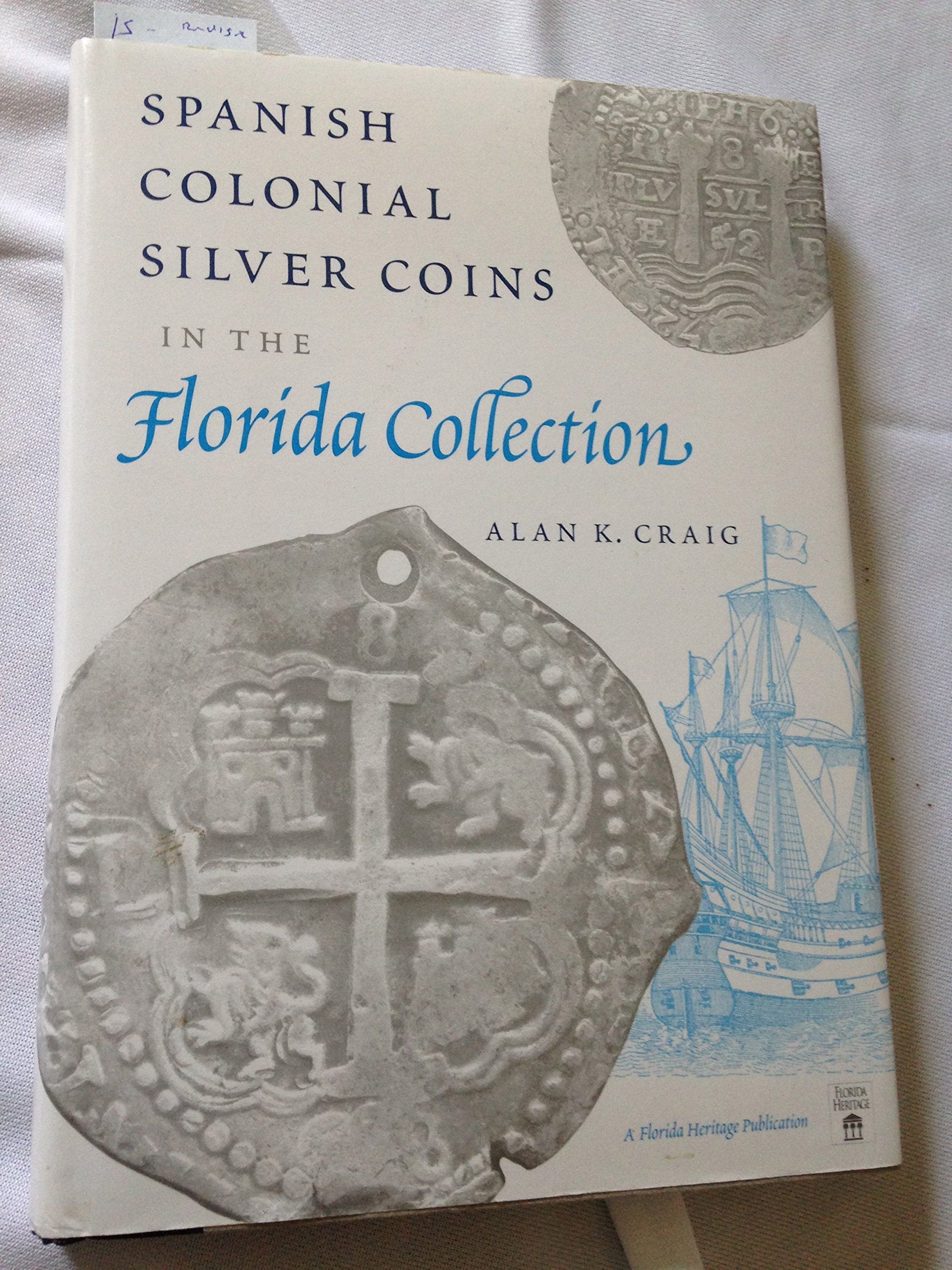
Title
Spanish Colonial Silver Coins in the Florida Collection (Florida Heritage),Used
Sold by Ergodebooks, an authorized reseller.
Returns accepted within 30 days | support@ergodebooks.com
Shipping Information
- Free Standard Shipping — United States only
- Processing Time: 3–5 business days
- Estimated Delivery: 6–10 business days after dispatch
- Double-boxed, fully insured & discreetly packaged
- Tracking number sent via email once dispatched
Returns & Refund
Returns accepted within 30 days of delivery.
Damaged or Defective Item
Free return shipping + replacement or full refund
Wrong Item Received
Free return shipping + replacement or full refund
Change of Mind
Return shipping at customer's expense · 25% restocking fee applies
Payment Option

After Spain's colonial American mints poured forth a flood of silver coins, some of that treasure ended up in wrecks off the Florida coast. Alan Craig's captivating study explains how those coins were made and what historians and numismatists can learn from them.'Kendall W. Brown, Brigham Young University'The State of Florida is indeed fortunate that its colonial coin inventory, Florida's shipwreck patrimony, could be studied by Alan Craig. This work enriches us all.'Eugene Lyon, author of The Enterprise of Florida: Pedro Menndez de Avils and the Spanish Conquest of 15651568 and The Search for the AtochaThe State of Florida owns a vast collection, nearly 23,000 specimens, of Spanish treasure coins salvaged from shipwrecks in Florida waters. It is the largest of its kind in existence.Alan Craig explains the circumstances behind their manufacture and describes the transporting of these unique handmade coins, a complicated business full of intrigue and royal regulations. When freshly minted gold and silver left the Spanish colonial viceroyalties of Peru and Mexico aboard fleets of galleons headed to Spain, a number of ships sank off the coast of Florida. Counterfeiting was rife at the time, and Craig discusses a variety of mint scandals, especially those perpetrated by the notorious Francisco Gomez de la Rocha.Craig also analyzes coins from the mints of Mexico City, Potosi, Lima, and elsewhere. He follows the procedure of making coins, from mining the silver to refining it and ultimately converting it into coins of various sizes, and takes readers on a vivid 'virtual' visit to a mint where they watch African slaves pour molten silver from furnaces into special molds and witness the days of constant hammering, annealing, die striking, blanching, weighing, and counting and recounting necessary to produce a sack of coins.Outstanding specimens from the Florida collection are depicted in numerous superb photographs, many enlarged to show elements of the engraving discussed in the text. In a final section Craig discusses the numismatic significance of the thousands of coins in the collection.As both an economic history and a numismatic study, this work will be a fascinating resource for historians, archaeologists, coin collectors, and general readers interested in maritime treasure.Alan K. Craig is professor emeritus of geography and geology at Florida Atlantic University in Boca Raton and coeditor of In Quest of Mineral Wealth.
⚠️ WARNING (California Proposition 65):
This product may contain chemicals known to the State of California to cause cancer, birth defects, or other reproductive harm.
For more information, please visit www.P65Warnings.ca.gov.
- Q: How many pages does this book have? A: This book has two hundred fifty-six pages. It provides a comprehensive study of Spanish colonial silver coins.
- Q: What are the dimensions of this book? A: The book measures seven point three four inches in length, zero point nine eight inches in width, and ten point two six inches in height.
- Q: What type of binding does this book have? A: This book is bound in hardcover. Hardcover binding is known for its durability and aesthetic appeal.
- Q: Who is the author of this book? A: The author is Alan K. Craig. He is a professor emeritus of geography and geology at Florida Atlantic University.
- Q: What is the main topic of this book? A: The main topic is Spanish colonial silver coins. It explores their history, manufacturing, and significance.
- Q: Is this book suitable for beginners in numismatics? A: Yes, this book is suitable for beginners. It provides insights into the history and significance of Spanish colonial coins.
- Q: What audience would benefit most from this book? A: Historians, archaeologists, and coin collectors would benefit most from this book. It offers both economic history and numismatic study.
- Q: How do I read this book effectively? A: To read this book effectively, consider taking notes on key historical events discussed. Engaging with the photographs can enhance understanding.
- Q: Is this book appropriate for children? A: No, this book is not specifically designed for children. It is more suited for adult readers interested in historical and numismatic topics.
- Q: How should I store this book? A: Store this book in a cool, dry place. Keeping it upright on a shelf can help prevent damage.
- Q: Can I clean the book if it gets dirty? A: Yes, you can gently wipe the cover with a soft, dry cloth. Avoid using water or cleaning solutions.
- Q: What should I do if the book arrives damaged? A: If the book arrives damaged, contact the seller for a return or exchange. Most sellers have policies in place for damaged items.
- Q: Is there a warranty on this book? A: No, books typically do not come with a warranty. However, check with the seller for their specific return policy.
- Q: What is the significance of the Florida Collection? A: The Florida Collection is significant as it holds nearly twenty-three thousand Spanish treasure coins. It is the largest collection of its kind.
- Q: Are there photographs included in this book? A: Yes, the book includes numerous photographs of outstanding specimens. Many of the photographs are enlarged for detailed viewing.
- Q: Does this book cover any historical scandals? A: Yes, the book discusses several mint scandals, including those involving Francisco Gomez de la Rocha. It provides a detailed historical context.