If you have any questions, you are always welcome to contact us. We'll get back to you as soon as possible, withing 24 hours on weekdays.
Customer service
All questions about your order, return and delivery must be sent to our customer service team by e-mail at yourstore@yourdomain.com
Sale & Press
If you are interested in selling our products, need more information about our brand or wish to make a collaboration, please contact us at press@yourdomain.com
Help
If you have any questions, you are always welcome to contact us. We'll get back to you as soon as possible, withing 24 hours on weekdays.
Customer service
All questions about your order, return and delivery must be sent to our customer service team by e-mail at yourstore@yourdomain.com
Sale & Press
If you are interested in selling our products, need more information about our brand or wish to make a collaboration, please contact us at press@yourdomain.com
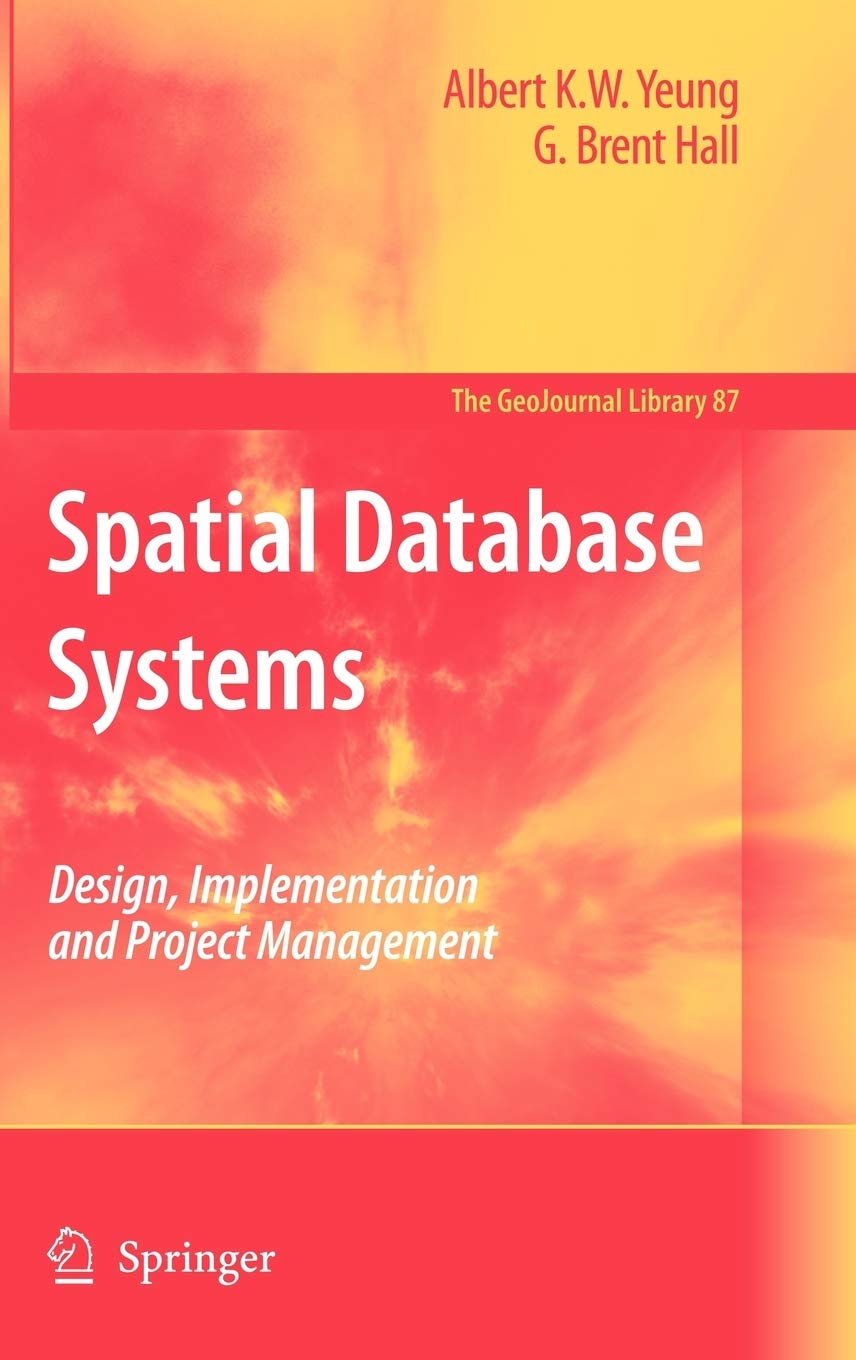
The decision to write this book was motivated by a number of factors. First, although several useful textbooks on spatial databases have recently been published, this is an area of spatial information science that has lagged somewhat behind the rapid advances of the technology and the profusion of books on domainspecific applications. Second, much of the information pertaining to spatial database technologies is only available in scattered journal papers and conference proceedings, and prior to this book no single effort has been made to sift through this expansive literature and unite the key contributions in a single volume. The tasks of sourcing and coherently integrating relevant contributions is daunting for students, many of whom have a substantial number of competing demands placed on them. This book should make the task of knowledge building less daunting. Third, and perhaps most importantly, an apparent trend in many spatial information science programs is to focus, from first or second year undergraduate through to fourth year courses, on learning to work confidently and independently with increasingly complex software tools. Hence, many courses are technical in nature, and while they continue to produce technically adept students, knowledge of the broader aspects of spatial databases is often not as complete as it might be among graduates. Some programs have sought to address this by introducing courses that focus on spatial data management. However, these courses are largely unsupported by a relevant and contemporary textbook.
⚠️ WARNING (California Proposition 65):
This product may contain chemicals known to the State of California to cause cancer,
birth defects, or other reproductive harm.
For MAP (Minimum Advertised Price) violations and Intellectual Property (IP) or Trademark concerns, please contact:
support@ergodebooks.com
⚠️ California Proposition 65 Warning: Some products sold on this website may expose you to chemicals known to the State of California to cause cancer, birth defects, or other reproductive harm. For more information, visit www.P65Warnings.ca.gov.