
Title
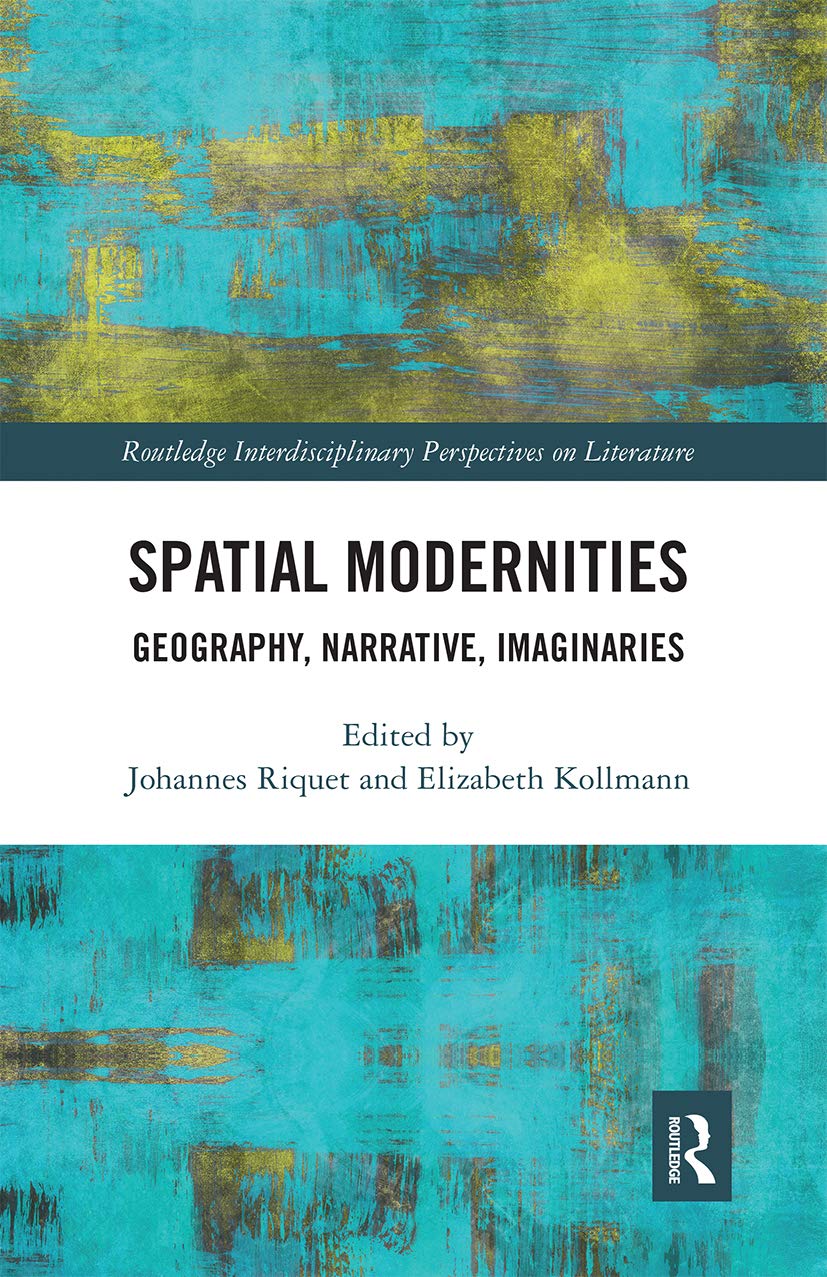
Spatial Modernities: Geography, Narrative, Imaginaries (Routledge Interdisciplinary Perspectives on Literature),Used
Sold by Ergodebooks, an authorized reseller.
Returns accepted within 30 days | support@ergodebooks.com
Shipping Information
- Free Standard Shipping — United States only
- Processing Time: 3–5 business days
- Estimated Delivery: 6–10 business days after dispatch
- Double-boxed, fully insured & discreetly packaged
- Tracking number sent via email once dispatched
Returns & Refund
Returns accepted within 30 days of delivery.
Damaged or Defective Item
Free return shipping + replacement or full refund
Wrong Item Received
Free return shipping + replacement or full refund
Change of Mind
Return shipping at customer's expense · 25% restocking fee applies
Payment Option

This collection of essays offers a series of reflections on the specific literary and cultural forms that can be seen as the product of modernitys spatial transformations, which have taken on new urgency in todays world of ever increasing mobility and global networks. The book offers a broad perspective on the narrative and poetic dimensions of the modern discourses and imaginaries that have shaped our current geographical sensibilities. In the early twentyfirst century, we are still grappling with the spatial effects of early and high modern developments, and the contemporary crises revolving around political boundaries and geopolitical orders in many parts of the world have intensified spatial anxieties. They call for a sustained analysis of individual perceptions, cultural constructions and political implications of spatial processes, movements and relations.The contributors of this book focus both on the spatial orders of modernity and on the various dynamic processes that have shaped our engagement with modern space. They creatively engage in a dialogue between literature, cinema, art history, geography, architecture, cultural semiotics and political science, and they transform twentieth and twentyfirstcentury theory and philosophy to examine the textual forms of different spatial modernities. The chapters do not only engage with the cartographies, crossings and displacements represented within different texts and media, but are also attentive to the ways in which the latter produce space and perform mobility. Tracing an arc from Thomas Mores Utopia to the digital spatiality of contemporary autobiographical film, they treat texts as active cultural forces that crystallize, reinforce, interrogate or complicate the spatial imaginaries of modernity through their own narrative and poetic form.
⚠️ WARNING (California Proposition 65):
This product may contain chemicals known to the State of California to cause cancer, birth defects, or other reproductive harm.
For more information, please visit www.P65Warnings.ca.gov.