
Title
Speaking Volumes: Women, Reading, And Speech In The Age Of Austen,Used
Sold by Ergodebooks, an authorized reseller.
Returns accepted within 30 days | support@ergodebooks.com
Shipping Information
- Free Standard Shipping — United States only
- Processing Time: 3–5 business days
- Estimated Delivery: 6–10 business days after dispatch
- Double-boxed, fully insured & discreetly packaged
- Tracking number sent via email once dispatched
Returns & Refund
Returns accepted within 30 days of delivery.
Damaged or Defective Item
Free return shipping + replacement or full refund
Wrong Item Received
Free return shipping + replacement or full refund
Change of Mind
Return shipping at customer's expense · 25% restocking fee applies
Payment Option

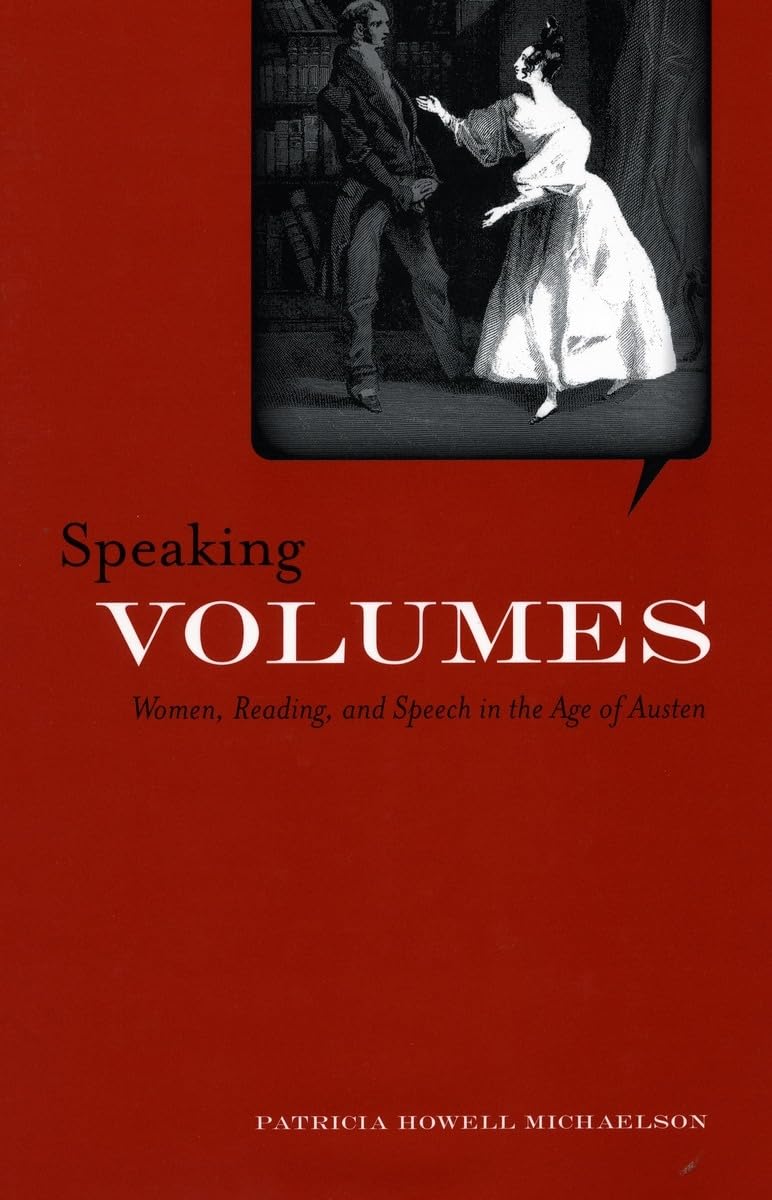
An interdisciplinary study of women and language in England in the late eighteenth and early nineteenth centuries, Speaking Volumes focuses on the connections that contemporaries made between speech and reading. It studies the period's discourses on 'woman's language' and contrasts them with the linguistic practices of individual women. The book also argues that the oral performance of literature was important in fostering domesticity and serving as a means for women to practice authoritative speech.Utilizing a range of evidence gleaned from language texts, schoolbooks, diaries, letters, conduct books, and works of literature (notably the novels of Jane Austen), the author shows how eighteenthcentury English women strategically used the stereotype of 'woman's language' while insisting implicitly that gender was not always the most salient feature of their identities.After an overview of the discourse on eighteenthcentury women's speech, which emphasizes how women were lumped together as a single, deficient class of speakers, the remaining chapters each center on an individual woman to examine the historical forces her speech illuminates. The author describes Quaker language as a sociolect with norms different from those of the 'polite' world, and shows how one speaker, Amelia Opie, utilized a highly mediated form of language that situated her strategically as either a Quaker or a 'polite' woman.In considering the struggle of the actress Sarah Siddons to bridge the gap between theatrical speech and ordinary language, the author relates the oral performance of literature to other forms of display that were expected of women. Using Frances Burney as exemplar, she then examines how reading together fostered domesticity. Finally, relying on the novels of Jane Austen, especially Pride and Prejudice and Persuasion, the book argues that novels took the place of conversation manuals in educating speakers.
⚠️ WARNING (California Proposition 65):
This product may contain chemicals known to the State of California to cause cancer, birth defects, or other reproductive harm.
For more information, please visit www.P65Warnings.ca.gov.