
Title
Spectacles Of Empire: Monsters, Martyrs, And The Book Of Revelation (Divinations: Rereading Late Ancient Religion),Used
Sold by Ergodebooks, an authorized reseller.
Returns accepted within 30 days | support@ergodebooks.com
Shipping Information
- Free Standard Shipping — United States only
- Processing Time: 3–5 business days
- Estimated Delivery: 6–10 business days after dispatch
- Double-boxed, fully insured & discreetly packaged
- Tracking number sent via email once dispatched
Returns & Refund
Returns accepted within 30 days of delivery.
Damaged or Defective Item
Free return shipping + replacement or full refund
Wrong Item Received
Free return shipping + replacement or full refund
Change of Mind
Return shipping at customer's expense · 25% restocking fee applies
Payment Option

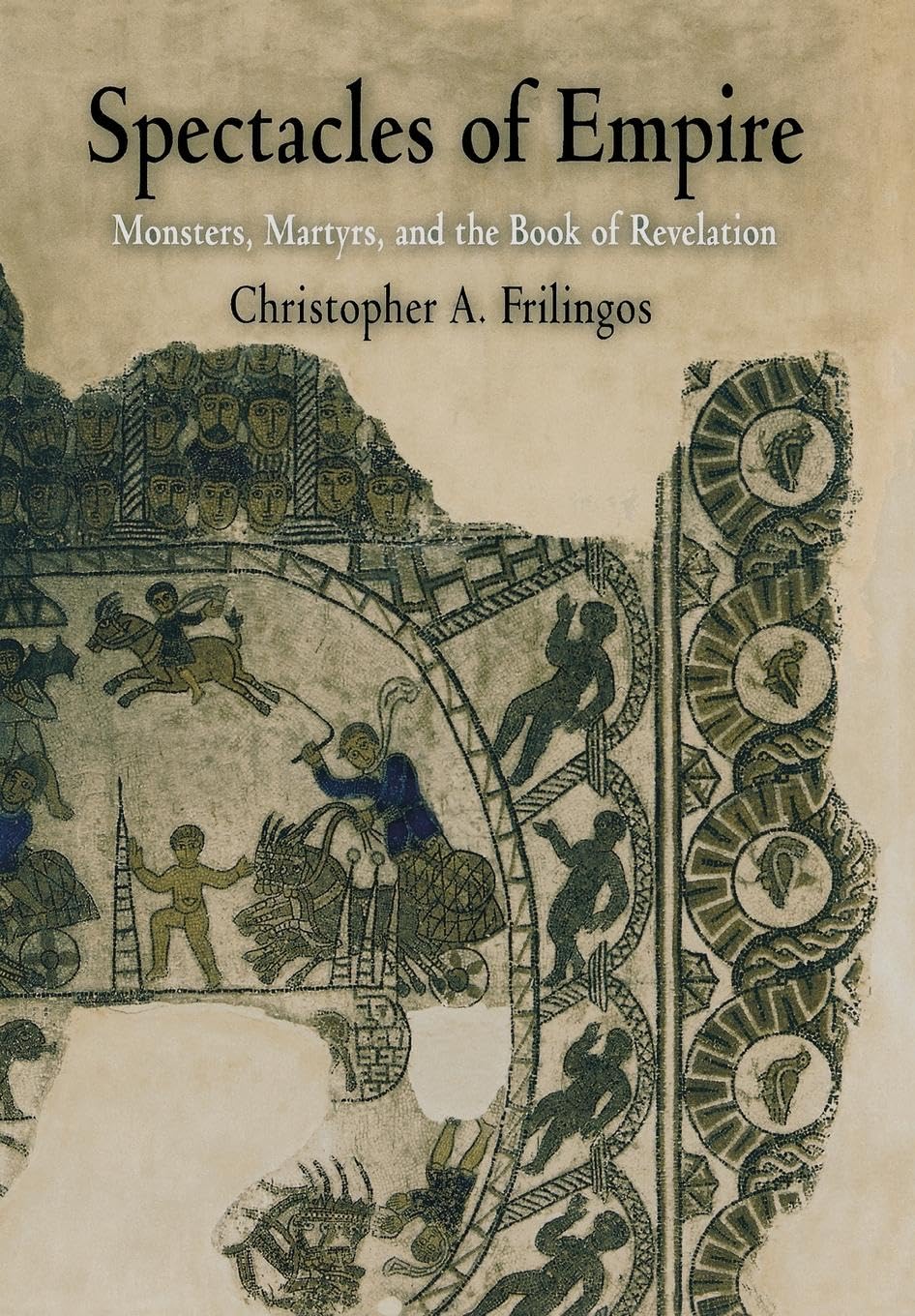
The book of Revelation presents a daunting picture of the destruction of the world, complete with clashing gods, a multiheaded beast, armies of heaven, and the final judgment of mankind. The bizarre conclusion to the New Testament is routinely cited as an example of the early Christian renunciation of the might and values of Rome. But Christopher A. Frilingos contends that Revelation's relationship to its ancient environment was a rather more complex one. In Spectacles of Empire he argues that the public displays of the Roman Empirethe games of the arena, the execution of criminals, the civic veneration of the emperoroffer a plausible context for reading Revelation. Like the spectacles that attracted audiences from one end of the Mediterranean Sea to the other, Revelation shares a preoccupation with matters of spectatorship, domination, and masculinity.Scholars have long noted that in promising a complete reversal of fortune to an oppressed minority, Revelation has provided inspiration to Christians of all kinds, from liberation theologians protesting globalization to the medieval Apostolic Brethren facing death at the stake. But Frilingos approaches the Apocalypse from a different angle, arguing that Revelation was not merely a rejection of the Roman world in favor of a Christian one; rather, its visions of monsters and martyrs were the product of an empire whose subjects were trained to dominate the threatening 'other.' By comparing images in Revelation to those in other Romanera literature, such as Greek romances and martyr accounts, Frilingos reveals a society preoccupied with seeing and being seen. At the same time, he shows how Revelation calls attention to both the risk and the allure of taking in a show in a society which emphasized the careful scrutiny of one's friends, enemies, and self. Ancient spectators, Frilingos notes, whether seated in an arena or standing at a distance as Babylon burned, frequently discovered that they themselves had become part of the performance.
⚠️ WARNING (California Proposition 65):
This product may contain chemicals known to the State of California to cause cancer, birth defects, or other reproductive harm.
For more information, please visit www.P65Warnings.ca.gov.