If you have any questions, you are always welcome to contact us. We'll get back to you as soon as possible, withing 24 hours on weekdays.
Customer service
All questions about your order, return and delivery must be sent to our customer service team by e-mail at yourstore@yourdomain.com
Sale & Press
If you are interested in selling our products, need more information about our brand or wish to make a collaboration, please contact us at press@yourdomain.com
Help
If you have any questions, you are always welcome to contact us. We'll get back to you as soon as possible, withing 24 hours on weekdays.
Customer service
All questions about your order, return and delivery must be sent to our customer service team by e-mail at yourstore@yourdomain.com
Sale & Press
If you are interested in selling our products, need more information about our brand or wish to make a collaboration, please contact us at press@yourdomain.com
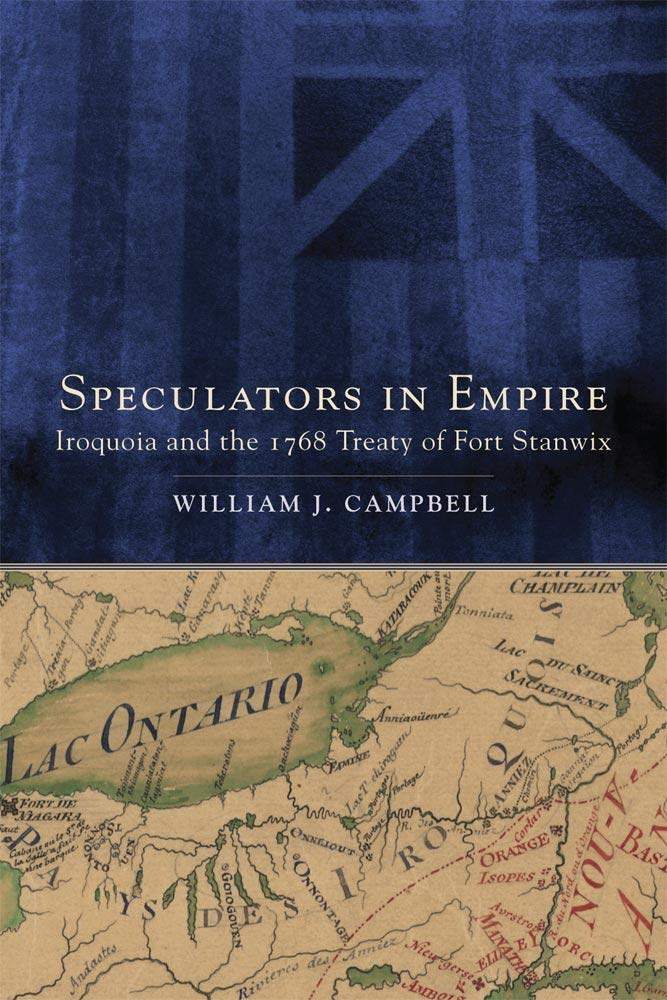
At the 1768 Treaty of Fort Stanwix, the British secured the largest land cession in colonial North America. Crown representatives gained possession of an area claimed but not occupied by the Iroquois that encompassed parts of New York, Pennsylvania, Ohio, Kentucky, and West Virginia. The Iroquois, however, were far from naveand the outcome was not an instance of their simply being dispossessed by Europeans. In Speculators in Empire, William J. Campbell examines the diplomacy, land speculation, and empire building that led up to the treaty. His detailed study overturns common assumptions about the roles of the Iroquois and British on the eve of the American Revolution.Through the treaty, the Iroquois directed the expansion of empire in order to serve their own needs while Crown negotiators obtained more territory than they were authorized to accept. How did this questionable transfer happen, who benefited, and at what cost? Campbell unravels complex intercultural negotiations in which colonial officials, land speculators, traders, tribes, and individual Indians pursued a variety of agendas, each side possessing considerable understanding of the others expectations and intentions.Historians have credited British Indian superintendent Sir William Johnson with pulling off the land grab, but Campbell shows that Johnson was only one of many players. Johnsons deputy, George Croghan, used the treaty to capitalize on a lifetime of scheming and speculation. Iroquois leaders and their peoples also benefited substantially. With keen awareness of the workings of the English legal system, they gained protection for their homelands by opening the Ohio country to settlement.Campbells navigation of the complexities of Native and British politics and land speculation illuminates a time when regional concerns and personal politicking would have lasting consequences for the continent. As Speculators in Empire shows, colonial and Native history are unavoidably entwined, and even interdependent.
⚠️ WARNING (California Proposition 65):
This product may contain chemicals known to the State of California to cause cancer,
birth defects, or other reproductive harm.
<div class="dynamic-checkout__content" id="dynamic-checkout-cart" data-shopify="dynamic-checkout-cart"> <shopify-accelerated-checkout-cart wallet-configs="[{"supports_subs":true,"supports_def_opts":false,"name":"shop_pay","wallet_params":{"shopId":73758048501,"merchantName":"Ergodebooks","personalized":true}},{"supports_subs":false,"supports_def_opts":false,"name":"amazon_pay","wallet_params":{"checkoutLanguage":"en_US","ledgerCurrency":"USD","placement":"Cart","sandbox":false,"merchantId":"A1G1ZY975O1T6J","productType":"PayAndShip","design":"C0002"}},{"supports_subs":true,"supports_def_opts":false,"name":"paypal","wallet_params":{"shopId":73758048501,"countryCode":"US","merchantName":"Ergodebooks","phoneRequired":true,"companyRequired":false,"shippingType":"shipping","shopifyPaymentsEnabled":true,"hasManagedSellingPlanState":false,"requiresBillingAgreement":false,"merchantId":"L873BZSC9NMQS","sdkUrl":"https://www.paypal.com/sdk/js?components=buttons\u0026commit=false\u0026currency=USD\u0026locale=en_US\u0026client-id=AbasDhzlU0HbpiStJiN1KRJ_cNJJ7xYBip7JJoMO0GQpLi8ePNgdbLXkC7_KMeyTg8tnAKW4WKrh9qmf\u0026merchant-id=L873BZSC9NMQS\u0026intent=authorize"}}]" access-token="c0f52a66b386e9fa5c0ab4c2febc737c" buyer-country="US" buyer-locale="en" buyer-currency="USD" shop-id="73758048501" cart-id="1c30f657ebfd3d1a802c0f7bd287cc33" enabled-flags="["32a68cd0","a1c7ccbe","ce346acf","c0874428"]" > <div class="wallet-button-wrapper"> <ul class='wallet-cart-grid wallet-cart-grid--skeleton' role="list" data-shopify-buttoncontainer="true"> <li data-testid='grid-cell' class='wallet-cart-button-container'><div class='wallet-cart-button wallet-cart-button__skeleton' role='button' disabled aria-hidden='true'> </div></li><li data-testid='grid-cell' class='wallet-cart-button-container'><div class='wallet-cart-button wallet-cart-button__skeleton' role='button' disabled aria-hidden='true'> </div></li><li data-testid='grid-cell' class='wallet-cart-button-container'><div class='wallet-cart-button wallet-cart-button__skeleton' role='button' disabled aria-hidden='true'> </div></li> </ul> </div> </shopify-accelerated-checkout-cart> <small id="shopify-buyer-consent" class="hidden" aria-hidden="true" data-consent-type="subscription"> One or more of the items in your cart is a deferred, subscription, or recurring purchase. By continuing, I agree to the <span id="shopify-subscription-policy-button">cancellation policy</span> and authorize you to charge my payment method at the prices, frequency and dates listed on this page until my order is fulfilled or I cancel, if permitted. </small> </div>
Stay in the know
Subscribe to our newsletter and stay updated on latest offers, discounts and events near you.
For MAP (Minimum Advertised Price) violations and Intellectual Property (IP) or Trademark concerns, please contact:
support@ergodebooks.com
⚠️ California Proposition 65 Warning: Some products sold on this website may expose you to chemicals known to the State of California to cause cancer, birth defects, or other reproductive harm. For more information, visit www.P65Warnings.ca.gov.