
Title
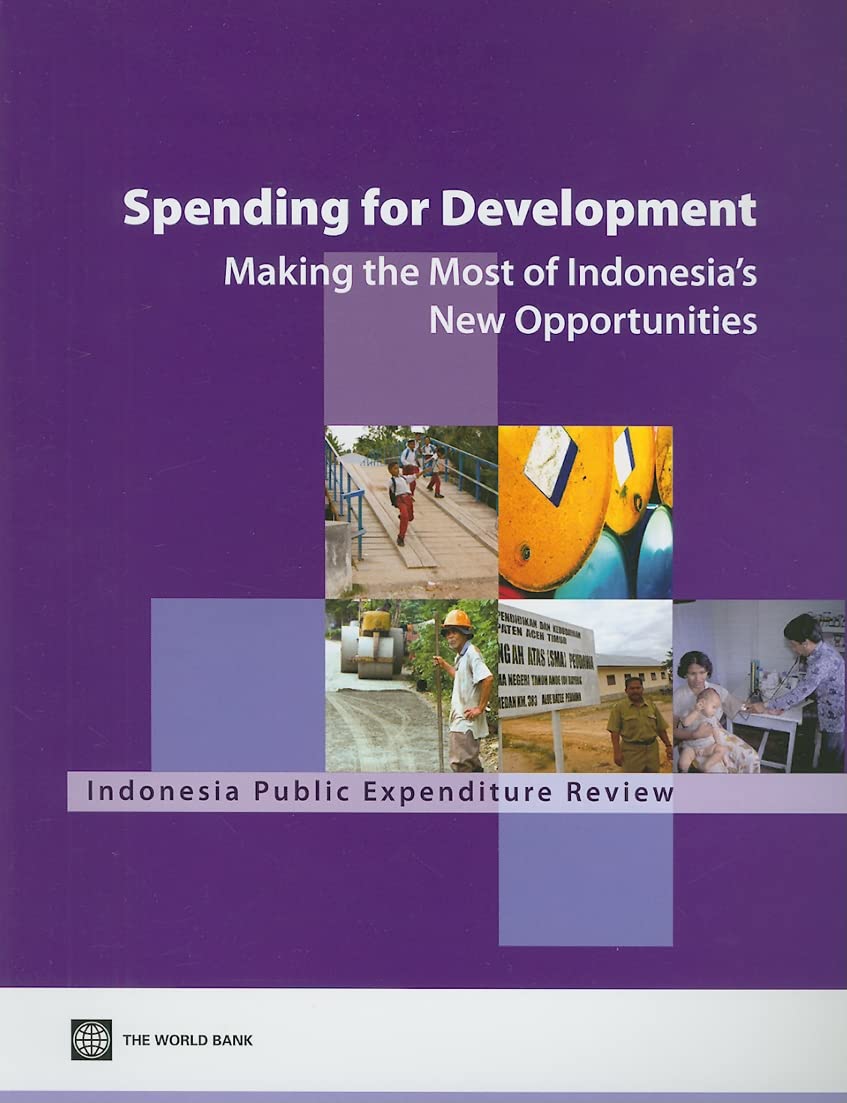
Spending For Development: Making The Most Of Indonesia'S New Opportunities: Indonesia Public Expenditure Review 2007,New
Sold by Ergodebooks, an authorized reseller.
Returns accepted within 30 days | support@ergodebooks.com
Shipping Information
- Free Standard Shipping — United States only
- Processing Time: 3–5 business days
- Estimated Delivery: 6–10 business days after dispatch
- Double-boxed, fully insured & discreetly packaged
- Tracking number sent via email once dispatched
Returns & Refund
Returns accepted within 30 days of delivery.
Damaged or Defective Item
Free return shipping + replacement or full refund
Wrong Item Received
Free return shipping + replacement or full refund
Change of Mind
Return shipping at customer's expense · 25% restocking fee applies
Payment Option

This report tries to establish the facts about Indonesia s public expenditures, presenting trends over time and analyzing the composition across sectors and levels of government. The report presents comprehensive information on key sectors, including subnational governments and stateowned enterprises in key infrastructure sectors. Based on these facts, the report asks: Who benefits from these substantial amounts of public resources? Where are the gaps? Which regions are wellendowed? Which regions are lagging behind? In addition to these questions, this report also tries to respond to key concerns that are in the minds of many ordinary Indonesians and friends of Indonesia, such as: Can Indonesia afford to spend more? Is the current level of education and health spending sufficient? How to revitalize infrastructure investment, and which sectors are the priorities? Why is it so difficult to disburse funds through the government budget system? How unequal is Indonesia and how should fiscal transfers be structured to equalize disparities? Spending for Development: Making the Most of Indonesia's New Opportunities is an essential source of analysis for all stakeholders in public finance in Indonesia, some of the most important findings include: 1 Thanks to the fuel subsidies cuts in 2005, Indonesia freed up US$10 billion in 2006 to spend on development programs. An additional US$5 billion also came available from increasing revenues and declining debt service. 2 Despite the 2005 domestic fuel price adjustments, Indonesia still spends US$12 billion on subsidies annually, mainly on fuel and electricity. 3 Thirtysix percent of all public spending is now in the hands of subnational governments. 4 While spending on education since the crisis has nearly doubled and spending on health has increased almost 70 percent, spending on infrastructure investment remains significantly less than precrisis levels (below 3.4 percent of GDP). 5 Indonesia spends about 50 percent of its total annual capital expenditure in the final quarter of the year.
⚠️ WARNING (California Proposition 65):
This product may contain chemicals known to the State of California to cause cancer, birth defects, or other reproductive harm.
For more information, please visit www.P65Warnings.ca.gov.