
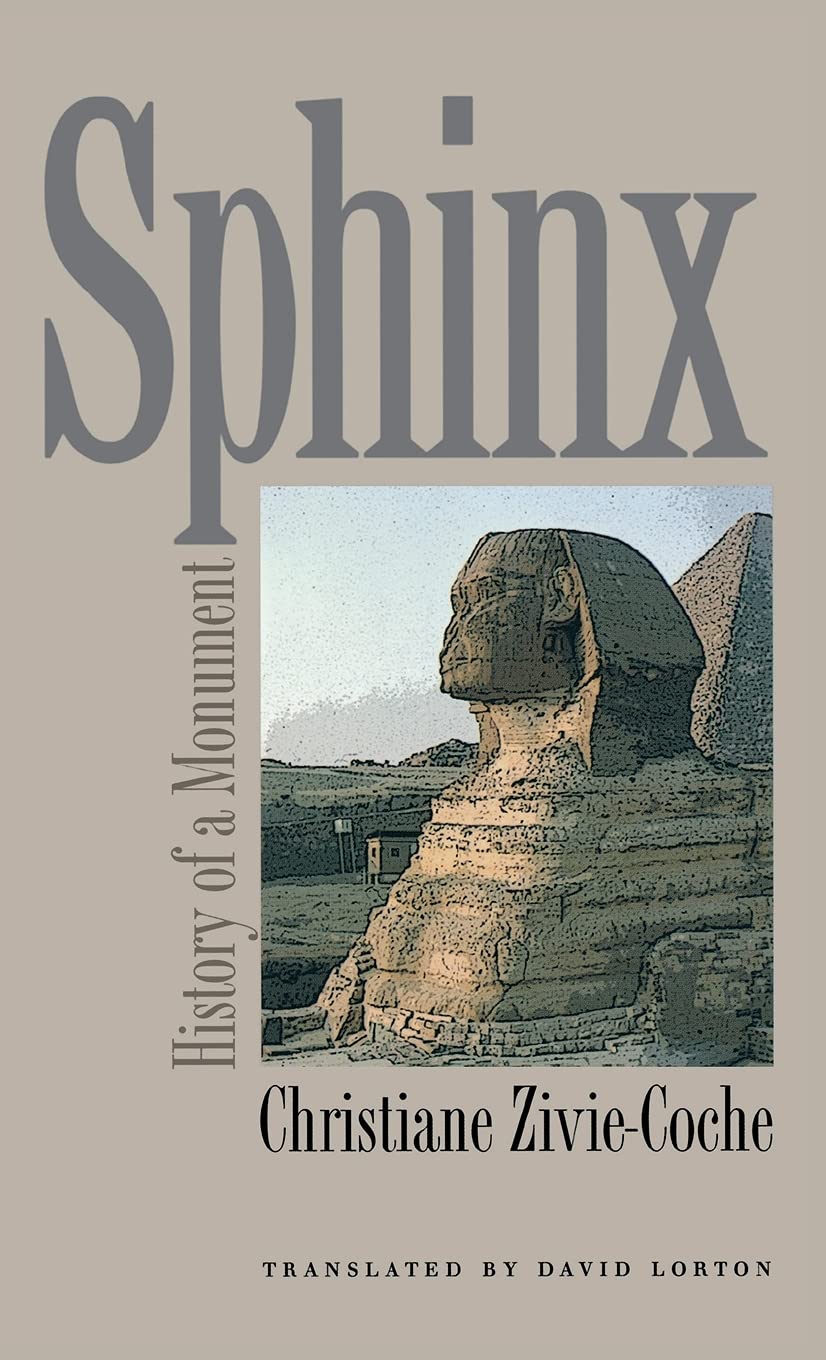
Title
Sphinx: History Of A Monument
Sold by Ergodebooks, an authorized reseller.
Returns accepted within 30 days | support@ergodebooks.com
Shipping Information
- Free Standard Shipping — United States only
- Processing Time: 3–5 business days
- Estimated Delivery: 6–10 business days after dispatch
- Double-boxed, fully insured & discreetly packaged
- Tracking number sent via email once dispatched
Returns & Refund
Returns accepted within 30 days of delivery.
Damaged or Defective Item
Free return shipping + replacement or full refund
Wrong Item Received
Free return shipping + replacement or full refund
Change of Mind
Return shipping at customer's expense · 25% restocking fee applies
Payment Option

Sphinxes Are Legion In Egyptwhat Is So Special About This One?... We Shall Take A Stroll Around The Monument Itself, Scrutinizing Its Special Features And Analyzing The Changes It Experienced Throughout Its History. The Evidence Linked To The Statue Will Enable Us To Trace Its Evolution... Down To The Worship It Received In The First Centuries Of Our Own Era, When Egyptians, Greeks, And Romans Mingled Together In Devotion To This Colossus, Illustrious Witness To A Past That Was Already More Than Two Millennia Old.From The Introductionthe Great Sphinx Of Giza Is One Of The Few Monuments From Ancient Egypt Familiar To Nearly Everyone. In A Land Where The Colossal Is Part Of The Landscape, It Still Stands Out, The Largest Known Statue In Egypt. Originally Constructed As The Image Of King Chephren, Builder Of The Second Of The Great Pyramids, The Sphinx Later Acquired New Fame In The Guise Of The Sun God Harmakhis. Major Construction Efforts In The New Kingdom And Roman Period Transformed The Monument And Its Environs Into An Impressive Place Of Pilgrimage, Visited Until The End Of Pagan Antiquity.Christiane Ziviecoche, A Distinguished Egyptologist, Surveys The Long History Of The Great Sphinx And Discusses Its Original Appearance, Its Functions And Religious Significance, Its Relation To The Many Other Egyptian Sphinxes, And The Various Discoveries Connected With It. From Votive Objects Deposited By The Faithful And Inscriptions That Testify To Details Of Worship, She Reconstructs The Cult Of Harmakhis (In Egyptian, Haremakhet, Or Horusinthehorizon), Which Arose Around The Monument In The Second Millennium. We Are Faced, She Writes, With A Religious Phenomenon That Is Entirely Original, Though Not Unique: A Theological Reinterpretation Turned An Existing Statue Into The Image Of The God Who Had Been Invented On Its Basis.The Coming Of Christianity Ended The Great Sphinx'S Religious Role. The Everpresent Sand Buried It, Thus Sparing It The Fate That Overtook The Nearby Pyramids, Which Were Stripped Of Their Stone By Medieval Builders. The Monument Remained Untouched, Covered By Its Desert Blanket, Until The First Excavations. Ziviecoche Details The Archaeological Activity Aimed At Clearing The Sphinx And, Later, At Preserving It From The Corrosive Effects Of A Rising Water Table.
⚠️ WARNING (California Proposition 65):
This product may contain chemicals known to the State of California to cause cancer, birth defects, or other reproductive harm.
For more information, please visit www.P65Warnings.ca.gov.
- Q: What is the page count of 'Sphinx: History of a Monument'? A: This book contains one hundred forty-four pages. It provides a detailed exploration of the Great Sphinx and its historical significance.
- Q: What is the binding type of this book? A: The book is bound in hardcover. This sturdy binding enhances durability and makes it a great addition to any collection.
- Q: Who is the author of 'Sphinx: History of a Monument'? A: The author is Christiane Zivie-Coche. She is a distinguished Egyptologist with extensive knowledge of ancient Egyptian monuments.
- Q: What are the dimensions of the book? A: The book measures five point five one inches in length, zero point seven one inches in width, and eight point five inches in height. These dimensions make it a manageable size for reading and display.
- Q: What category does this book fall under? A: This book is categorized under Landmarks & Monuments. It focuses specifically on the historical and cultural aspects of the Great Sphinx.
- Q: How do I read 'Sphinx: History of a Monument'? A: You can read this book as a traditional hardcover. It is suitable for anyone interested in ancient Egyptian history and monuments.
- Q: Is this book suitable for academic use? A: Yes, it is suitable for academic use. The thorough research and insights provided by the author make it a valuable resource for students and scholars.
- Q: Can children read this book? A: Yes, it can be read by older children and teens interested in history. However, parental guidance may be beneficial due to complex themes.
- Q: How should I store 'Sphinx: History of a Monument'? A: Store the book upright on a bookshelf to prevent warping. Keep it away from direct sunlight to protect the cover and pages.
- Q: Does this book require special care? A: No, it does not require special care. Just keep it in a dry area and avoid moisture to maintain its condition.
- Q: What if the book arrives damaged? A: If the book arrives damaged, you should contact the seller for a return or exchange policy. Most reputable sellers will offer a solution.
- Q: Is there a warranty for this book? A: Typically, books do not come with a warranty. However, check with the seller for specific return policies or guarantees.
- Q: How can I clean the book? A: To clean the book, gently wipe the cover with a dry cloth. Avoid using water or cleaning solutions to protect the material.
- Q: What makes this book unique? A: This book is unique due to its detailed examination of the Great Sphinx's history and religious significance. It offers insights from a leading Egyptologist.
- Q: Is this book a good gift for history enthusiasts? A: Yes, it makes an excellent gift for history enthusiasts. Its informative content and engaging writing style will appeal to anyone interested in ancient Egypt.