
Title




Spirituality in Conflict: Saint Francis and Giottos Bardi Chapel,Used
Sold by Ergodebooks, an authorized reseller.
Returns accepted within 30 days | support@ergodebooks.com
Shipping Information
- Free Standard Shipping — United States only
- Processing Time: 3–5 business days
- Estimated Delivery: 6–10 business days after dispatch
- Double-boxed, fully insured & discreetly packaged
- Tracking number sent via email once dispatched
Returns & Refund
Returns accepted within 30 days of delivery.
Damaged or Defective Item
Free return shipping + replacement or full refund
Wrong Item Received
Free return shipping + replacement or full refund
Change of Mind
Return shipping at customer's expense · 25% restocking fee applies
Payment Option

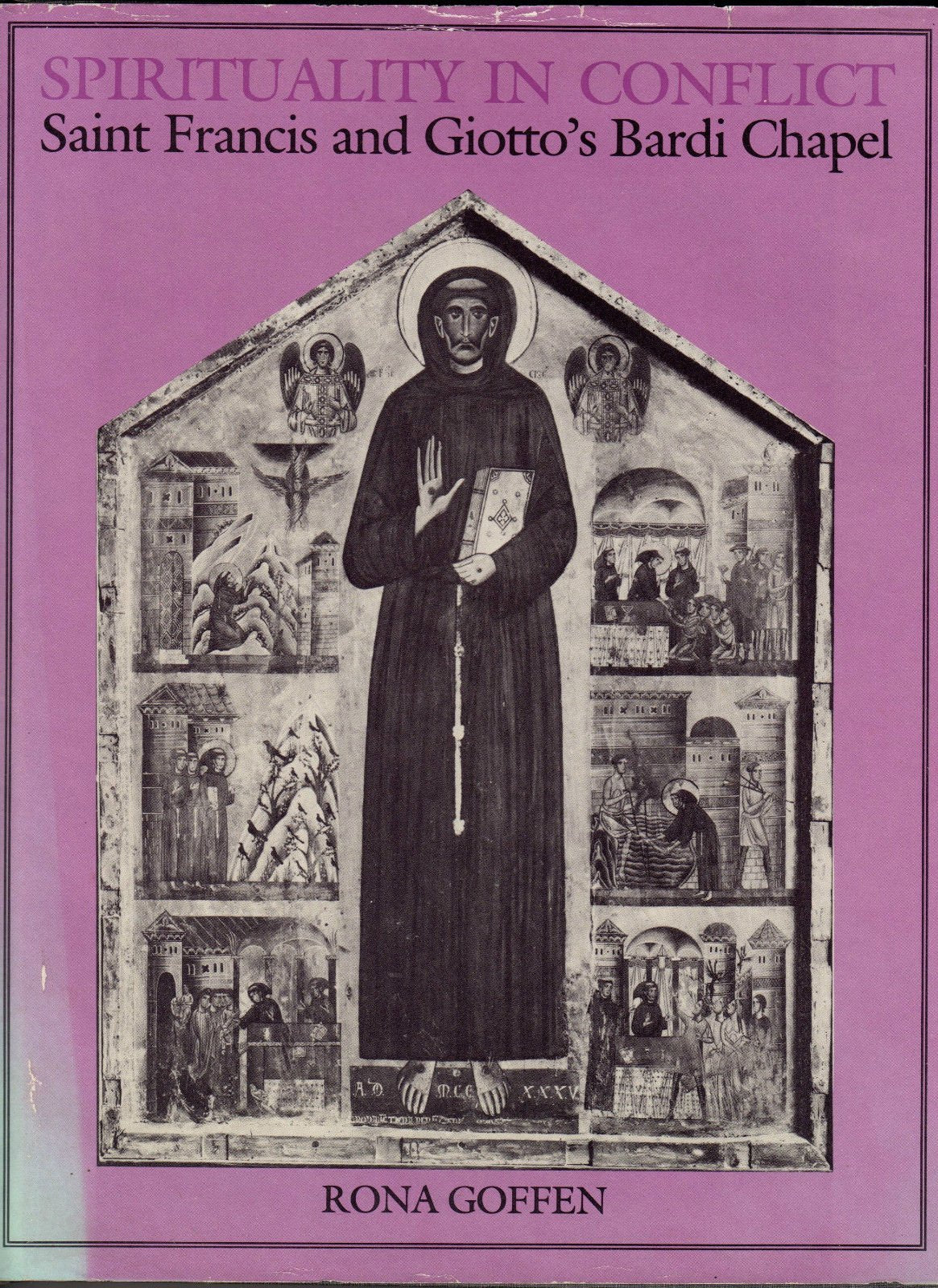
Few saints have received so much attention as Francis of Assisi and few artists so much attention as Giotto di Bondoneand yet the masters cycle of Saint Francis in the Bardi Chapel of Santa Croce in Florence has been little discussed. Similarly, the remarkable panel that now serves as the chapels altarpiece has been given only cursory consideration by historians and art historianseven though this panel, with its twenty narrative scenes of the saints life, represents the most complete visualization of midthirteenthcentury Franciscan spirituality which has survived. In this book Goffen shoes how the history of Santa Croce itself, which contains both of these works of art, parallels and summarizes the early history of the Order of Friars Minor. Santa Croce was and is the most important Franciscan church of Florence and, like the order itself in the Middle Ages and the Renaissance, it was bitterly divided into opposing factions, the Spirituals and the Conventuals. We see here that, tragically, the source of their disagreement lay in the character of Saint Francis himself. Unlike the Dominicansand, indeed, unlike all other contemporary religious ordersthe Friars Minor fostered a cult of personality of their founder. Precisely because Francis provided the example for his friars, the way in which his character was presented in art and in literature became of the utmost concern to the order, a matter requiring deep consideration and, eventually, careful control. But despite their disagreements, the factions were agreed about one central point: Francis was unique in having received the wounds of Crucifixion as a sign of divine approbation.Goffen considers the church of Santa Croce, the Bardi Dossal, and Giottos cycle of Saint Francis both in relation to each other and in the context of the history and spirituality of the Franciscan order during its first century. The dossal is the visual equivalent of the writings of Celano, the first biographer of Saint Francis. The hero of the dossal is the Spiritual ideal, but by the time the Bardi family had commissioned its chapel of Saint Francis, almost a century after the dossal was painted, the Conventuals had effectively taken over the church and friary of Santa Croce. Giottos cycle of Saint Francis in the Bardi Chapel is understood as the representation of the Conventual Saint Francis, the purposeful and controlled hero of Bonaventures biography, which had been imposed as the only official life of a saint.
⚠️ WARNING (California Proposition 65):
This product may contain chemicals known to the State of California to cause cancer, birth defects, or other reproductive harm.
For more information, please visit www.P65Warnings.ca.gov.