If you have any questions, you are always welcome to contact us. We'll get back to you as soon as possible, withing 24 hours on weekdays.
Customer service
All questions about your order, return and delivery must be sent to our customer service team by e-mail at yourstore@yourdomain.com
Sale & Press
If you are interested in selling our products, need more information about our brand or wish to make a collaboration, please contact us at press@yourdomain.com
Help
If you have any questions, you are always welcome to contact us. We'll get back to you as soon as possible, withing 24 hours on weekdays.
Customer service
All questions about your order, return and delivery must be sent to our customer service team by e-mail at yourstore@yourdomain.com
Sale & Press
If you are interested in selling our products, need more information about our brand or wish to make a collaboration, please contact us at press@yourdomain.com
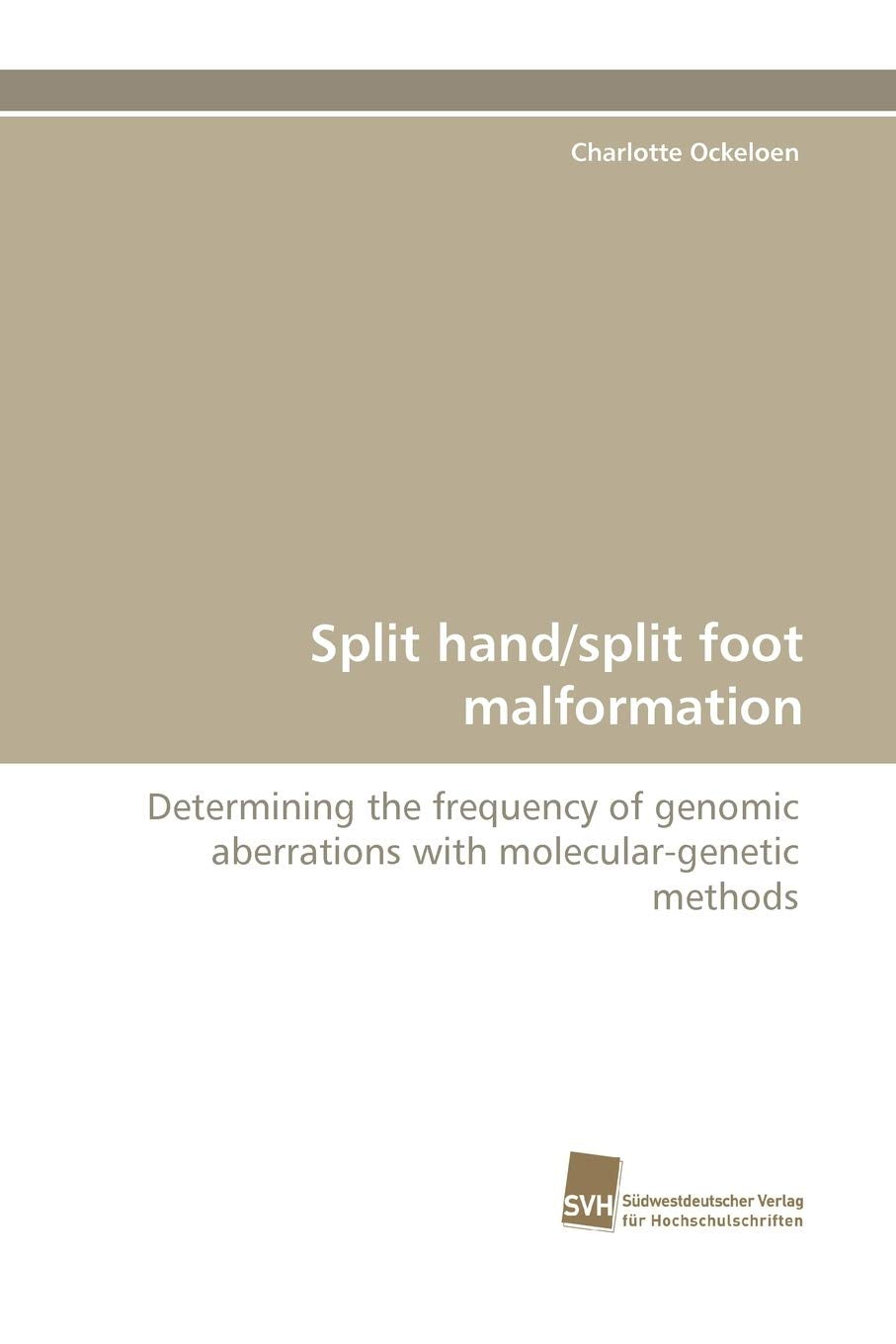
Split hand/split foot malformation (SHFM) is a mostly dominantly inherited congenital limb malformation. Until now, five genetic loci have been identified that contribute to the development of SHFM. Currently, TP63 mutation analysis (SHFM4) is the routine diagnostic test for SHFM. However, there are indications that the frequency of SHFM3 is substantially higher than that of SHFM4. So far, estimations of the frequency of the five known SHFM loci have not been made based exclusively on phenotype. In this study, 28 SHFM patients were analysed using array CGH, MLPA and qPCR to detect copy number variations at the five known genetic loci. TP63positive patients were excluded. In our cohort, the frequency of SHFM3 was 25% (7/28). This result confirms our hypothesis that the frequency of SHFM3 in SHFM patients is substantially high and, in fact, about two times higher than the frequency of SHFM4, which is 1015%. Therefore I recommend that in clinical practice patients with isolated SHFM should primarily be tested for copy number changes at the SHFM3 locus.
⚠️ WARNING (California Proposition 65):
This product may contain chemicals known to the State of California to cause cancer,
birth defects, or other reproductive harm.
For MAP (Minimum Advertised Price) violations and Intellectual Property (IP) or Trademark concerns, please contact:
support@ergodebooks.com
⚠️ California Proposition 65 Warning: Some products sold on this website may expose you to chemicals known to the State of California to cause cancer, birth defects, or other reproductive harm. For more information, visit www.P65Warnings.ca.gov.