
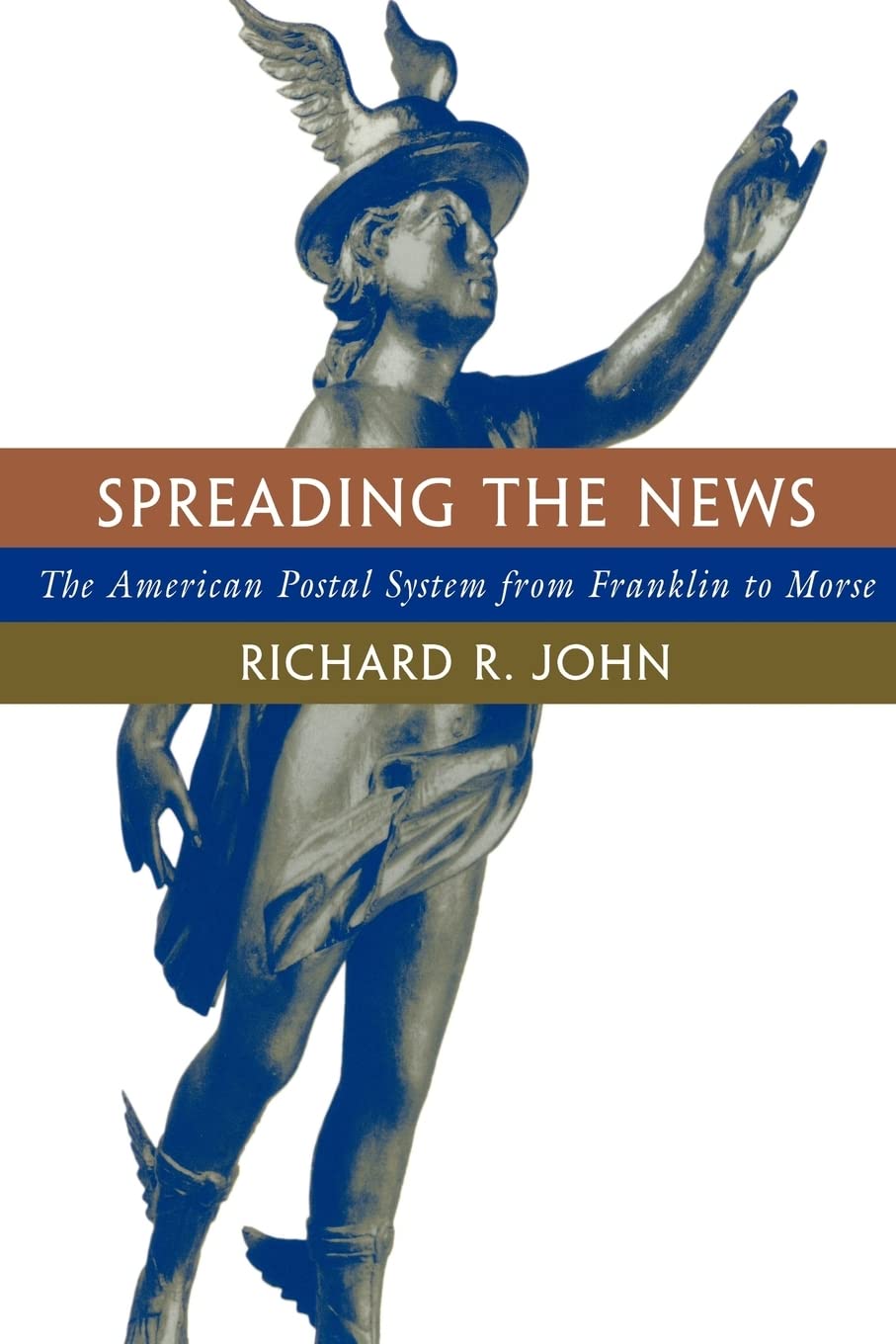
Title
Spreading the News: The American Postal System from Franklin to Morse,Used
Sold by Ergodebooks, an authorized reseller.
Returns accepted within 30 days | support@ergodebooks.com
Shipping Information
- Free Standard Shipping — United States only
- Processing Time: 3–5 business days
- Estimated Delivery: 6–10 business days after dispatch
- Double-boxed, fully insured & discreetly packaged
- Tracking number sent via email once dispatched
Returns & Refund
Returns accepted within 30 days of delivery.
Damaged or Defective Item
Free return shipping + replacement or full refund
Wrong Item Received
Free return shipping + replacement or full refund
Change of Mind
Return shipping at customer's expense · 25% restocking fee applies
Payment Option

In the seven decades from its establishment in 1775 to the commercialization of the electric telegraph in 1844, the American postal system spurred a communications revolution no less farreaching than the subsequent revolutions associated with the telegraph, telephone, and computer. This book tells the story of that revolution and the challenge it posed for American business, politics, and cultural life.During the early republic, the postal system was widely hailed as one of the most important institutions of the day. No other institution had the capacity to transmit such a large volume of information on a regular basis over such an enormous geographical expanse. The stagecoaches and postriders who conveyed the mail were virtually synonymous with speed.In the United States, the unimpeded transmission of information has long been hailed as a positive good. In few other countries has informational mobility been such a cherished ideal. Richard John shows how postal policy can help explain this state of affairs. He discusses its influence on the development of such informationintensive institutions as the national market, the voluntary association, and the mass party. He traces its consequences for ordinary Americans, including women, blacks, and the poor. In a broader sense, he shows how the postal system worked to create a national society out of a loose union of confederated states. This exploration of the role of the postal system in American public life provides a fresh perspective not only on an important but neglected chapter in American history, but also on the origins of some of the most distinctive features of American life today.
⚠️ WARNING (California Proposition 65):
This product may contain chemicals known to the State of California to cause cancer, birth defects, or other reproductive harm.
For more information, please visit www.P65Warnings.ca.gov.