If you have any questions, you are always welcome to contact us. We'll get back to you as soon as possible, withing 24 hours on weekdays.
Customer service
All questions about your order, return and delivery must be sent to our customer service team by e-mail at yourstore@yourdomain.com
Sale & Press
If you are interested in selling our products, need more information about our brand or wish to make a collaboration, please contact us at press@yourdomain.com
Help
If you have any questions, you are always welcome to contact us. We'll get back to you as soon as possible, withing 24 hours on weekdays.
Customer service
All questions about your order, return and delivery must be sent to our customer service team by e-mail at yourstore@yourdomain.com
Sale & Press
If you are interested in selling our products, need more information about our brand or wish to make a collaboration, please contact us at press@yourdomain.com
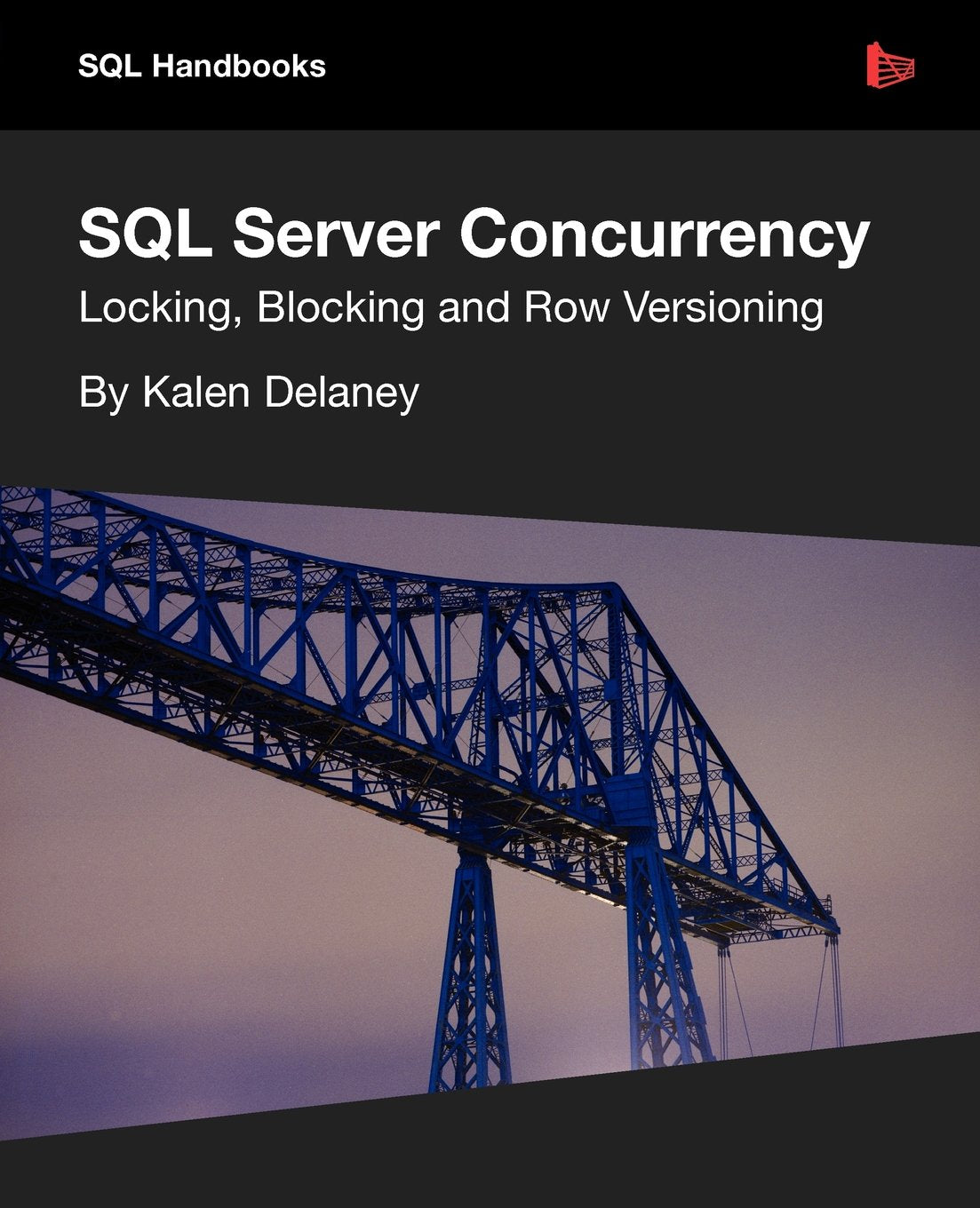
If you've designed your SQL code intelligently, and implemented a sensible indexing strategy, there's a good chance your queries will 'fly', when tested in isolation. In the real world, however, where multiple processes can access the same data at the same time, SQL Server often has to make one process wait, sacrificing concurrency and performance, in order that in order that all can succeed, without destroying data integrity. Transactions are at the heart of concurrency. I explain their ACID properties, the transaction isolation levels that dictate the acceptable behaviors when multiple transactions access the same data simultaneously, and SQL Server's optimistic and pessimistic models for mediating concurrent access. Pessimistic concurrency, SQL Server's default, uses locks to avoid concurrency problems. I explain all the different locks and their compatibility. I show how to control locking with hints and bound connections, and how to troubleshoot excessive blocking and deadlocking. Optimistic concurrency uses row versions to support concurrency. I explain how row versioning works, cover SQL Server's two Snapshotbased isolation levels and offer troubleshooting tips for issues such as update conflicts. Your application can have worldclass indexes and queries, but they won't help you if you can't get your data, because another application has it locked. That's why every DBA and developer must understand SQL Server concurrency, and how to troubleshoot any issues. I hope my book helps!
⚠️ WARNING (California Proposition 65):
This product may contain chemicals known to the State of California to cause cancer,
birth defects, or other reproductive harm.
For MAP (Minimum Advertised Price) violations and Intellectual Property (IP) or Trademark concerns, please contact:
support@ergodebooks.com
⚠️ California Proposition 65 Warning: Some products sold on this website may expose you to chemicals known to the State of California to cause cancer, birth defects, or other reproductive harm. For more information, visit www.P65Warnings.ca.gov.