
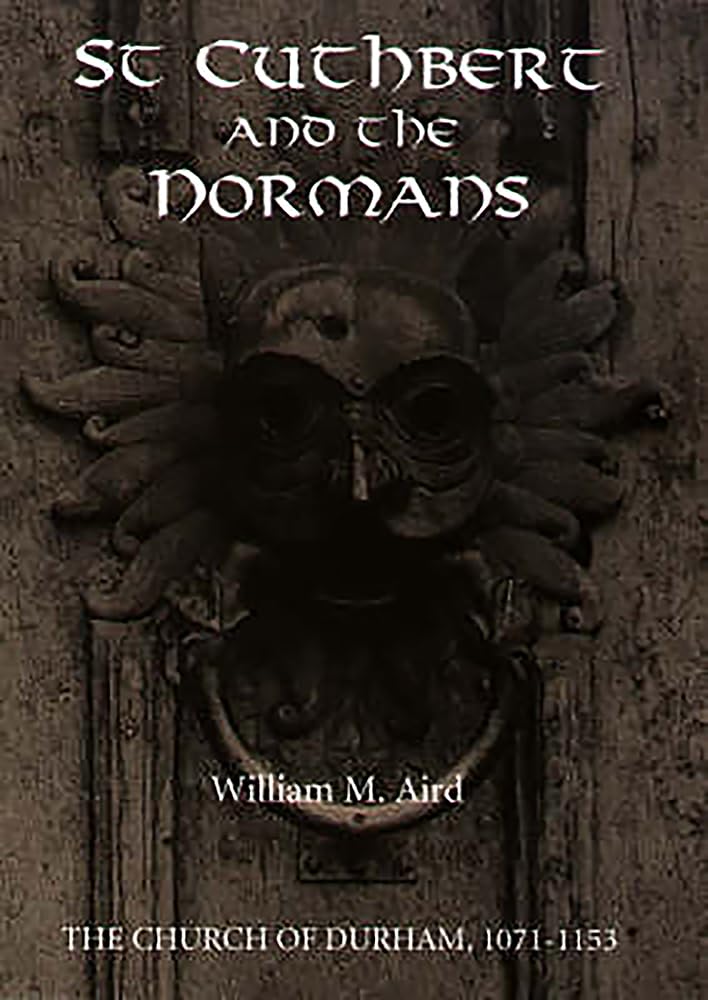
Title
St Cuthbert and the Normans: The Church of Durham, 10711153 (Studies in the History of Medieval Religion, 14),Used
Sold by Ergodebooks, an authorized reseller.
Returns accepted within 30 days | support@ergodebooks.com
Shipping Information
- Free Standard Shipping — United States only
- Processing Time: 3–5 business days
- Estimated Delivery: 6–10 business days after dispatch
- Double-boxed, fully insured & discreetly packaged
- Tracking number sent via email once dispatched
Returns & Refund
Returns accepted within 30 days of delivery.
Damaged or Defective Item
Free return shipping + replacement or full refund
Wrong Item Received
Free return shipping + replacement or full refund
Change of Mind
Return shipping at customer's expense · 25% restocking fee applies
Payment Option

An alternative view of the Conquest and settlement from northeast England, charting relations between the monastic community and the invading Normans.Northeast England experienced the Norman Conquest rather differently from the south of the country. This account of events in Northumbria gives an important alternative view of the Conquest and settlement, distinct from the moreusual southern and courtcentred evidence. A key factor in events was the monastic community of St Cuthbert in Durham, which had survived the political upheavals following the collapse of the Northumbrian kingdom under Scandinavian pressure in the ninth century. Its position thus strengthened, it occupied an influential place in the factors ranged against the Normans, who recognised in the community a powerful force for resistance. The history of the community during the AngloNorman period is closely examined, particularly the relationship between the new Norman bishops and the monastic cathedral chapter and their respective rights and privileges. From this detailed study, Dr Airdargues that conquest, in the northeast at least, took a different, less traumatic form from that generally assumed from the early twelfthcentury description of the reformation of the church in 1083. Throughout this account of events in Durham in the years following the conquest, Dr Aird is careful also to give due emphasis to relations with the Scots kings of the later eleventh and twelfth centuries, and to the distinctive nature of medieval Northumbriaand the Haliwerfolc in particular, that region subject to the bishops of the Church.Dr WILLIAM M. AIRD is Lecturer in History, School of History, Classics and Archaeology, University of Edinburgh.
⚠️ WARNING (California Proposition 65):
This product may contain chemicals known to the State of California to cause cancer, birth defects, or other reproductive harm.
For more information, please visit www.P65Warnings.ca.gov.