
Title
Standing Soldiers, Kneeling Slaves: Race, War, And Monument In Nineteenthcentury America
Sold by Ergodebooks, an authorized reseller.
Returns accepted within 30 days | support@ergodebooks.com
Shipping Information
- Free Standard Shipping — United States only
- Processing Time: 3–5 business days
- Estimated Delivery: 6–10 business days after dispatch
- Double-boxed, fully insured & discreetly packaged
- Tracking number sent via email once dispatched
Returns & Refund
Returns accepted within 30 days of delivery.
Damaged or Defective Item
Free return shipping + replacement or full refund
Wrong Item Received
Free return shipping + replacement or full refund
Change of Mind
Return shipping at customer's expense · 25% restocking fee applies
Payment Option

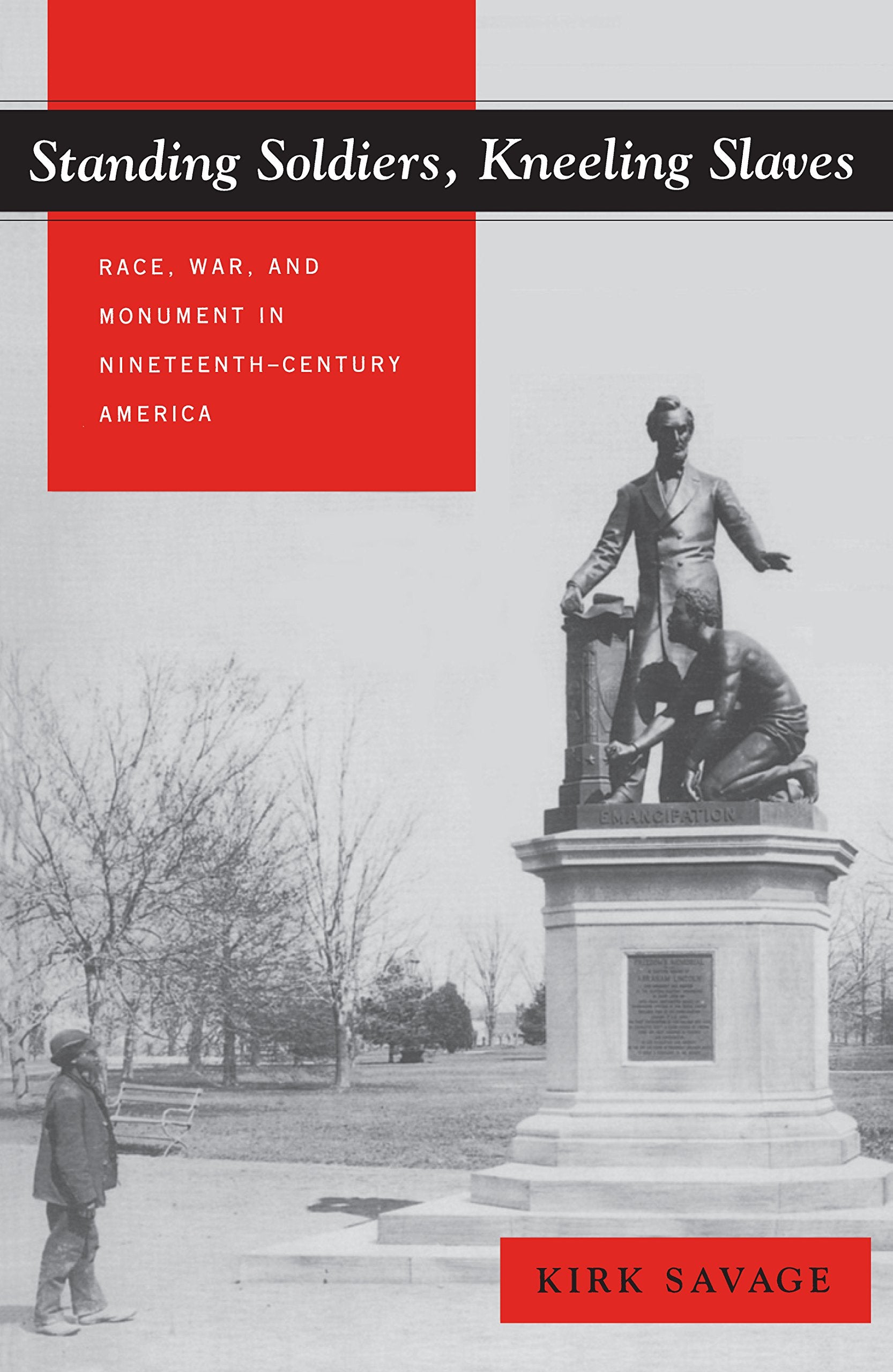
The United States Of America Originated As A Slave Society, Holding Millions Of Africans And Their Descendants In Bondage, And Remained So Until A Civil War Took The Lives Of A Half Million Soldiers, Some Once Slaves Themselves. Standing Soldiers, Kneeling Slaves Explores How That History Of Slavery And Its Violent End Was Told In Public Spacespecifically In The Sculptural Monuments That Increasingly Came To Dominate Streets, Parks, And Town Squares In Nineteenthcentury America. Here Kirk Savage Shows How The Greatest Era Of Monument Building In American History Arose Amidst Struggles Over Race, Gender, And Collective Memory. As Men And Women North And South Fought To Define The War'S Legacy In Monumental Art, They Reshaped The Cultural Landscape Of American Nationalism.At The Same Time That The Civil War Challenged The Nation To Reexamine The Meaning Of Freedom, Americans Began To Erect Public Monuments As Never Before. Savage Studies This Extraordinary Moment In American History When A New Interracial Order Seemed To Be On The Horizon, And When Public Sculptors Tried To Bring That New Order Into Concrete Form. Looking At Monuments Built And Unbuilt, Savage Shows How An Old Image Of Black Slavery Was Perpetuated While A New Image Of The Common White Soldier Was Launched In Public Space. Faced With The Challenge Of Reconstruction, The Nation Ultimately Recast Itself In The Mold Of The Ordinary White Man.Standing Soldiers, Kneeling Slaves, The First Sustained Investigation Of Monument Building As A Process Of National And Racial Definition, Probes A Host Of Fascinating Questions: How Was Slavery To Be Explained Without Exploding The Myth Of A United People? How Did Notions Of Heroism Become Racialized? And More Generally, Who Is Represented In And By Monumental Space? How Are Particular Visions Of History Constructed By Public Monuments? Written In An Engaging Fashion, This Book Will Appeal To A Wide Range Of Readers Interested In American Culture, Race Relations, And Public Art.
⚠️ WARNING (California Proposition 65):
This product may contain chemicals known to the State of California to cause cancer, birth defects, or other reproductive harm.
For more information, please visit www.P65Warnings.ca.gov.
- Q: What is the page count of the book? A: The book has two hundred eighty-eight pages. This length allows for a comprehensive exploration of race, war, and monuments in American history.
- Q: What is the binding type of this book? A: The book is paperback. This makes it lightweight and flexible, ideal for casual reading and portability.
- Q: What are the dimensions of the book? A: The book measures six point two six inches in length, zero point seven five inches in width, and nine point four nine inches in height. These dimensions make it easy to handle and store.
- Q: Who is the author of this book? A: The author is Kirk Savage. He is known for his work on American art and monuments, providing a critical perspective on cultural history.
- Q: What themes does the book cover? A: The book explores themes of race, war, and collective memory. It examines how public monuments reflect and shape the cultural landscape of America.
- Q: Is this book suitable for academic study? A: Yes, the book is suitable for academic study. Its in-depth analysis and critical approach make it a valuable resource for understanding American history.
- Q: How do I care for this paperback book? A: To care for the book, store it in a cool, dry place and avoid exposure to direct sunlight. This will help maintain its condition over time.
- Q: Can this book be used as a reference for a research paper? A: Yes, this book can be used as a reference for a research paper. It provides insightful analysis and a thorough bibliography for further reading.
- Q: What should I do if the book arrives damaged? A: If the book arrives damaged, contact the seller for a return or exchange. Most sellers have policies in place for handling such issues.
- Q: Are there any specific storage recommendations for this book? A: Store the book upright on a shelf or in a bookcase to prevent bending. Keeping it away from moisture will help preserve its quality.
- Q: Is this book appropriate for high school students? A: Yes, the book is appropriate for high school students. Its engaging writing style and relevant themes make it accessible for younger readers.
- Q: What kind of audience is this book intended for? A: The book is intended for readers interested in American culture, history, and race relations. It appeals to a wide range of audiences.
- Q: Does the book contain illustrations or photographs? A: No, the book does not contain illustrations or photographs. It focuses on textual analysis and historical context.
- Q: What is the main argument of the book? A: The main argument explores how public monuments reflect and shape national identity in the context of race and memory. It interrogates the narratives constructed through these monuments.
- Q: Can this book be read as a casual read? A: Yes, the book can be read as a casual read. Its engaging narrative style makes it suitable for general readers interested in history.