
Title
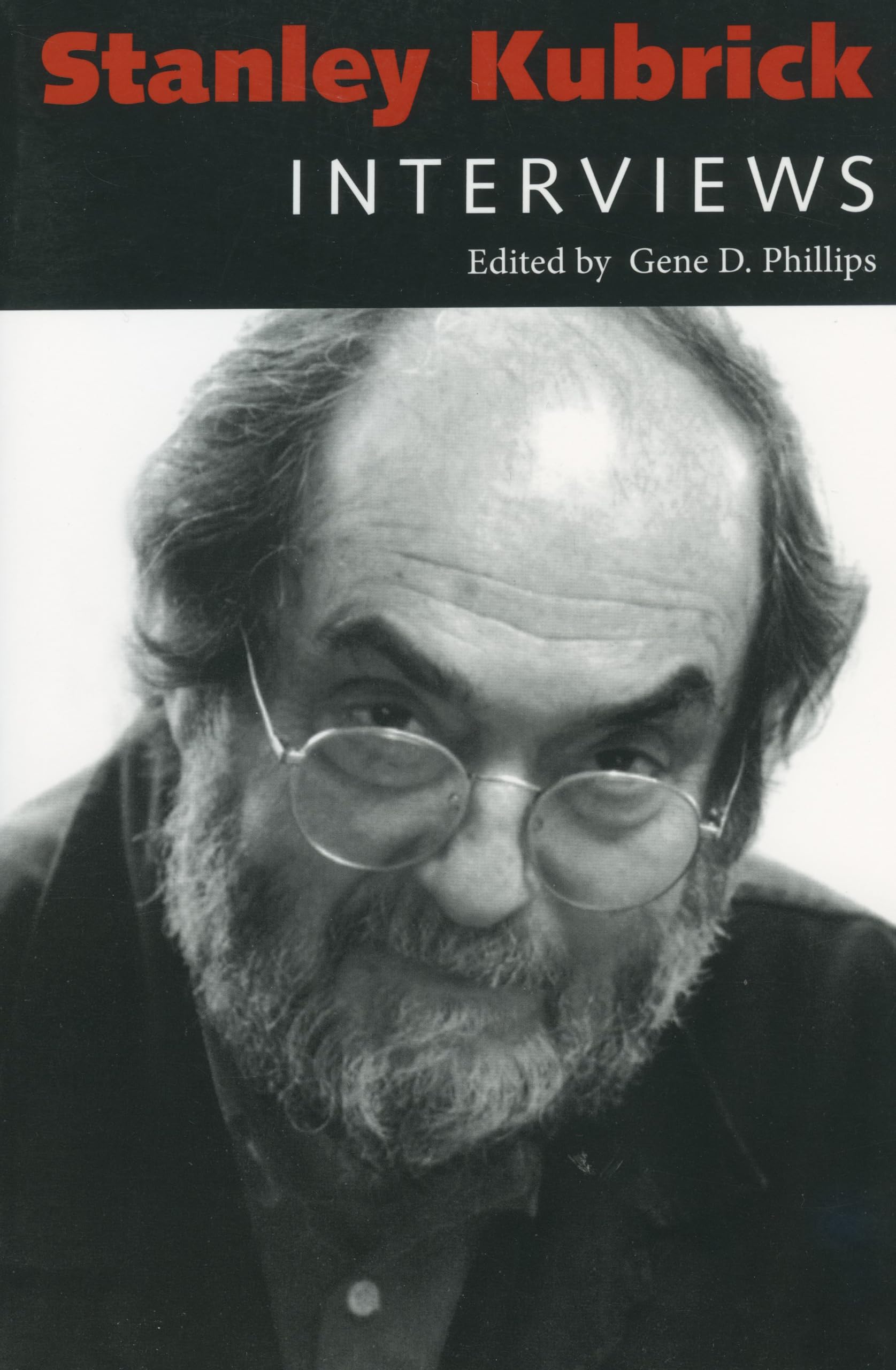
Stanley Kubrick: Interviews (Conversations with Filmmakers Series),Used
Sold by Ergodebooks, an authorized reseller.
Returns accepted within 30 days | support@ergodebooks.com
Shipping Information
- Free Standard Shipping — United States only
- Processing Time: 3–5 business days
- Estimated Delivery: 6–10 business days after dispatch
- Double-boxed, fully insured & discreetly packaged
- Tracking number sent via email once dispatched
Returns & Refund
Returns accepted within 30 days of delivery.
Damaged or Defective Item
Free return shipping + replacement or full refund
Wrong Item Received
Free return shipping + replacement or full refund
Change of Mind
Return shipping at customer's expense · 25% restocking fee applies
Payment Option

From his first feature film, Fear and Desire (1953), to his final, posthumously released Eyes Wide Shut (1999), Stanley Kubrick excelled at probing the dark corners of human consciousness. In doing so, he adapted such popular novels as The Killing, Lolita, A Clockwork Orange, and The Shining and selected a wide variety of genres for his filmsblack comedy (Dr. Strangelove), science fiction (2001: A Space Odyssey), and war (Paths of Glory and Full Metal Jacket). Because he was peerless in unveiling the intimate mysteries of human nature, no new film by Kubrick ever failed to spark debate or to be deeply pondered.Kubrick (19281999) has remained as elusive as the subjects of his films. Unlike many other filmmakers he was not inclined to grant interviews, instead preferring to let his movies speak for themselves. By allowing both critics and moviegoers to see the inner workings of this reclusive filmmaker, this first comprehensive collection of his relatively few interviews is invaluable. Ranging from 1959 to 1987 and including Kubrick's conversations with Gene Siskel, Jeremy Bernstein, Gene D. Phillips, and others, this book reveals Kubrick's diverse interestsnuclear energy and its consequences, space exploration, science fiction, literature, religion, psychoanalysis, the effects of violence, and even chessand discloses how each affects his films. He enthusiastically speaks of how advances in camera and sound technology made his films more effective.Kubrick details his handson approach to filmmaking as he discusses why he supervises nearly every aspect of production. All the handheld camerawork is mine, he says in a 1972 interview about A Clockwork Orange. In addition to the fun of doing the shooting myself, I find it virtually impossible to explain what I want in a handheld shot to even the most talented and sensitive camera operator.Neither guarded nor evasive, the Kubrick who emerges from these interviews is candid, opinionated, confident, and articulate. His incredible memory and his gift for organization come to light as he quotes verbatim sections of reviews, books, and articles. Despite his reputation as a recluse, the Kubrick of these interviews is approachable, witty, full of anecdotes, and eager to share a fascinating story.
⚠️ WARNING (California Proposition 65):
This product may contain chemicals known to the State of California to cause cancer, birth defects, or other reproductive harm.
For more information, please visit www.P65Warnings.ca.gov.
- Q: What is the main theme of 'Stanley Kubrick: Interviews'? A: The main theme of 'Stanley Kubrick: Interviews' revolves around the insights and reflections of filmmaker Stanley Kubrick on his works, exploring his thoughts on various topics such as human nature, filmmaking techniques, and the influence of technology on cinema.
- Q: Who is the author of this book? A: The author of 'Stanley Kubrick: Interviews' is D. Gene Phillips, who compiles and presents a comprehensive collection of Kubrick's interviews.
- Q: What can I expect to learn from this collection of interviews? A: Readers can expect to learn about Stanley Kubrick's creative process, his perspectives on filmmaking, and his opinions on subjects ranging from literature to science fiction, as well as his personal anecdotes and experiences.
- Q: How many pages does the book contain? A: The book contains 233 pages, providing an in-depth look at Kubrick's interviews over several decades.
- Q: What is the condition of the book? A: The book is listed as 'New', ensuring that it is in excellent condition for readers.
- Q: What is the binding type of this book? A: The binding type of 'Stanley Kubrick: Interviews' is paperback, making it lightweight and easy to handle.
- Q: When was this book published? A: The book was published on January 8, 2001.
- Q: Is this book suitable for film students or enthusiasts? A: Yes, this book is highly suitable for film students and enthusiasts as it provides valuable insights into Kubrick's filmmaking philosophy and techniques.
- Q: Does the book include interviews from various periods of Kubrick's career? A: Yes, the book includes interviews from 1959 to 1987, showcasing a range of Kubrick's thoughts throughout his career.
- Q: What are some notable topics discussed by Kubrick in these interviews? A: Notable topics discussed by Kubrick include nuclear energy, space exploration, literature, psychoanalysis, and the impact of technology on film production.