
Title
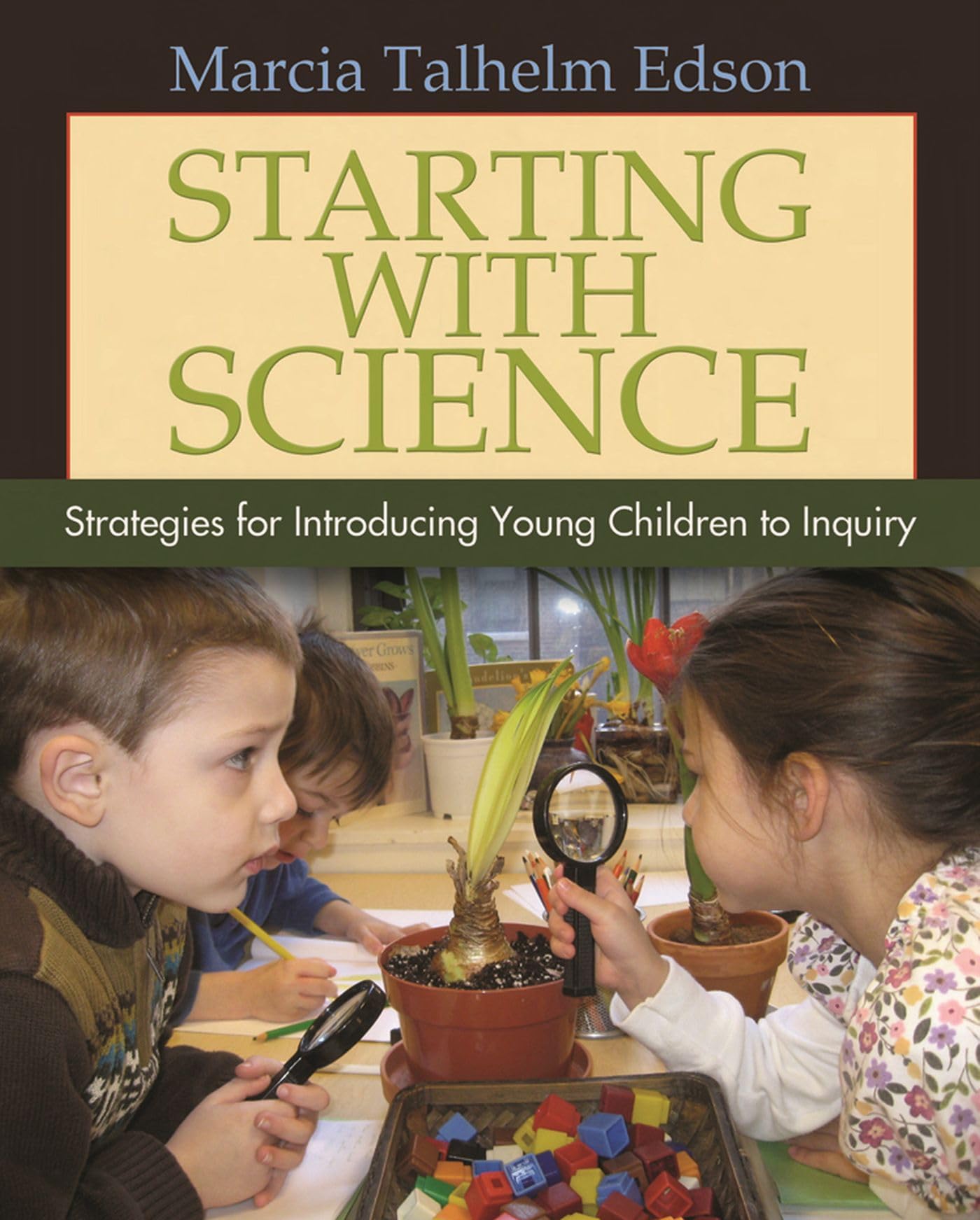
Starting With Science: Strategies For Introducing Young Children To Inquiry
Sold by Ergodebooks, an authorized reseller.
Returns accepted within 30 days | support@ergodebooks.com
Shipping Information
- Free Standard Shipping — United States only
- Processing Time: 3–5 business days
- Estimated Delivery: 6–10 business days after dispatch
- Double-boxed, fully insured & discreetly packaged
- Tracking number sent via email once dispatched
Returns & Refund
Returns accepted within 30 days of delivery.
Damaged or Defective Item
Free return shipping + replacement or full refund
Wrong Item Received
Free return shipping + replacement or full refund
Change of Mind
Return shipping at customer's expense · 25% restocking fee applies
Payment Option

Young Children Arrive At School With Unrestrained Curiosity And Wonder About The World. A Factbased, Handson Activity Approach To Teaching Science, However, Is Not Enough To Help Them Deepen Their Scientific Thinking Or Discoveries. In Starting With Science: Strategies For Introducing Young Children To Inquiry, Marcia Talhelm Edson Explores The Big Ideas Surrounding Inquirybased Science. She Helps Teachers Thoughtfully Plan For And Implement A Conceptual Approach To Teaching And Learning Science So Students Can Engage In Observation, Questioning, Predictions, Collaboration, Data Collection, And A Deeper Understanding Of Topics Important To Their Lives.Through Numerous Examples From Classroom Discussions, Teacher Commentary, And Children'S Work Samples, Starting With Science Provides Practical Suggestions And Models For Beginning Teachers As Well As Those Who Are Finetuning Their Practice. Four Key Questions Underlie The Book: What Is Inquirybased Science? How Can Prek, Kindergarten, And Primarygrade Teachers Incorporate Inquirybased Science When Faced With Limited Science Background, Insufficient Time, And Lack Of Resources? What Roles Do The Children, The Teacher, And The Environment Play In An Inquirybased Science Program? What Instructional Strategies Are Effective In Implementing Inquirybased Science?In Answering These Questions, Edson Provides A Framework From Which Teachers Can Devise Their Own Indepth Inquiry Investigations Based On District Requirements And Students' Own Interests. She Also Integrates Literacy Opportunities As Well As Explicit Suggestions For Effective Assessment Of Inquirybased Science.Starting With Scienceshows Us What Inquiry Looks Like In An Early Childhood Classroom And Introduces Strategies Teachers Can Employ To Confidently And Competently Teach Science To Students In Grades Prek2. Children Will Gain Skills For Problem Solving And An Attitude About Learning That They Will Carry With Them Not Just To The Next Grade But Throughout Their Lives.
⚠️ WARNING (California Proposition 65):
This product may contain chemicals known to the State of California to cause cancer, birth defects, or other reproductive harm.
For more information, please visit www.P65Warnings.ca.gov.
- Q: How many pages does this book have? A: This book has one hundred sixty pages. It provides comprehensive insights into inquiry-based science for young children.
- Q: What are the dimensions of this book? A: The book measures seven point thirty-eight inches in length, nine point twenty-five inches in height, and zero point thirty-nine inches in width.
- Q: What type of binding does this book have? A: This book is paperback bound. This makes it lightweight and easy for young children to handle.
- Q: What age group is this book suitable for? A: This book is suitable for teachers of children in pre-K through second grade. It addresses strategies for engaging young learners in science.
- Q: How can I use this book in the classroom? A: You can use this book to introduce inquiry-based science activities. It provides practical strategies and examples for effective teaching.
- Q: Is this book appropriate for beginner teachers? A: Yes, this book is perfect for beginner teachers. It offers foundational strategies and insights for those new to teaching science.
- Q: How should I store this book? A: Store this book in a cool, dry place to prevent damage. Keeping it on a bookshelf will help maintain its condition.
- Q: Can this book help with lesson planning? A: Yes, this book includes frameworks for lesson planning. It aids teachers in developing inquiry-based science investigations.
- Q: What should I do if the book arrives damaged? A: If the book arrives damaged, contact the seller for returns or exchanges. Ensure you have your order details ready for assistance.
- Q: Does this book include assessment suggestions? A: Yes, the book provides explicit suggestions for assessing inquiry-based science. This helps teachers evaluate student understanding effectively.
- Q: Is there a specific teaching method discussed in this book? A: Yes, the book discusses inquiry-based science as a primary teaching method. It emphasizes observation, questioning, and collaboration.
- Q: What kind of examples does the book provide? A: The book includes numerous examples from classroom discussions and children's work. These examples illustrate effective inquiry-based teaching.
- Q: Who is the author of this book? A: The author of the book is Marcia Talhelm Edson. She specializes in education theory and inquiry-based learning.
- Q: What is the main focus of the content in this book? A: The main focus is on introducing young children to inquiry-based science. It explores methods to enhance their scientific thinking.
- Q: Can I find literacy opportunities in this book? A: Yes, the book integrates literacy opportunities within the context of science teaching. This supports language development alongside science education.