
Title
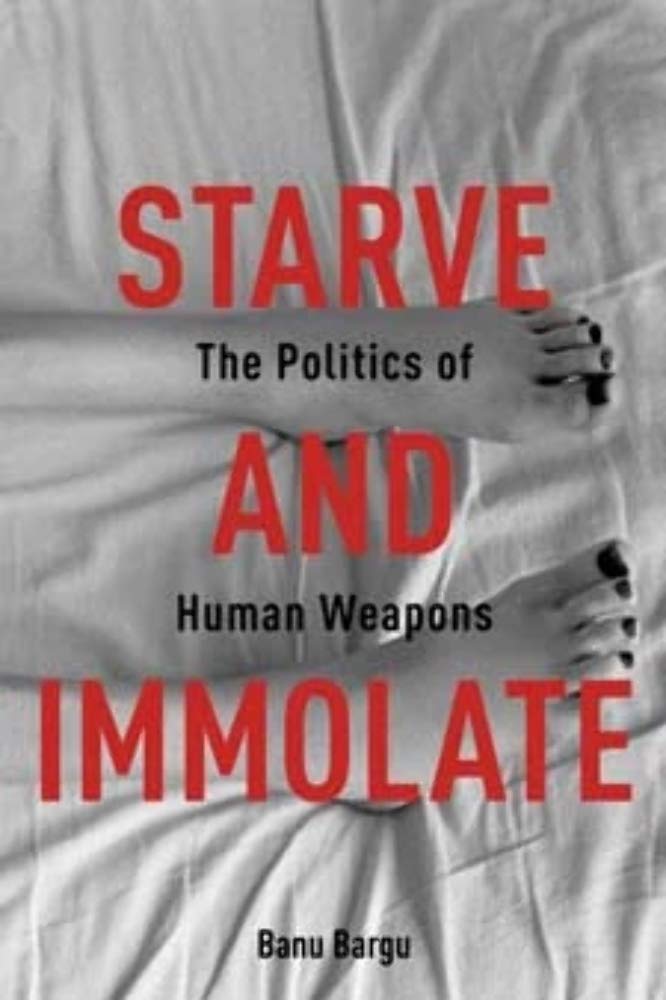
Starve and Immolate: The Politics of Human Weapons (New Directions in Critical Theory, 33),Used
Sold by Ergodebooks, an authorized reseller.
Returns accepted within 30 days | support@ergodebooks.com
Shipping Information
- Free Standard Shipping — United States only
- Processing Time: 3–5 business days
- Estimated Delivery: 6–10 business days after dispatch
- Double-boxed, fully insured & discreetly packaged
- Tracking number sent via email once dispatched
Returns & Refund
Returns accepted within 30 days of delivery.
Damaged or Defective Item
Free return shipping + replacement or full refund
Wrong Item Received
Free return shipping + replacement or full refund
Change of Mind
Return shipping at customer's expense · 25% restocking fee applies
Payment Option

Starve and Immolate tells the story of leftist political prisoners in Turkey who waged a deadly struggle against the introduction of high security prisons by forging their lives into weapons. Weaving together contemporary and critical political theory with political ethnography, Banu Bargu analyzes the death fast struggle as an exemplary though not exceptional instance of selfdestructive practices that are a consequence of, retort to, and refusal of the increasingly biopolitical forms of sovereign power deployed around the globe.Bargu chronicles the experiences, rituals, values, beliefs, ideological selfrepresentations, and contentions of the protestors who fought cellular confinement against the background of the history of Turkish democracy and the treatment of dissent in a country where prisons have become sites of political confrontation. A critical response to Michel Foucault's Discipline and Punish, Starve and Immolate centers on new forms of struggle that arise from the asymmetric antagonism between the state and its contestants in the contemporary prison. Bargu ultimately positions the weaponization of life as a bleak, violent, and ambivalent form of insurgent politics that seeks to wrench the power of life and death away from the modern state on corporeal grounds and in increasingly theologized forms. Drawing attention to the existential commitment, sacrificial morality, and militant martyrdom that transforms these struggles into a complex amalgam of resistance, Bargu explores the global ramifications of human weapons' practices of resistance, their possibilities and limitations.
⚠️ WARNING (California Proposition 65):
This product may contain chemicals known to the State of California to cause cancer, birth defects, or other reproductive harm.
For more information, please visit www.P65Warnings.ca.gov.
- Q: How many pages does this book have? A: This book has five hundred twelve pages. It provides an in-depth examination of the politics surrounding human weapons in Turkey.
- Q: What is the binding type of this book? A: The binding type is paperback. This makes it a lightweight and portable option for readers.
- Q: What are the dimensions of the book? A: The book measures six inches in length, one point two inches in width, and eight point nine inches in height. These dimensions make it easy to handle.
- Q: Who is the author of 'Starve and Immolate'? A: The author is Banu Bargu. She analyzes the struggles of leftist political prisoners in Turkey.
- Q: What is the main theme of this book? A: The main theme explores the politics of human weapons and self-destructive practices against biopolitical sovereign power. It focuses on resistance and martyrdom.
- Q: Is this book suitable for academic study? A: Yes, this book is suitable for academic study. It combines political theory with ethnography, making it valuable for research.
- Q: How can I use this book for research? A: You can use this book as a primary source for understanding resistance movements and political theory. It provides critical insights into biopolitical struggles.
- Q: What audience is this book intended for? A: This book is intended for scholars, students, and anyone interested in political theory and human rights. It addresses complex themes.
- Q: Is there a specific reading level for this book? A: The book is suitable for advanced readers. It contains academic language and concepts related to political theory.
- Q: How should I store this paperback book? A: Store this book in a dry, cool place to maintain its condition. Keep it upright on a shelf to avoid bending the cover.
- Q: Can I clean the book if it gets dirty? A: Yes, you can clean the book. Use a soft, dry cloth to gently wipe the cover and remove any dirt.
- Q: What should I do if the book arrives damaged? A: If the book arrives damaged, contact the seller for a return or exchange. Most sellers will provide options for resolution.
- Q: Is there a warranty for this book? A: Typically, books do not come with a warranty. However, check the retailer's policy for specific return guidelines.
- Q: What if I have questions about the book's content? A: If you have questions about the content, look for academic reviews or discussions online. Many resources analyze the themes presented.
- Q: How does this book compare to other works in political theory? A: This book offers a unique perspective on resistance compared to other political theory texts. It focuses on human weapons and biopolitics.
- Q: Is this book appropriate for younger audiences? A: No, this book is not appropriate for younger audiences. It discusses mature themes related to political struggles and violence.